Friday, March 27, 2020

A New Month and a New Year

A New Month and a New Year
At Touro Synagogue
March 27-28, 2020
Thanks to Rabbi Marc Mandel


Earlier this week we celebrated the first day of the month of Nissan. In Jewish life there are several first months of the year. Nisan was the first month in Assyria, and when Israel was under Assyria influence, it followed Assyria’s calendar. 


Rabbi Marc Mandel, of Newport’s Touro Synagogue sent a message about Shabbat,


“This Shabbat, we find ourselves in a pattern of newness. A new book is beginning in the Torah, the Book of Leviticus. And we are in the new month of Nisan. At this time, we also find ourselves in a new experience, one that we did not anticipate. But we should learn from the Jewish calendar that, just as the calendar teaches us to start new, and find hope in new challenges, so too, should we find hope and inspiration for a better future, as we deal with the current crisis. The month of Nisan is the month of redemption and let us hope and pray that we will see the Redemption of the entire world from the current situation.”


At our pre-shabbat  learning and prayer meeting we had at least 21 sign-ins, representing about twenty-three people.Among them was Naomi Kabak who lives in New York. Rabbi Mandel spoke of our concern with the  current situation in New York.


 Rabbi Mandel discussed the first sentence of Leviticus:


וַיִּקְרָ֖א אֶל־מֹשֶׁ֑ה וַיְדַבֵּ֤ר יְהוָה֙ אֵלָ֔יו מֵאֹ֥הֶל מוֹעֵ֖ד לֵאמֹֽר׃ 
The LORD called to Moses and spoke to him from the Tent of Meeting, saying: 
In the Torah, the aleph that concludes the first word is written smaller than the other letters. One commentator said, “When Moses wrote the Torah down, he made the aleph smaller out of modesty. This changes the word to be less formal and more general. Moses was modest, and didn’t want to stand out by having God call directly to him.” Another commentary said that God was specifically calling Moses, and did not include Aaron, who was included on a previous occasion. 


Rabbi Mandel mentioned that there was a lot of discussion about the cloud that God was in, and drolly told us that being in the cloud was not new! I know I have my head in the cloud most of the time.


There was commentary on the last word in the phrase, “saying (lemor).” This could be read as two words, “Lo amor!” meaning “Do not say!” This makes the word a double entendre. When someone tells you something, it is private unless the speaker gives permission to repeat it. This is a way of recognizing that some matters are confidential, including both personal and business information. In the context of the Torah, when God wanted Moses to relay a message to the children of Israel, he would make it clear, as he did in verse 2 of Leviticus,
דַּבֵּ֞ר אֶל־בְּנֵ֤י יִשְׂרָאֵל֙ וְאָמַרְתָּ֣ אֲלֵהֶ֔ם אָדָ֗ם 
Speak to the Israelite people, and say to them: 
After our Friday evening learning, we sang excerpts from the Psalm and Lecha Dodi. Rabbi Mandel discussed Lecha Dodi with a friend, and decided that although it welcomes Shabbat, Shabbat starts with the next reading, the Psalm for Shabbat.


During our new situation we meet online instead of in person. Congregation Jeshuat Israel sponsors several opportunities to meet, Next week we will have three opportunities in addition to Friday pre-shabbat. For information email me at aaron.ginsburg@gmail.com


CJI Virtual Program Schedule For Next Week.


Monday, March 30 at 7:30pm 
A Virtual Tour of Jamestown with Delia Klingbeil.

Delia Klingbeil lives in Jamestown with her husband Ralph.
She is an amateur photographer, and also serves as the secretary 
of the Jamestown Historical Society. 


Tuesday, March 31 at 7:30pm
Reuniting Families Through Genealogy With Aaron Ginsburg


Aaron has 25 years of experience in genealogical research. He has spoken before the Jewish Genealogical Society of Greater Boston, at the annual convention of the International Association of Jewish Genealogical Societies, and before Jewish groups in the United States and Ukraine. He has helped several clients with their genealogical journeys and created a shtetl community to help restore a Jewish cemetery in Belarus.


Wednesday, April 1 at 7:30pm
Virtual Torah Class With Rabbi Mandel
Passover and the Bible 


Friday, March 20, 2020

Chazak, Chazak

Chazak, Chazak
At Touro Synagogue
Newport, RI
March 20-21, 2020
By Aaron Ginsburg aaron.ginsburg@gmail.com
Thanks to Rabbi Marc Mandel


Today is a special Shabbat, Shabbat Hachodesh, that is the shabbat before Rosh Chodesh Nissan, before the month of Nissan.

Friday at 4 PM with Rabbi Marc Mandel
To prepare for Shabbat, at 4:00 PM on Friday several of us participated in learning with Rabbi Marc Mandel. He discussed the special torah reading,  Exodus 12:1-20 using Sefaria https://www.sefaria.org/texts  a source for Jewish texts and commentary. He reviewed the first two verses:
וַיֹּ֤אמֶר יְהוָה֙ אֶל־מֹשֶׁ֣ה וְאֶֽל־אַהֲרֹ֔ן בְּאֶ֥רֶץ מִצְרַ֖יִם לֵאמֹֽר׃ 
The LORD said to Moses and Aaron in the land of Egypt:
הַחֹ֧דֶשׁ הַזֶּ֛ה לָכֶ֖ם רֹ֣אשׁ חֳדָשִׁ֑ים רִאשׁ֥וֹן הוּא֙ לָכֶ֔ם לְחָדְשֵׁ֖י הַשָּׁנָֽה׃ 
This month shall mark for you the beginning of the months; it shall be the first of the months of the year for you.
Rabbi Mandel pointed to Rashi’s commentary which asked, “Why did God speak to Aaron rather than Moses?” Rashi pointed out that Aaron was just
as involved in the miracles of Exodus as Moses.


Although we like to think the Torah was given at Sinai, the command about “this month” was given before that, while the Israelites were still in Egypt. Rabbi Mandel explained that one of the first things a nation does is to create its own calendar. Israel had used the Egyptian calendar for over 400 years.

Sefaria includes Jewish liturgy. Using a sephardic siddur, we read and sang several Psalms from Kabbalat Shabbat. Three quarters of our prayers come from Psalms. We omitted Lechah Dodi, which accepts the Shabbat. It was too early for that. Rabbi Mandel will consult with his colleagues to decide which prayers are appropriate. 


When you paint a room, a lot of the work is in the preparation, cleaning or washing the walls, moving the furniture, and using a drop cloth to protect the floors and carpets. 


photo caption:The Golden Haggadah preparing for Passover ca 1320. top Left, the leader ordering distrubuiting Matza and haroset, top left, Miriam with timbrel and maidens with musical instruments, Bottom left, sheep are slaughtered for Passover and untesils are purified, bottom right man with candle searchinf for hametz, woman and children cleaning house.

During Nissan, we celebrate Passover, which also takes a lot of preparation, shopping, cleaning, cooking and studying including the study of new and old tunes. The preparations are worth it so we can experience the joy of being in a newly painted room or joining a seder.


Although we will not be in shul, Rabbi Mark Mandel shared some words of Torah, 


“This week we are scheduled to read the last two Parshas in the Book of Exodus. That means, we would say, ‘Chazak, Chazak, V'nitchazek’ at the end of the reading, which means, ‘Be strong, be strong, and Be Strengthened.’ How fitting that we say this now, as we face a crisis that challenges all of us. We say to each other, ‘Be strong - we can get through this.’”


To face the current crisis, part of what we do involves preparation. Both as individuals and as a community, we need to think about having enough food and sundries, about how to keep busy, and how to avoid getting sick or getting other people sick. We also need to think how we can spread our wings to help people who are alone or vulnerable. 


In spite of our best efforts things may not work out. There might be drips on the wall or roller marks on the ceiling, seders may be marred by minor or major problems, and preparations for Corona may fail to protect lives.


And so we say together, ‘Chazak, Chazak, V'nitchazek’


Shabbat Shalom from Jewish Newport!

Friday, March 13, 2020

A Passion For Science And A Quest for Knowledge

A Passion For Science And A Quest for Knowledge
At Touro Synagogue 
March 7, 2019


By Aaron Ginsburg
Thanks to Rabbi Marc Mandel

Dr. Elie Cohen
On Shabbat we had a good attendance at Touro Synagogue. The family of Dr. Elie Cohen, who died on Purim two years ago, sponsored Kiddush. Many family members were in attendance, as well as regulars, Navy personnel, and a few visitors. 


In the special haftarah for Shabbat Zachor, I Samuel 15:2 - 15:34, Samuel confronted King Saul because all the booty from the defeat of the Amelakites was not destroyed. Saul responded that it was saved to sacrifice to the Holy One. Samuel was having none of it. His response indicates an evolving change in Israelite religion, “But Samuel said: ‘Does the LORD delight in burnt offerings and sacrifices as much as in obedience to the LORD’s command? Surely, obedience is better than sacrifice, compliance than the fat of rams.’”


Rabbi Marc Mandel began by thanking us for following the Corona Protocols (I am working on the comic book). Among the Corona Protocols: 


Don’t shake hands, 
Don’t kiss the Torah. 
OK to kiss a spouse (but I think we were told to take our thermometers out and check the temperature first- either to make sure the other half was not too hot, or to make sure that the other half was hot...I can’t quite recall.)


Rabbi Mandel told us, 


“This week is Shabbat Zachor - the Shabbat to remember. 


“This Shabbat we remember our dear member Dr. Elie Cohen, who passed away on Purim. 


“We thank his family for sponsoring the Kiddush in his memory.


“Dr. Elie Cohen was a great member of Touro Synagogue who loved to participate in our Services.


“He was also a great member of the larger Newport community. He was a superb doctor and he helped advance the practice of medicine greatly in this city. 


“On Shabbat Zachor we are supposed to remember how the nation of Amalek attacked the Jewish people when they left Egypt. 


“Dr. Cohen knew Amalek. He was born in Egypt and he faced many challenges there, and that's why he left, and moved to the US.  


“The Jewish people have always stood for progress and science, and Amalek is threatened by this, and Dr. Cohen understood his future as a doctor and as a person of science was not there. May his memory be a blessing."


After a bounteous kiddush by Paula, which didn’t include bagels, Charlene Tuttle, wife of Larry Cohen and daughter-in-law of Elie z.l. and Marcia  spoke about what it is like to be Rhode Island teacher of the year. It has been a busy year for her. Charlene hopes to inculcate in her students “a passion for science and a quest for knowledge.” That phrase is a good description of Dr. Elie Cohen


We learnt this morning that Shabbat services were canceled this week and that the annual CJI Seder would not take place this year.


I hope to continue posting during this difficult period.


Shabbat Shalom from Jewish Newport!


More about Dr. Cohen: 

Friday, March 6, 2020

Ships and Gifts


At Touro Synagogue February 28-29, 2020
By Aaron Ginsburg aaron.ginsburg@gmail.com
edited by Rebecca Beit-Aharon
With thanks to Rabbi Marc Mandel


On Friday, February 28, 45 people gathered at Touro Synagogue in Newport, Rhode Island for Shabbat Across America. Jonathan Kabak arrived in the middle of services at Maariv and explained that there had been a childcare situation. The congregation smiled as we recalled our own child care situations.  
Jonathan Kabak

Jonathan is Captain (Chief Operating Officer) at the Oliver Hazard Perry Foundation. The Oliver Hazard Perry is a tall ship with educational programs and community outreach, an important part of Jonathan’s portfolio. Jonathan’s maritime journey has included the Sea Scouts and time aboard the ships of the South Street Seaport Museum in New York City. 

Rabbi Marc Mandel hustled Jonathan Kabak to the bimah, where he led a spirited Maariv, punctuated by regular greetings from his son on the balcony above: “Hi, Daddy.”
_____
After services we went to the Levi Gale house and shared a meal sponsored by Rabbi Mandel’s Discretionary Fund. Jonathan’s mother, Naomi Kabak, mentioned that her family were among the founders of Lincoln Square Synagogue, where Rabbi Epraim Buchwald, the head of NJOP, started his outreach programs, including Shabbat Across America.  Rabbi Mandel was a student of Rabbi Buchwald and learned a lot from him.


Mrs. Kabak reminisced about her Israel-focused career in the travel industry. She told us that she had worked for El Al in marketing, and among her achievements was the opening of El Al’s Boston office. 


During the Six Day War period, Israel was not marketed effectively by the travel industry. Mrs. Kabak joined Isram, which specializes in group tours to Israel.


Naftali Sabo mentioned another old stalwart in Israel travel history, ZIM Integrated Shipping Services, which employed his dad. ZIM was founded in 1945. During the Israeli War of Independence, it was the only line that shipped to Israel. Mrs Kabak’s rejoinder: “I made my first trip to Israel on ZIM. And I have another story about ZIM.


“My father dreamt he was on a ZIM cruise. The seas got very rough and he woke up with a start. He had fallen out of bed, and made a hole in the wall with his foot! Only a Zionist would dream about ZIM.”


Jonathan told me that many of the engineers from ZIM ended up supervising heating systems in New York apartment buildings. Many buildings in New York City are heated by steam, which was used to power ships until the 1980s.


For at least three generations, the Kabak family has had a fascination with ships. Their fascination with Judaism has lasted a bit longer!


—


On Saturday, during his brief Torah message, Rabbi Mandel spoke about a difficult question:


“This week's Torah reading, Parshat Terumah, is about all the donations people gave for the Mishkan, the portable synagogue the Jews had in the desert. The Parsha discusses the Menorah, the Ark, the Bima, among a few other parts. 


“As we look around Touro Synagogue, we can see all the beautiful donations that were made to this synagogue in the 1700's. Many of them are the original donations, and we can see the names of the people that made the donations.


“Recently, someone asked to meet with me to discuss a matter of concern they had. In my office, this person told me that she recently discovered that some of the founders of Touro Synagogue were involved in the slave trade here in Rhode Island. This bothered her very much and tainted her view of our synagogue. She asked me, ‘How can people that were fleeing persecution persecute other people?’


“This is not an easy question to answer, and it wasn't the first time I was asked this. A few years ago, at a panel in Providence, someone surprised me with this question. 


“I explained to her that, ‘This is something we are aware of, and, in fact, the Loeb Visitors Center at Touro Synagogue has an exhibit that deals with this topic. We are not trying to cover it up, but perhaps it needs to be understood in the context of the times.’ She wasn't very satisfied, but at least she was able to start a conversation about a topic that bothered her dearly. 


“Is there anything in our world that is pure? In a couple of weeks we will read in the Torah that many of the same people who donated to the Mishkan also donated to the golden calf. As humans, we are not one dimensional. We are complex and unpredictable. To deny that is to deny history.”


Shabbat Shalom from Jewish Newport!
more info about the Oliver Hazard Perry Foundation: https://www.ohpri.org/staff-and-crew/

Friday, February 14, 2020

Pizza and Common Sense

Pizza and Common Sense

At Touro Synagogue February 8, 2020 By Aaron Ginsburg aaron.ginsburg@gmail.com edited by Beth Ginsburg Levin With thanks to Rabbi Marc Mandel Also at https://www.facebook.com/groups/jewishnewport/

On Shabbat morning at Touro Synagogue in Newport Rhode Island, Rabbi Marc Mandel discussed the latest news. Rabbi Mandel dealt with skepticism about science and fake news, although he didn’t use those terms. The latest news was not in Washington, D.C. or Iowa, but China. In China, things are theoretically managed from the top down. Often the people who are running things don’t want to cause any static with their superiors, and fail to pass on bad news. This backfired in the case of coronavirus, since it delayed the response. Of course this can happen in any society.
“This week Dr. Li passed away,” began Rabbi Mandel. “He was the whistleblower about the coronavirus. This week's parsha (Beshalach) addressed the issue of pandemics and illness. After the Jews crossed the Red Sea, they were concerned that a plague would wipe them out in the desert. God said to them, ‘If you follow my commandments, any illness that I struck upon the Egyptians, I will not place on you, for I am your doctor.’
“If God is our doctor, does that mean we can't have a human doctor? Would that be an insult to God?
“This contradicts a passage in the upcoming parsha of Mishpatim, which says, if you injure someone you must pay their doctor bills!
“There seems to be some tension in the Torah about this, the same way there is tension today in China. The Chinese doctors want to save people and warn people, but the government says, slow down, don't overdo it. Both these cases can lead to problems. Last year, there was a measles epidemic in the United States because some people, including some orthodox Jews, didn't trust the doctors. In China, had the government listened earlier to the doctors, less people would have died. In leading our lives we must take advantage of medical expertise, while we still have faith in God to help us.”
At the kiddush, we discussed Daf Yomi, Masechet Brachot, page 35. This chapter discusses what brachot (blessings) to make on certain foods.
Lorenzo's Pizza sign on South Street, Philadelphia, Pennsylvania Highsmith, Carol M., 1946-, photographer
A lively discussion about certain foods indicated that this is not always a simple matter. For example, what bracha does one make on hummus? Although hummus is made from chickpeas which grow from the ground, we make a shehakol, because the texture has changed. This is similar to orange juice, which also gets a shehakol. This soon degenerated into a discussion about recipes, and people offered to share their favorites.
Rabbi Mandel said he usually defers to his wife, Jackie, when there is a food question.
Then came the great pizza question. Is pizza bread? Apparently not since we don’t say hamotzi over it. Rabbi Mandel pointed out that if we have bread with a meal, once we say the hamotzi we don’t need to say a blessing over the other items in the meal. The congregants heaved a sigh of relief, and resumed eating their pizza!
Shabbat Shalom from Jewish Newport!


Saturday, February 1, 2020

Teamwork and Knishes


Teamwork and Knishes
At Touro Synagogue
January 25, 2020
By Aaron Ginsburg edited by Beth Ginsburg Levine 
Thank you to Dr. Irene Glasser and Rabbi Marc Mandel

Taking the census Harpers Weekly 1870
after asketch by 
Thomas Worth.
On Friday before services at Touro Synagogue in Newport, RI, congregant Dr. Irene Glasser spoke about her work for the Center for Survey Measurement which is a part of the Research and Methodology Directorate of the US Census. Rabbi Marc Mandel introduced her, “This week's parsha, Parashat Vaera, has a census of its own, as they listed the names of the leaders of the tribes.”


”Certain populations,” Irene told us, “are chronically undercounted including people experiencing homelessness, people living in very rural areas, people who are Hispanic, African American, Asian, and American Indian. In 1989 and in 2009 I conducted research in homeless shelters, soup kitchens, out of doors, and with individuals and families who were ‘doubled up’ with another individual or family because they had nowhere else to go. I recommended strategies to try to better include people experiencing homelessness and evaluated how thorough I thought that the homeless count would be.


“The United States census figures are the basis for the number of Congressmen from each state in the US House of Representatives and the basis for much of the federal funding sent to the states. This year the census will be especially challenging in terms of complete coverage because, among other reasons, the census is not as well funded as it has been in the past and the citizenship question, although ultimately not asked, is thought to have scared US communities.” 


Census employees are expected to respect the privacy of the public. Irene took an oath at the Census Bureau to hold as confidential for life any personal information she learned by working on the census. Confidentiality is a major reason people will answer the US census. 


Many people work together as a team to make the census work.


In his brief words of Torah on Shabbat morning, Rabbi Mandel spoke about another team. “Moses and Aaron worked together in Egypt to help bring the redemption of the Jews. This is charting new territory, as in earlier Torah readings there was very little brotherly love.


“Cain and Abel were not friends, nor were Isaac and Ishmael, nor were Jacob and Esau, and not Joseph and his brothers. Suddenly we see two brothers, Moses and Aaron, working side-by-side, seamlessly, without mutual envy, towards the goal of Jewish redemption. 


“Rashi tells us that in last week's parsha, “Moshe was concerned that Aaron would be envious of him since Aaron was the older brother, but it was quite the contrary. Aaron was very happy for his brother and was later awarded the title of the Kohen, because of this unselfishness.” 


Moshe expressed his concern to God, who replied, “Don’t worry about it. Aaron will be happy to speak for you.” And so it was.


Rabbi Mandel pointed out, “Today things are different and families don't usually live so close together and don't work so closely together. It might not be so central anymore because the family unit is able to be more self-sufficient than in the past. But the kernel of the idea is still very important, that in order to be successful, teamwork is essential.” 


At kiddush, Rabbi Mandel introduced the initiative to have Touro Synagogue participate in Daf Yomi (page of the day). “Thousands of people all over the world are studying the same page of Talmud each day. This unites all Jews and brings a sense of community to the global Jewish world.” 


The Babylonian Talmud has 2,711 pages (each page consists of two sides). A cycle takes seven and a half years. The idea came to fruition when Rabbi Meir Shaprio proposed it at the first World Conference of Agudath Israel in Vienna in August 1923. The first cycle began on the first day of Rosh Hashanah, 1923.


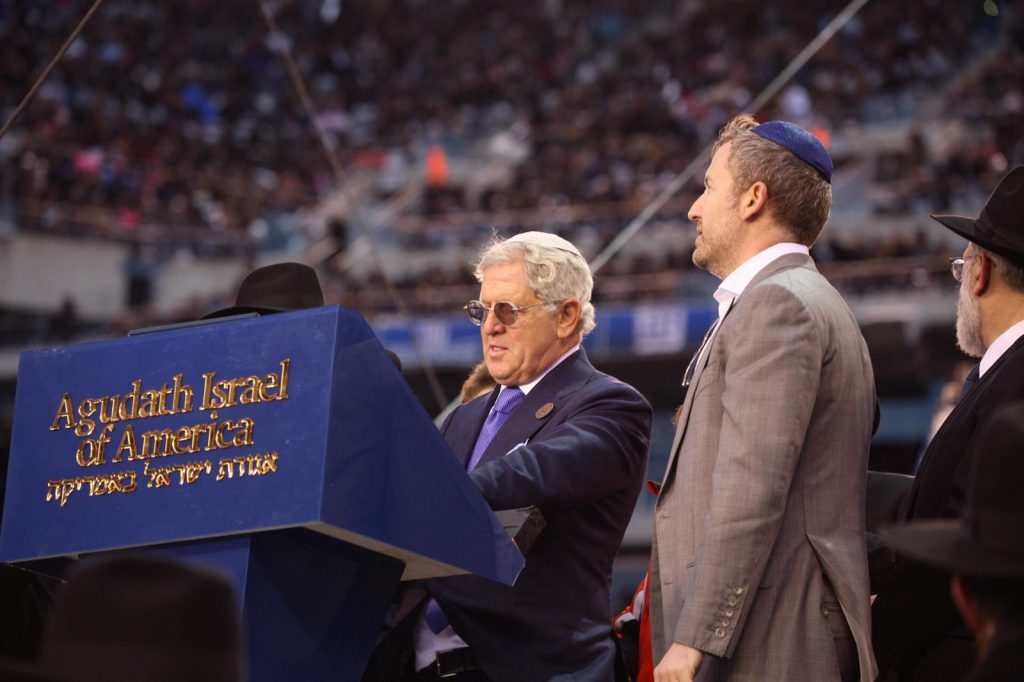
The cycle concludes with a celebration, Siyum HaShas, the completion of the six Orders of the Talmud. On January 1, 2020 over 90,000 people gathered at MetLife Stadium in New Jersey, including Touro member Jay Shottenstein, who recited the kaddish. Jay’s family underwrote the Schottenstein Talmud, published by Artscroll.


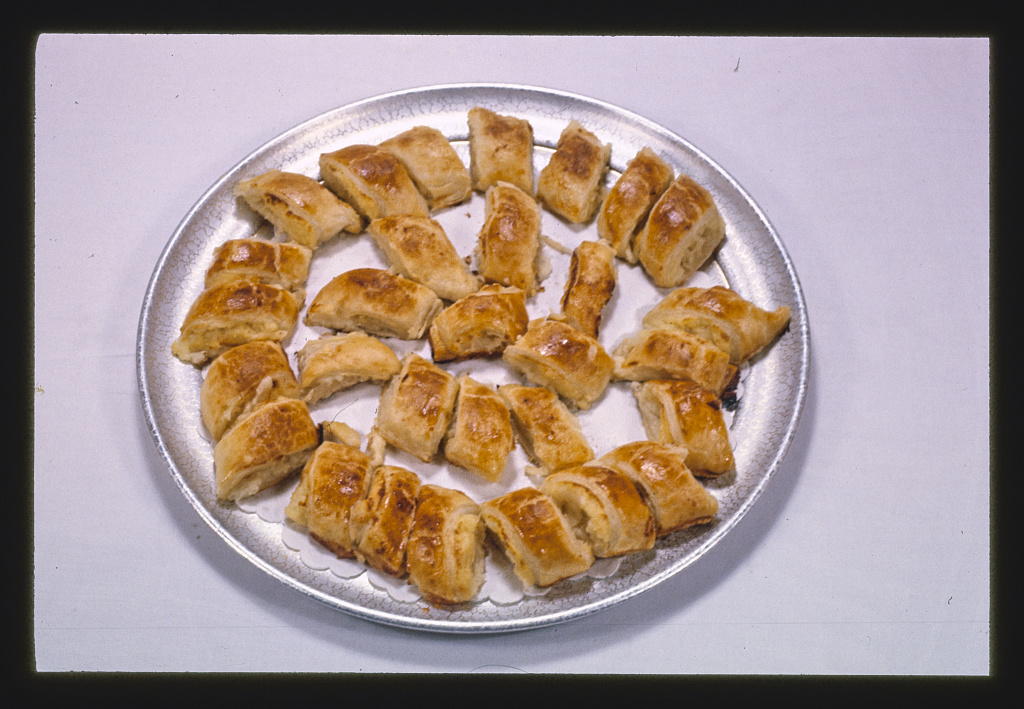
When ArtScroll was founded in the 1970s, David Nathanson told us that he helped to print its first books. The best part was when the founder of Artscroll, Rabbi Meir Zlotowitz, arrived from New York City with fresh knishes for all.


Shabbat Shalom and Happy Knishes from Jewish Newport!