Friday, February 14, 2020

Pizza and Common Sense

Pizza and Common Sense

At Touro Synagogue February 8, 2020 By Aaron Ginsburg aaron.ginsburg@gmail.com edited by Beth Ginsburg Levin With thanks to Rabbi Marc Mandel Also at https://www.facebook.com/groups/jewishnewport/

On Shabbat morning at Touro Synagogue in Newport Rhode Island, Rabbi Marc Mandel discussed the latest news. Rabbi Mandel dealt with skepticism about science and fake news, although he didn’t use those terms. The latest news was not in Washington, D.C. or Iowa, but China. In China, things are theoretically managed from the top down. Often the people who are running things don’t want to cause any static with their superiors, and fail to pass on bad news. This backfired in the case of coronavirus, since it delayed the response. Of course this can happen in any society.
“This week Dr. Li passed away,” began Rabbi Mandel. “He was the whistleblower about the coronavirus. This week's parsha (Beshalach) addressed the issue of pandemics and illness. After the Jews crossed the Red Sea, they were concerned that a plague would wipe them out in the desert. God said to them, ‘If you follow my commandments, any illness that I struck upon the Egyptians, I will not place on you, for I am your doctor.’
“If God is our doctor, does that mean we can't have a human doctor? Would that be an insult to God?
“This contradicts a passage in the upcoming parsha of Mishpatim, which says, if you injure someone you must pay their doctor bills!
“There seems to be some tension in the Torah about this, the same way there is tension today in China. The Chinese doctors want to save people and warn people, but the government says, slow down, don't overdo it. Both these cases can lead to problems. Last year, there was a measles epidemic in the United States because some people, including some orthodox Jews, didn't trust the doctors. In China, had the government listened earlier to the doctors, less people would have died. In leading our lives we must take advantage of medical expertise, while we still have faith in God to help us.”
At the kiddush, we discussed Daf Yomi, Masechet Brachot, page 35. This chapter discusses what brachot (blessings) to make on certain foods.
Lorenzo's Pizza sign on South Street, Philadelphia, Pennsylvania Highsmith, Carol M., 1946-, photographer
A lively discussion about certain foods indicated that this is not always a simple matter. For example, what bracha does one make on hummus? Although hummus is made from chickpeas which grow from the ground, we make a shehakol, because the texture has changed. This is similar to orange juice, which also gets a shehakol. This soon degenerated into a discussion about recipes, and people offered to share their favorites.
Rabbi Mandel said he usually defers to his wife, Jackie, when there is a food question.
Then came the great pizza question. Is pizza bread? Apparently not since we don’t say hamotzi over it. Rabbi Mandel pointed out that if we have bread with a meal, once we say the hamotzi we don’t need to say a blessing over the other items in the meal. The congregants heaved a sigh of relief, and resumed eating their pizza!
Shabbat Shalom from Jewish Newport!


Saturday, February 1, 2020

Teamwork and Knishes


Teamwork and Knishes
At Touro Synagogue
January 25, 2020
By Aaron Ginsburg edited by Beth Ginsburg Levine 
Thank you to Dr. Irene Glasser and Rabbi Marc Mandel

Taking the census Harpers Weekly 1870
after asketch by 
Thomas Worth.
On Friday before services at Touro Synagogue in Newport, RI, congregant Dr. Irene Glasser spoke about her work for the Center for Survey Measurement which is a part of the Research and Methodology Directorate of the US Census. Rabbi Marc Mandel introduced her, “This week's parsha, Parashat Vaera, has a census of its own, as they listed the names of the leaders of the tribes.”


Certain populations,” Irene told us, “are chronically undercounted including people experiencing homelessness, people living in very rural areas, people who are Hispanic, African American, Asian, and American Indian. In 1989 and in 2009 I conducted research in homeless shelters, soup kitchens, out of doors, and with individuals and families who were ‘doubled up’ with another individual or family because they had nowhere else to go. I recommended strategies to try to better include people experiencing homelessness and evaluated how thorough I thought that the homeless count would be.


“The United States census figures are the basis for the number of Congressmen from each state in the US House of Representatives and the basis for much of the federal funding sent to the states. This year the census will be especially challenging in terms of complete coverage because, among other reasons, the census is not as well funded as it has been in the past and the citizenship question, although ultimately not asked, is thought to have scared US communities.” 


Census employees are expected to respect the privacy of the public. Irene took an oath at the Census Bureau to hold as confidential for life any personal information she learned by working on the census. Confidentiality is a major reason people will answer the US census. 


Many people work together as a team to make the census work.


In his brief words of Torah on Shabbat morning, Rabbi Mandel spoke about another team. “Moses and Aaron worked together in Egypt to help bring the redemption of the Jews. This is charting new territory, as in earlier Torah readings there was very little brotherly love.


“Cain and Abel were not friends, nor were Isaac and Ishmael, nor were Jacob and Esau, and not Joseph and his brothers. Suddenly we see two brothers, Moses and Aaron, working side-by-side, seamlessly, without mutual envy, towards the goal of Jewish redemption. 


“Rashi tells us that in last week's parsha, “Moshe was concerned that Aaron would be envious of him since Aaron was the older brother, but it was quite the contrary. Aaron was very happy for his brother and was later awarded the title of the Kohen, because of this unselfishness.” 


Moshe expressed his concern to God, who replied, “Don’t worry about it. Aaron will be happy to speak for you.” And so it was.


Rabbi Mandel pointed out, “Today things are different and families don't usually live so close together and don't work so closely together. It might not be so central anymore because the family unit is able to be more self-sufficient than in the past. But the kernel of the idea is still very important, that in order to be successful, teamwork is essential.” 


At kiddush, Rabbi Mandel introduced the initiative to have Touro Synagogue participate in Daf Yomi (page of the day). “Thousands of people all over the world are studying the same page of Talmud each day. This unites all Jews and brings a sense of community to the global Jewish world.” 


The Babylonian Talmud has 2,711 pages (each page consists of two sides). A cycle takes seven and a half years. The idea came to fruition when Rabbi Meir Shaprio proposed it at the first World Conference of Agudath Israel in Vienna in August 1923. The first cycle began on the first day of Rosh Hashanah, 1923.


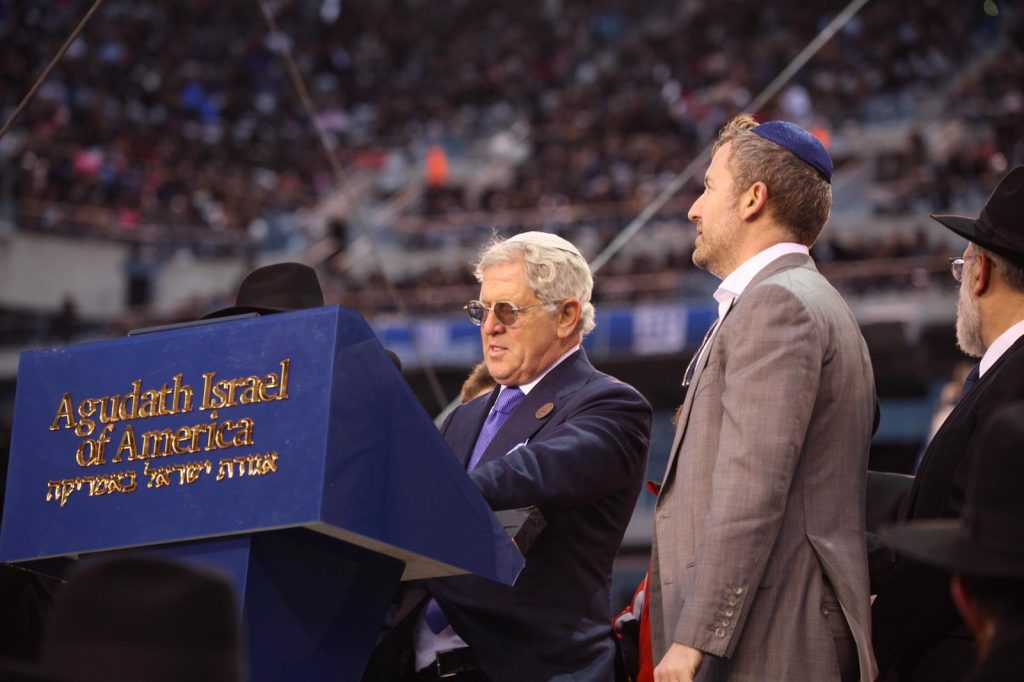
The cycle concludes with a celebration, Siyum HaShas, the completion of the six Orders of the Talmud. On January 1, 2020 over 90,000 people gathered at MetLife Stadium in New Jersey, including Touro member Jay Shottenstein, who recited the kaddish. Jay’s family underwrote the Schottenstein Talmud, published by Artscroll.


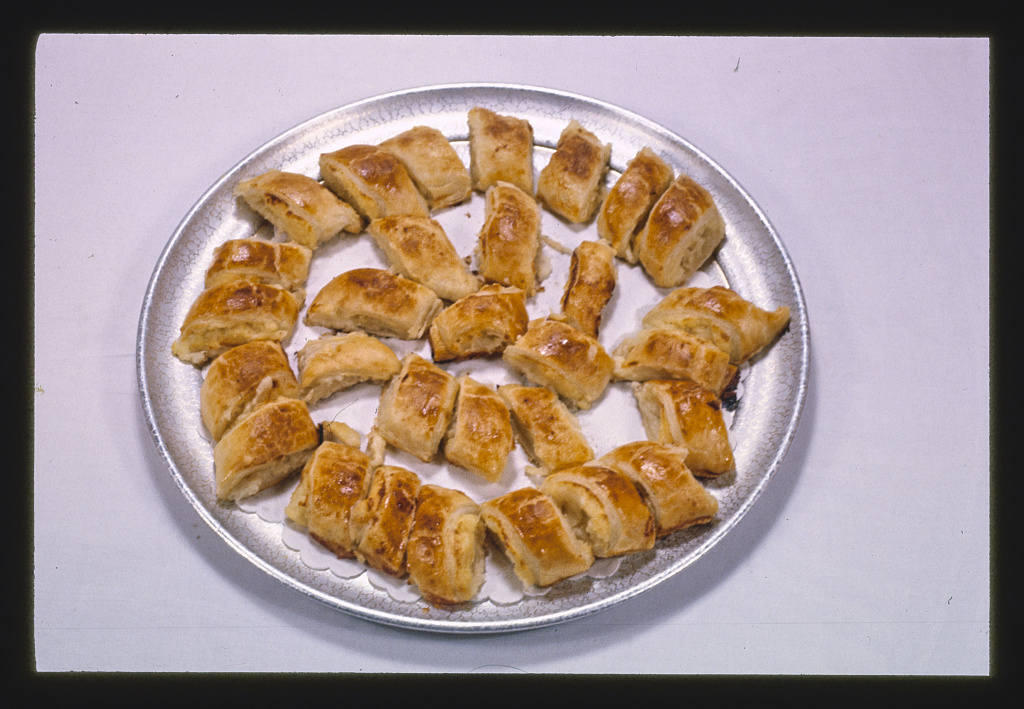
When ArtScroll was founded in the 1970s, David Nathanson told us that he helped to print its first books. The best part was when the founder of Artscroll, Rabbi Meir Zlotowitz, arrived from New York City with fresh knishes for all.


Shabbat Shalom and Happy Knishes from Jewish Newport!

Friday, January 24, 2020

Veggie Burgers and Defiance

Veggie Burgers and Defiance
At Jewish Newport
By Aaron Ginsburg
January 18, 2020
Edited by Beth Ginsburg Levine
also at

On Shabbat, Touro Synagogue in Newport, RI,  had a scholar in residence, Dr. Steven Schechter. Dr. Schechter is a surgeon and a teacher at Brown University. Friday night he discussed "The Efficacy of Prayer for the Terminally Ill."

On Saturday in his words of Torah, Rabbi Mandel spoke about defiance. 

‘The first thing a doctor is taught is - do no harm.

Pharoah and the midwives, Golden Haggadah
Spain ca. 1320, British Library 
“In this week's parsha, Parshat Shmot, Pharaoh tells the doctors to do harm. The midwives are commanded to kill the Jewish male children. They defy Pharaoh's orders and they don't throw the babies in the water. In addition, they feed the babies!

“The whole parsha is really about defiance in the face of injustice.

“There are many examples: Moshe's sister watches over him when he is in the water, to protect him; Moshe saves the Jewish slave as he was being beaten; Moshe rescues Yitro's daughters at the well.

“But defiance isn't easy.

“Even Moshe wanted to opt out. He told God, ‘Please find someone else.’ People don't like to leave their comfort zone to help others.

“Dr. Schechter related a story that happened to him. A medical resident was in jeopardy of being dismissed from the medical program because immigration papers were late. 

“The administrators said, ‘Well, that's one less resident.’

“Dr Schechter said, ‘No. We must help him.’ They contacted their elected officials to rescue this medical resident. 

“Let us learn from the parsha and from our scholar to be defiant in the face of injustice.”

At kiddush on Saturday, Dr. Schechter spoke about “Updates in Colorectal Cancer Risks and Screening Techniques.” This sounds dry, but it turned out to be very informative. 

Dr. Schechter spends a lot of his time performing colonoscopies, which is a screening test for bowel cancer. A screening test, he told us, must satisfy several requirements. Among those are that the screening be safe, be accurate, that the condition being tested have an effective treatment and that the screening test should be cost effective. All of these are not a given, and some screening tests may result in more harm than good. He acknowledged that there is a slight but definite risk; in the case of colonoscopies the risk is far outweighed by the amount of successful treatment.

An article in Wikipedia discusses the pitfalls of assuring that screening does less harm than good. Do false positives result in overtreatment? Since screenings are not mandatory, people with a family history may be more likely to be screened. So if women who screen for breast cancer are more likely to have the disease and die from it, this could make the test seem to cause more harm. If healthy people were more likely to take a test (healthy people might find it easier to travel to a test than unhealthy people, or healthy non-smokers might find it easier to go to a screening than non-healthy smokers, or healthy affluent people might be more likely to go than people who are not affluent.), it might mask any harm the screening might result in (by overtreatment). 

In answer to a question Dr. Schechter reviewed risk factors for bowel cancer. Smoking was one. Another was drinking more than 4 ounces of alcohol a day. Obesity was another factor. The doctor said he limits his drinking and overeating to one day a week, Shabbat. This is facilitated, he said, by the fact that his wife doesn’t cook during the week (and presumably neither does he). Veggie burgers are a staple most days! Looking at Dr. Schechter, I doubt he ever overeats!

Dr. Schechter mentioned observing a man cleaning the soot off his car while smoking. He was tempted to say, ‘Don’t you know what the soot from cigarettes does to your lungs? There is no rag that that can wipe that soot away.’ He said nothing, telling us that the reaction would be a refusal to listen. Changing behavior requires tact, time and counseling.

Some people are concerned about the anesthesia during a colonoscopy. Dr Schechter does not use any anesthesia when he has a colonoscopy himself. He said, ‘I have seen thousands of colonoscopies and know what to expect.’ He cautioned that the procedure is uncomfortable. The anesthesia itself is getting more refined, and the latest thing will enable patients to get up and on with their business right away rather than take it easy for several hours.

If a polyp is cancerous it is removed. This can be difficult since they grow out from the walls of the intestines. Since they are snipped off from the inside, there is a risk of a small puncture to the intestines. The latest technique is to have two surgeons. The second surgeon inserts a camera outside the colon, to keep an eye on what’s happening inside. 

Although Dr. Schechter didn’t avoid the technical details, his talk focused on public health. If words could cure, Dr. Steven Schechter knows what to say!

Shabbat Shalom from Jewish Newport!

https://www.myjewishlearning.com/article/birthings-and-beginnings/


Monday, December 30, 2019

Not By Might

Not By Might
At Jewish Newport
December 28, 2019
Edited by Beth Ginsburg Levine

Over 30 people enjoyed Shabbat services at Touro Synagogue yesterday. Mostly they were attentive to the Rabbi’s grandson, who joyfully romped around the synagogue. From a child’s eye view, the cushions on the bimah seats are a lot of fun to jump on and pull off. On the way to the ark to see the Torah, the benches in front of the bimah look like a fantastic playground, and much more fun than  the ark, with the opportunity to climb and hang out.


The rest of us had to follow the rules of decorum, shivering a bit in our seats.


The first reference to the miracle of the oil burning for 8 days is in the Talmud, written 600 years after the event. http://myjewishlearning.com/ speculates that it was mentioned to provide a supernatural basis for the holiday. Earlier sources for Hanukkah are the books of 1 and 2 Maccabees which are not in the tanakh  but are part of the apocrypha in the Christian bible, and Josephus.


In his words of Torah, Rabbi Marc Mandel told us that the holiday of Hanukkah snuck up on us, and that in the Talmud, the rabbis asked, “What is hanukkah?” It didn’t have biblical roots and was one of the last holidays added to the Jewish calendar. Purim, also a late addition, had the book of Esther. One of the discussions is about how we light the hanukkah menorah? Should we light all the candles on the first day, and then one less each day, or should we start with one candle, and add a candle each day? And since the miracle was that the candles lasted 7 additional days, why don’t we light 7 rather than 8 candles. In the Talmud, a discussion might extend over hundreds of years, so the differences about the ways of lighting the candles are described early on in the Mishnah, but the reasons are discussed much later.


The school of Shammai believed we should start with 8 candles to reflect the way the offerings in the Temple were made on Sukkot (Hanukkah is a delayed Sukkot).  The school if Hillel took the position that one should always add to a mitzvah, and increasing the number of lights was the logical position. As was usual, we follow Hillel. Rabbi Mandel added that we should always try to accomplish more in life and to constantly aim higher.


During Hanukkah we add al hanisim to the Amidah. The short paragraph carefully avoids describing the Hanukkah miracle. We also add full Hallel each day. The great miracle of hanukkah is that God enabled the Jews, under the leadership of the Maccabees, to throw off the yoke of the Syrian Greeks and to restore the defiled Temple. To emphazize the spiritual victory, the hanukkah haftarah (from Zechariah) ends with, “Not by might, nor by power, but by My spirit—said the LORD of Hosts.לֹ֤א בְחַ֙יִל֙ וְלֹ֣א בְכֹ֔חַ כִּ֣י אִם־בְּרוּחִ֔י אָמַ֖ר יְהוָ֥ה צְבָאֽוֹת” This is a warning against hero worship. In Judaism, we are each individually created in the image of God. We are responsible for our own behavior, and are each capable of being heroes. 


Sunday, November 24, 2019

And Sarah Laughed

And Sarah Laughed
At Jewish Newport
November 16, 2019
Thanks to Beth Ginsburg Levine for editing

Thanks to the Temple Israel Sharon MA Minyan and 
The New York Times 
For sharing their joke collections

Abraham Entertaining the Angels
Rembrandt van Rijn 1656
National Gallery of ArtNotice Sarah in the door,
laughing to herself.

What a difference a week makes! After the hullabaloo last week with the visit from Congregation Shearith Israel, an aufruf, and the chance to see three sets of Myer Myers rimonim, we were back to our seasonal routine. A few hardy tourists and congregants braved the cold temperature. 

But the parsha was far from routine. The Avot and Imahot (Patriarchs and Matriarchs) soap opera continued. Sarah laughed at the announcement that she would have a child, Lot’s sons-in-law (to their regret) shrugged off the bad news that the destruction of Sodom was imminent, Abimelach could hardly believe that Abraham passed his wife Sarah off as a sister, Sarah convinced Abraham to send Hagar and Ishmael away, and Abraham was ready to obey the divine command to sacrifice his son Isaac, who willingly cooperated. After reading the parsha, I was eager for some schnapps at Kiddush.

During his words of Torah, Touro Synagogue’s  Rabbi Marc Mandel spoke about laughter,

“Does G-d play favorites? We can see in this week’s Parsha that when she [Sarah] heard that she was going to have a child in a year, she laughed. God said, ‘Why are you laughing? Don't you trust me?’

“But Avraham also laughed in last week’s Parsha, and there was no divine anger. This question is addressed the Talmud on Masechet Megillah page 9A.

“In the year 304 before the common era, the Greek king Ptolemy gathered 70 Jewish scholars in 70 different rooms and asked them to translate the Torah. Miraculously they all gave the same translation with a few changes. One of the changes was that instead of saying that Sarah laughed inside her head they wrote, ‘And Sarah laughed among her relatives.’ Why did they make this change? ‘They made this change to distinguish between Sarah’s laughter, which God criticized, and Abraham’s laughter, to which no reaction is recorded. Based on the change, Sarah’s laughter was offensive because she voiced it to others.’ They thought that the king would say, ‘God plays favorites because he was angry with Sarah not Avraham.’

“Why do people laugh? It's an interesting subject. You don't have to learn how to laugh. We are born with the capacity to laugh. It occurs unconsciously. You don't decide to do it.

“What makes a person laugh? Plato said it was connected to the superiority theory. A person laughs when they feel superior to someone else, and that's why many comedians will put people down and get a lot of laughs. Emanuel Kant noticed that there are many jokes that are not part of the superiority theory.  According to Kant, people laugh because they're surprised when something unexpected happens. This could be the reason why Sarah laughed. She laughed because she was totally surprised by the idea that she was going to have a child at her age. 

‘Let's hope this year will be a year of laughter, not laughter at someone else’s expense but because of good things and good news. 

“Shabbat Shalom!” 

At kiddush, in addition to some schnapps, I got an earful from Mrs. Namel Chadash.

“Listen, mein kindele, ven Rebbe Mandel talks about laughter, it vould be nice if he vas funny. Doesn’t he know that people laugh when they hear other people laugh? Wus good are Plato and Kant if dey don’t know this?

“Our ima Sarah was in shock when the good news came from the ubershter. Fortunately, Avraham had some jokes ready. ‘Ven we tie the holy toira mit a belt, vos do we get?  A safer toira.’ G-d laughed, and so did Sarah!

“And in last week's parsha do you think that Avraham laughed when he got de same good news? No vay. He cried out, ‘G-d, give me a break.’ But his ashas chayel, Sarah, vas ready, ‘Ven you play tic tac toe mit de Almighty, who gets the x’s and who gets the o’s? Hashem oz li’amo yitan, G-d will give strength (oz) to his people.’ G-d, and Avraham, cracked up.

“Vile I’m giving advice, Mr. Aaron, I vant to tell you, ‘You are longvinded. Ven you write for Jewish Newport, you don’t need to include the kitchen sink.’ Which reminds me, ‘Vus is the best day of the week to cook? Vat, you don’t know? Fry-day, so you can get ready for Shabbas Choidosh!’

“A gute Shabbos.”

And Shabbat Shalom from Jewish Newport!

Monday, November 11, 2019

Pomegranates and People


Pomegranates and People
At Touro Synagogue
Thanks to Beth Ginsburg Levine for editing
On Friday, November 8, 2019, Congregation Shearith Israel CSI traveled from New York to Newport, Rhode Island for a three day Shabbaton with Congregation Jeshuat Israel CJI. The New Yorkers were led by Rabbi Meir Y. Soloveichik, Parnas Louis Solomon and Sexton Zachariah Edinger and were accompanied by executive director Barbara Reiss. Much work was done behind the scenes in New York and Newport to ensure a successful weekend.
The visitors were greeted by CJI’s Rabbi Marc Mandel and co-presidents Louise Ellen Teitz and Paul Tobak. Newport caterer Paula made sure we were well fed.
On Friday night Rabbi Soloveichik kicked things off with a description of one of his heroes, Adolphus Simeon Solomons. His stationery store in Washington, D.C., supplied paper to the government. Solomons was friendly with Presidents Lincoln, Grant and Arthur. Grant offered him the opportunity to become governor of Washington, D.C. He declined because he thought the responsibility would interfere with his observance of Shabbos.
When Lincoln wrote the Gettysburg address he made two copies; he made three additional handwritten copies for people who had requested them. Two copies bear the watermark of Solomons’ stationery store.
The store also had a photography studio. They had not managed to get a good photograph of President Lincoln so Adolphus asked him to visit. It wasn't easy in those days to take a photograph. During his visit Lincoln regaled those present with jokes. The photographer was not happy with the results so Lincoln suggested that Adolphus tell jokes instead. The result was the last picture taken before Lincoln’s assassination. Jews in the United States were among the first to formally mourn Lincoln, who died on Saturday morning, April 15, 1865. Jews learned of it on their way to synagogue, and recited Kaddish for Lincoln that morning.
At Friday night dinner the highlight was Hungarian strudel prepared by Paula, which got rave reviews. I was sitting next to William Bernstein from CSI who said, “That was the best Hungarian strudel I have ever had.” His wife commented, “What about my strudel?” Mr. Bernstein told me his mother was born in Zabludow,Poland, and that he went there in 1995. I visited Zabludow in 2018 with a friend, Alan Kaul, who had a grandparent born there. Only one or two matzevahs remain in its Jewish cemetery. Before WWII, Zabladow had a famous wooden synagogue.

I also met Shlomit. When I mentioned that I visited Poltava, Ukraine. She said, “My grandfather, Moshe Nachum Jerusalimski , a rabbi in Kielce, Poland was buried in Churol Poltava.” Churol is now Khorol, Ukraine. I drove through Khorol in 2018 on my way to Poltava from Kyiv. Vitaliy Buryak, who was my guide when I visited Gorodishche, Ukraine, where my grandfather Jacob Pokross was born, wrote about Khorol at http://jewua.org/khorol/. He mentioned a son of Rabbi Jerusalimski, David Moiseyevich Yerusalimskiy, who was a leader in a prayer house.  


Rabbi Moshe Jerusalijski was very well respected In Kielce, as told In the Kielce Yizkor book. He worked hard to defend the Jews community from pogroms instigated anti-semitic rumors during the turmoil of World War I in 1914 and 1915. The Yizkor mentions that he moved to Khorol to join his family, and includes the rabbi’s diary from 1914-15. After World War II, forty-two Jews and two non-jews were murdered in a notorious pogrom in Kielce on July 4, 1946. 

Louise Ellen Teitz and Rabbi Mandel warmly welcomed our guests, and Parnas Louis Solomon responded in kind.
On Saturday we davened in Sephardic fashion with siddurim brought by CSI, led by Sexton Zachariah Edinger. Zachariah pointed out that the tunes used were similar to the tunes used in the 18th century at CSI and CJI. Among the differences from an Ashkenazic service were that the Torah was raised at the beginning of the Torah service and the musaf amidah was read by the leader with the congregation following along and not repeated.
During the service, a family from Illinois celebrated an aufruf. Candy rained down on the groom, and friends and congregants celebrated by dancing on the bimah. This family sponsored a congregational kiddush at the Levi Gale House. Because the Levi Gale House was in use, the Shabbaton lunch was at the Newport Historical Society next-door in the Seventh Day Baptist Meeting House (1730) in the rear of the building.
Society director Ruth S. Taylor told us that the chapel was moved from the corner of Touro and Spring Streets in 1884. It's one of at least three buildings around Touro Synagogue that have been relocated. The Levi Gale House and the house across from it at the corner of Division and Touro Streets were also moved. If they had all been moved on the same day that would’ve caused quite a traffic jam! On the wall was a clock made for the church in 1832 by William Claggett. Another Claggett clock is in the Redwood Library, and one of the Claggett family homes is on Bridge St. Rabbi Mandel briefly spoke about the Touro family, America’s first philanthropists.
Saturday afternoon we enjoyed seudah shelishit (third meal) at 4 PM. Many of us had to loosen our belts before we proceeded across the street for the maariv service.
At 7 PM we attended a discussion about three pairs of Myer Myers rimonim on display. (Rimonim means pomegranates.) Two of the pairs are used at CJI and one at CSI. They are rarely used becausethey are too precious and fragile for regular use. Holly Snyder, Curator, American Historical Collections and Lincoln/Hay Collections, Brown University, moderated. The panel included frequent Touro visitor Professor Jonathan Sarna, Brandeis University, Marietta Cambareri, Senior Curator of European Sculpture, Jetskalina H. Phillips Curator of Judaica Art of Europe, and Simona Di Nepi, Charles and Lynn Schusterman Curator of Judaica Art of Europe, both of the Museum of Fine Arts, Boston.
There were many observations and speculations about the rimonim because there is a lack of documentation about them and about their creator Myer Myers.
Professor Sarna told us that Meyr Meyers was probably of Ashkenazic origin. This led to a discussion of the composition of early American congregations. Although they followed the Sephardic ritual their membership was mixed and by no means totally Sephardic. In Philadelphia, Bernard Gratz was the parnas (president) of Mikveh Israel when their first building was built in the 1770s. The decision was made to follow the Sephardic ritual, probably because that was the ritual that was used in America at the time. This continued until the first Ashkenazic congregation was founded in the United States which was not until the late 1780s.
Jonathan Sarna speculated that in colonial America this pragmatic solution was possible because there were no rabbis in America. The rabbis present remained silent!
Sarna also mentioned that Isaac Touro, CJI’s spiritual leader when the synagogue was built, was a loyalist during the American Revolution. America was very divided about independence, and many people were neutral. Loyalists were persecuted and many left the country including Isaac Touro, who returned to Jamaica, where he died. After America gained its independence, loyalists who remained did their best to distance themselves from that part of their past. CJI member Naftali Hart was also a loyalist. He was killed during an American raid on British-occupied Long Island.
The speakers agreed that Touro Synagogue was a unique building which broke new ground in both American and Jewish American history.
Philadelphia, Newport and New York all had rimonim made by Myer Myers. This reflects how closely the congregations kept in touch. Myer Myers also had family relations both in Newport and Philadelphia.
After morning services on Sunday many of the CSIers visited the Breakers before heading home.
Bringing together the rimonim was a remarkable and symbolic feat. The important part of the Shabbaton was bringing together two congregations.
We look forward to continued exchange visits as CSI and CJI work together in harmony to preserve our mutual history and to assure our future.