Friday, November 30, 2018

It’s all about giving thanks


It’s all about giving thanks
At Touro Synagogue

November 24, 2018

ALSO ON FACEBOOK


I hope you enjoyed a full plate on Thanksgiving. I was grateful to be with my sister, Beth Levine, and with friends and family. The plates were my mother’s. Does anyone recognize the dish’s pattern?

A long weekend is always big deal. During Shabbat at Touro Synagogue we were joined by several regular Thanksgiving visitors and itinerant members including David Jolley, who took a break from his musical duties. Was our davening a little more tuneful because of David’s presence?

A group of young women came from the NY area for the weekend (their rental was a long walk from the shul). Professor Ronald Birke, who teaches Chemistry and Biochemistry at CUNY (The City University of New York) joined us with his family. His sons stood during his aliyah.

We were also joined by a former dean at Yeshiva University, Rabbi Dr. Michael Hecht. Rabbi Marc Mandel is one of Rabbi Hecht’s students. I told Marc Ladin that at the end of the service I was going to ask Rabbi Hecht if Rabbi Mandel was a good student. Marc is not one to beat around the bush. He walked over to the Rabbi and asked! Rabbi Hecht was joined by his family, including his son-in-law, Aaron J. Koller who teaches Near Eastern and Jewish Studies at Yeshiva University.

Rabbi Mandel introduced the visitors, and incorporated them into his sermon. He held up a book by Rabbi Hecht,  Have You Ever Asked Yourself These Questions? A Guide to Traditional Jewish Thought, which he had studied carefully, “It is a book that deals with important questions about the interplay of Judaism with science and faith.”  

Torah Umadda תּוֹרָה וּמַדָּע, Torah and Science, is the motto of Yeshiva University. According to Rabbi Norman Lamm, "Torah, faith, religious learning on one side and Madda, science, worldly knowledge on the other, together offer us a more over-arching and truer vision than either one set alone. Each set gives one view of the Creator as well as of His creation, and the other a different perspective that may not agree at all with the first ... Each alone is true, but only partially true; both together present the possibility of a larger truth.” That sounds good, but the devil is in the details!

Rabbi Mandel attended Rabbi Hecht’s Talmud class, which covered  the third perek of Bava Batra, and in the following year the second perek of Kiddushin.

Rabbi Mandel noted that in the parsha, Jacob thanked the Holy One for blessings that he was not expecting, and that Jacob was severely wounded when he fought with the angel, but carried on. The Rabbi concluded by saying, “In our life journey, we need to be thankful to our mentors.” 

We also need to be thankful to our cooks!


Shabbat Shalom from Jewish Newport!

Friday, November 16, 2018

FATHER KNOWS BEST

Father Knows Best
AT TOURO SYNAGOGUE
November 10, 2018
ALSO ON FACEBOOK

Shabbat last week was chilly. The temperature was 45 degrees both inside and outside the shul. Outside it was natural difficulties and inside it was technical difficulties. The congregation is experienced, and dressed appropriately for both the inside and outside climate. I noticed that our service, which is known for its fast pace, ended earlier than normal.

The Parsha, Toledot, is about family matters, especially about Jacob and Esau. Esau is a described as a a hunter and a man of the fields, a hunter-gatherer, while Jacob is not. Not only is a clash of two individuals, but two life styles. When they were blessed by their father Isaac, Jacob received land, while Esau was told he would live by the sword.

Rabbi Marc Mandel compared our ancestors to a TV show, Father Knows Best.

“Do you remember the popular TV show Father Knows Best? It starred Robert Young and Jane Wyatt. Robert Young was the father who always knew what was best. Well, this week’s parsha could be called Mother Knows Best

“In this week’s parsha it is not the father who is the star of the show; it is the mother. The story is well known-Rivka wants her son Yaakov to receive the blessings of Yitzhak-so she orchestrates a whole plan for Yaakov to dress as Esau and bring Yitzhak a delicious meal before Esau does it to receive the bracha. The question is, does Rivka really know best? Was this a good idea?


“Didn’t she put Yaakov’s life in danger? Is this really a case of mother knows best? Or is it really father knows best and Yaakov should have realized the danger of this plan.

“The Torah teaches in Proverbs 1:18, שְׁמַ֣ע בְּ֭נִי מוּסַ֣ר אָבִ֑יךָ וְאַל־תִּ֝טֹּ֗שׁ תּוֹרַ֥ת אִמֶּֽךָ׃. 'Listen my child to the advice of your father and do not abandon the torah of your mother.' In this case Yaakov does listen to the Torah of his mother and it changes the course of his life.  Yes, he does receive the blessing, but he’s also turned into a fugitive-worrying his whole life that his brother will kill him.

“Yaakov doesn't seem to harbor any anger towards his mother for changing his life so radically: He is willing to follow all her advice and take the consequences. He believed sincerely that mother knows best.

“We pray that as we go on our life’s journey that we will make the right decisions and that Hashem will bless us with an abundance of berachot.”

The Anderson Family source Wikimedia
Father Knows Best, a show about the Anderson family, was created by its star, Robert Young. In the TV series, sometimes father did know best, but often it was mother or one of the children. 

The Anderson house pictured in the credits was used in Dennis the Menace, I Dream of Jeannie. It was built in 1941 for Blondie movies, and also was used in Hazel, Bewitched, The Monkees, and The Partridge Family.

The Hollywood set required a lot of remodeling to make it work for decades. Fortunately, Touro Synagogue only had one remodel, of its eastern wall, in the early 1800s. 

Shabbat Shalom from Jewish Newport!


Friday, November 9, 2018

THE STAGES OF GRIEF

The Stages of Grief
AT TOURO SYNAGOGUE
ALSO ON FACEBOOK


Dear Friends,

A week ago we were in shock after the mass shooting at the Tree of Life Congregation in Pittsburgh.  This one struck close to home. I could not help but think that it could have happened to me at my synagogue.

At Touro Synagogue on Shabbat, Rabbi Marc Mandel observed how people reacted. Some are shocked, horrified, and can’t believe it.

Some think politically about the government and gun control, for example.

Others focus on what could have been done differently. Was there enough security, armed guards, an active shooter protocol?

Some of us are overwhelmed with sadness.

And then there are those who don’t have much to say.

“These are all natural reactions,” Rabbi Mandel said. “Elizabeth Kübler-Ross gives us a framework to helps us process this event, the five stages of grief, denial, anger, bargaining, depression, and acceptance.”

“Each one of those stages is normal. Sometimes we need to slow down and take a deep breath.”

There is an interesting article on Wikipedia at https://en.wikipedia.org/wiki/Kübler-Ross_model about the Kübler-Ross model.  The five stages were meant to describe the reaction of dying people to their situation, and were subsequently expanded to almost any loss. Criticisms involve the lack of evidence that these stages exist, and that a principal response to grief is resilience. 

So if you didn’t go through the Kübler-Ross stages, that’s normal too! 


Shabbat Shalom from Jewish Newport!


Friday, October 26, 2018

Soldiers and Stamps


Soldiers and Stamps
At Touro Synagogue
also on facebook


It was a busy week.

On Friday evening, October 19, I attended a community dinner at Young Israel of Sharon.  At the dinner were fifteen Israeli army reservists. They were visiting for a week of intensive group therapy with two psychologists, 40 hours. The visit was sponsored by the local Jewish community and was part of the Peace of Mind program https://metiv.org/peace-of-mind/ for soldiers who were on the front line, in Lebanon, Gaza, and the West bank.  The program is designed to help soldiers to talk about things that most soldiers don’t discuss.

Rabbi Noah Chesis introduced the group. He referred to the parsha, which said that before the flood, “Noah was righteous man.” After the flood Noah planted grapes, made wine, and became אִ֣ישׁ הָֽאֲדָמָ֑ה…a man of the earth.  Noah underwent a lot of stress. He had seen almost all leaving creatures killed. We all handle stress in different ways, ways that we are not always aware of. If, Rabbi Chesis said, there had been a Peace of Mind program, Noah might have avoided becoming a man of the earth.

Rabbi Chesis knows Rabbi Mandel. They are in the same cohort for continuing education at Yeshiva University. 

On Shabbat at Touro Synagogue, we had the usual panoply of locals and visitors. Rabbi Marc Mandel told us the Noah was a complex individual. Was he good or bad? A little bit of both. That’s why, he said, that we read the Tanach and Shakespeare, “Because they both portray people as complex individuals.”


On Tuesday, October 16, I attended the Hanukkah Stamp dedication in Newport.  It was a good day for Touro synagogue, and for the United States Postal Service. Actually for two postal services! Israel used the same design! 

The stamp was based on a paper cut by Tamara Fishman. I met her and the post office employee who was given the task of finding an artist. I was very curious to learn how an artist gets a job and how the post office chooses a venue. Watch the video at https://youtu.be/37G5zY2cZNI to find out. 

One visitor had some souvenirs from Touro.  They probably came from the library of Rabbi Kirshblum. However, there is more than one rabbi with that last name. A book about Touro Synagogue is with the complements of B. C. Friedman, President of the Society of Friends of Touro Synagogue, dated 1951! 

Shabbat Shalom from Jewish Newport!

#HanukkahStamps


Friday, October 5, 2018

A Blast From The Past

A Blast From The Past
At Touro Synagogue
Shabbat Chol Hamoed Sukkot and Shemini Atzeret 2018
also on facebook


Talk about a blast from the past!  Last Saturday Rabbi Marc Mandel had a little surprise. One of the visitors was a bunkmate of Rabbi Mandel at Camp HILI White Lake. What was life like at camp? View some pictures


In 1961 Howard Rosenman was a waiter at Camp HILI. He and his friends liked to visit nearby Grossingers. One day Rosenman ‘borrowed’ a picture of  Elizabeth Taylor- Eddie Fisher-Jennie Grossinger that was hanging on Grossingers’ wall, and, as he recounted in an article in the Los Angeles Times, it still hangs on the wall of his home in West Hollywood! You guessed it. Rosenman became a producer and motion picture executive.


We almost had an off-day, sermon wise, but not quite. Rabbi Mandel discussed the Torah reading for Shabbat Chol Hamoed Sukkot. Why was the story of the Golden Calf featured? It seems a bit discordant for a joyous holiday. Rabbi Mandel told us that the Children of Israel were sincere, and the calf idea was not totally off base. After all, Aaron, high priest and brother of Moses, went along with the idea.


We know that it was a bad idea, and it became clear to the participants when Moses lost his temper and smashed the Shenei Luchot HaBerit, the two tablets of the Covenant. We learn something that should always be on our minds. The difference between the right path and the wrong path is not large, and it is easy to make the wrong choice.


On Monday, Shemini Atzeret, Rabbi Mandel told us that the message of Sukkot is embodied in the Sukkah. A Sukkah is a temporary dwelling, built to last only a short time. Dwelling in a Sukkah, which goes back to the Exodus and the trip through Sinai, was a short term expedient to provide a minimum of comfort.  And that is the message of Sukkot, Rabbi Mandel said. Sometimes, although we would rather stay under a solid roof, we need to go out of our comfort zones to accomplish things.


Two of our visitors, Rabbi Mandel observed, have also gone out of their comfort zones. Rabbi Harold Bernstein has had a long career as an attorney in Stamford, Connecticut. Now he is also dean of a jewish school in Stamford, the k-8 Bi-Cultural Day School.


Rabbi Bernstein also happens to be a cousin of Senator Joe Lieberman. In 2000, when Marsha Greenberg of Stamford made a “GORE-LIEBERMAN 2000” kippah for Lieberman when Al Gore chose him as a vice-presidential running mate, she got it to the Senator by giving it to her friend, Rabbi Bernstein. There was a bit of a hang-up. When Al Gore saw the kippah he appropriated it, and another one was made Senator Lieberman. I guess it was a double-kippah ceremony!


Professor David Machlis has taught finance and economics at Adelphi University for many years. His classes have no more than 35 students and he knows his students by name. He even gives the students his cell phone number so they can ask him questions about the course. At ratemyprofessor.com 100% of the students say that they would take the course again!


Dr. Machlis is not content to be a professor. He has gone out of his comfort zone repeatedly.


In 1982 during the Reagan administration, Machlis was appointed to the President's Council on Bilingual Education. “A major goal for myself here,” he said, “is to show the economic value of bilingual education both to the individual and to society. As you know, the President's policies today are seeking to cut back on so many social programs and educational programs, and bilingual education is one of the areas where they're cutting. And I am currently involved in developing research material that will show that expenditures by the Federal Government for bilingual education are perfectly compatible with supply-side economics, or Reaganomics.”


In 1988, Professor Machlis was asked to become the vice chairman of the International March of the Living before the first annual march. The march combines a visit to Auschwitz followed by a visit to Israel during Israeli memorial and independence days.


His role is not just administrative. For example, he came up with the idea of having concentration camp liberators accompany the teenage groups. He has also opened the March of the Living to non-Jews. “We never anticipated,” he said, “the tremendous impact it [the March of the Living] would have on Jewish identity, bonding with Israel, and commitment to Jewish heritage.”


May you have a Gut Shabbos both in and out of your comfort zone!

Sunday, September 23, 2018

The Buildings of Civilizations

The Buildings of Civilizations
At Touro Synagogue 
Rosh Hashanah Second Day, Kol Nidre, Yom Kippur
September 2018
also on facebook

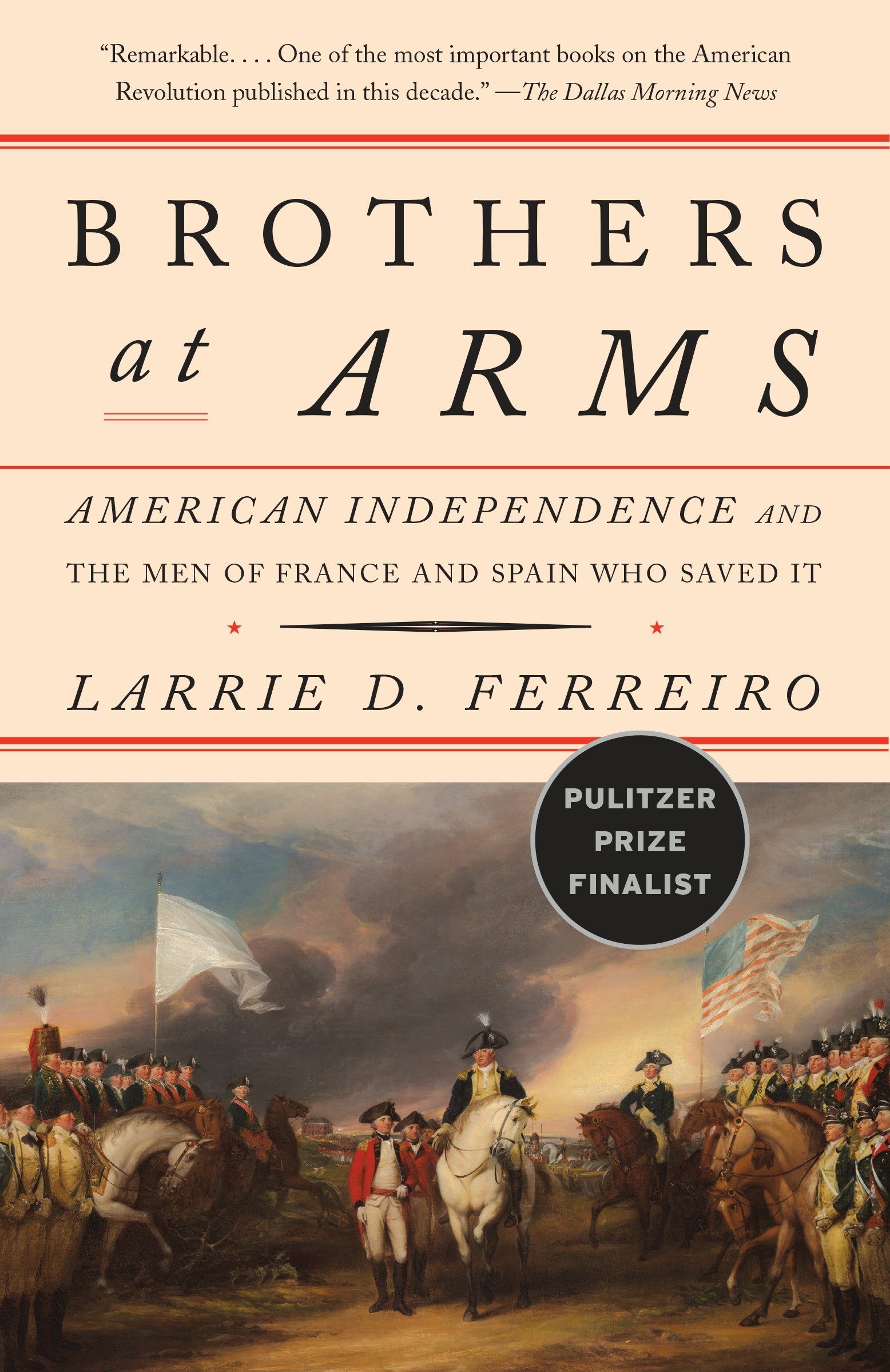
On Yom Kippur, I sat in my chair at Touro Synagogue in Newport, Rhode Island,  anticipating a beautiful and fulfilling evening. Next to me sat Larrie D. Ferreiro of Washington, DC, who was attending a conference at Salve. He teaches history and engineering at George Mason and several other schools in Washington DC.

I asked him to explain the combination of these disciplines. He said,

“Humans have been engineering large, complex structures as long as we have had civilizations.   Everywhere around the world, every time humans have created complex social systems, they have also created large complex structures.”

His examples include many of the structures in history such as the Pyramids, Angor Watt, and even a ship of the line which, with more than 10,000 parts, he calls one of  the “most complex machines built before the industrial revolution.”  

In a recent book, "Brothers at Arms,” he treats the American Revolution in a similar way. Although Americans see the revolution as a local event, it was much more. France and Spain were seething in anger at the results of the previous war, and the American Revolution became part of a much larger war that involved many of the major players in Europe in an 18th century world war.  

The American thinkers who ran things from Philadelphia realized that America could not succeed without (French) help…and the help in arms, men and money was very generous. Although America liked to credit Benjamin Franklin for his diplomatic success, in fact the French were very eager to assist. 

Newport had a role in the victory at Yorktown, Dr. Ferreiro points out. “American independence was saved by France and Spain — and the Rochambeau expedition at Newport was a major part of that.” The victory at Yorktown began with the march of the French Army from Newport southwards.

The French always deferred to Washington, who in turn consulted his advisors, including the French. The French suggested that with the help of the French Fleet, it would be easier to win a victory at Yorktown than to retake New York City, which was Washington’s preference. With some well placed leaks, Washington fooled the English into believing New York was the target, and moved much of the French and American forces to Virginia. Many of the soldiers at Yorktown, in each of the three armies, were Germans, either soldiers for hire, volunteers or immigrants to America.

As I contemplated our candle-lit shul, I thought how the building was a cooperative effort that involved a lot of moving parts, something like a ship. Some of the push to hire a rabbi, Isaac Touro, and build the synagogue might have been from Aaron Lopez, a recent arrival from Lisbon. The architect, Peter Harrison, used English architectural books for the outline, and information about a synagogue from the Jews of Newport for the details. The bricks were imported from England.

Our current congregation reflects its diverse origin.  In Rabbi Marc Mandel’s various holiday sermons, he addressed us as individuals and as a congregation. He challenged us to build ourselves into better human beings, on both an individual and community level.

On the second day of of Rosh Hashanah, Rabbi Mandel spoke about וּתְשׁוּבָה וּתְפִלָּה וּצְדָקָה “repentance prayer and charity will lead us to a better year.”

“The High Holiday prayer book, the מחזור,” he said, “doesn’t give us a tool kit for how to achieve these three goals. How should we do it and how should we not do it?”

Rabbi Mandel cautioned us against multi-tasking. “One of the most important words in our tradition is שְׁמַע- to listen. If we are multitasking, how can we listen? 

"Therefore this year–when we focus on תְשׁוּבָה תְפִלָּה צְדָקָה when we focus on repentance prayer and charity–let’s focus on each one separately–so that we can concentrate on each goal as we pray for a year of spiritual growth and success.” 

“But repentance, prayer and righteousness avert the severity of the decree.” is from Unetanneh Tokef. Although the machzor attributes it to Rabbi Amnon of Mainz in the 1100s, his existence is doubtful, and it was probably composed in Palestine between 500 and 600. The phrase is based on the Yerushalmi Talmud, which says that the decree will be annulled. 

As Rabbi David Golinkin explained in his paraphrase of Rabbi Marc Saperstein, “In other words, the Yerushalmi (and the Bavli too) had a very simple yet problematic theology: if you do X, Y, and Z you will annul the severe decree. The author of Unetaneh Tokef, who lived in the Land of Israel at the time of the Yerushalmi , did not agree with that theology. In his opinion, repentance, prayer and tzedakah cannot annul or eliminate evil, but by searching our souls through teshuvah, praying to God through tefillah and helping other people through tzedakah we help ourselves and others cope with evil and ‘make the evil of the decree pass.’ This is the peshat (simple meaning) of Unetane Tokef which, I believe, most modern Jews can relate to.”

At Kol Nidre, Rabbi Mandel said that perhaps the trap door on Touro’s Bimah was a message from the builders of Touro to future congregants,“Perhaps the people who built the synagogue were doing it for teaching, but for future generations.

“They were telling future members of Touro Synagogue, ‘Don’t become trapped by your own mistakes and misjudgments. Think courageously and boldly like we did.’”

Before Yizkor on Wednesday, Rabbi Mandel pointed to Jonah, who did what we all would like to do in the face of something unpleasant, run away. “God tells him to go to Nineveh and tell the people everything you’re doing is wrong. And Jonah says, ‘Not me. I’m not doing that.’ So he hops on a cruise ship, the best place in the world to run away from your problems and forget about everything.”

In the face of a hurricane, Jonah and we are snapped back into reality. There are forces in the world bigger that us that we can’t hide from.

Death is one of those forces.

As we think of our loved ones who are gone, Rabbi Mandel said, “It’s not too late for us to learn from them. Their souls will be alive if we take their sparks and live as if they are very much a part of us.

“We can inject anything they stood for into our lives and by doing so will unite with them once again, and they are still our mentors and our partners as we continue on our own journeys and once again learn all about what is right and wrong. Gamar Chatima Tova!”

Now it is time to build our sukkahs, ourselves, and our society. 


Friday, September 14, 2018

Apples and Apple

Apples and Apple
At Touro Synagogue
Rosh Hashanah First Day
September 10, 2018


On the first day of Rosh Hashanah at Touro Synagogue in Newport, Rhode Island, things were just right. The weather cooperated, there was a good crowd, yet it was not crowded, Rabbi Marc Mandel and Saul Woythaler raised us up during shofarot, we delighted to the davening of Dr. James Herstoff, Dr. Henry Spencer and Rabbi Mandel, the layning of Sam Spencer and our co-presidents, Professor Louise Ellen Teitz and Paul Tobak, sponsored kiddush lunch. We were happy in our seats, thanks to the work of Renee Talewsky.
After greeting us, Rabbi Marc Mandel spoke about Rosh Hashanah and apples,

“There is a custom on Rosh Hashanah to eat apples and honey. The Jewish people are compared to an apple, as it says in the Song of Songs - as the apple tree is unique among the trees, so is my beloved Israel.

“Recently, the company Apple achieved something never accomplished in American history. It became the first company to be valued at $1 trillion. With one trillion dollars, Apple could buy one billion people a $999 iPhone X and still have a billion dollars left in the bank.

“Even more remarkable, in 1997, Apple stood on the brink of bankruptcy and was just a short step from going broke. Steve Jobs revealed that the company was 90 days away from total insolvency.

“Steve Jobs started Apple in his parents’ garage when he was 20 years old and in 10 years Apple grew from two founders into a company with over 4000 employees.

“After he turned 30, Jobs was fired from the company that he himself started and he endured a public shaming, and what seemed then like the end of his career. Steve Jobs said the following to the graduates of Stanford University, ‘I didn’t see it then, but it turned out that getting fired from Apple was the best thing that could’ve ever happened to me. The business of being successful was replaced by the lightness of being a beginner again, less sure about everything. It helped me to enter one of the most creative times of my life.’

“Several years later, Jobs returned to Apple and turned it into the giant it would become by way of his genius. He understood that setbacks were stepping stones to greatness. Downfalls are not permanent. Failures are trials meant to make us stronger. The first tablets of the Ten Commandments were smashed – it was the second set which remained.

“As we celebrate the new year Apple can be a lesson to us - and an inspiration to us – if we face challenges that seem insurmountable, just remember how close Apple was to being broken, and today it is the most successful company in American history.

“With this New Year, let us pray that our dreams will bring us great success when we are challenged with difficult days.”

Steve Jobs’ 2005 commencement address at Stanford is one of the great speeches. He told three short stories from his life.

Jobs dropped out of college after realizing that he was wasting his parents’ savings...but then studied things that interested him such as calligraphy. It was of no use to him until the creation of the first Macintosh computer. He was able to ensure that both the fonts and the computer were esthetically pleasing.

His second story was about how being fired was good for him. At first he was in shock.  “But something slowly began to dawn on me — I still loved what I did. The turn of events at Apple had not changed that one bit. I had been rejected, but I was still in love. And so I decided to start over.”

Finally he spoke about death, “When I was 17, I read a quote that went something like: ‘If you live each day as if it was your last, someday you’ll most certainly be right.’ It made an impression on me, and since then, for the past 33 years, I have looked in the mirror every morning and asked myself: ‘If today were the last day of my life, would I want to do what I am about to do today?’ And whenever the answer has been ‘No’ for too many days in a row, I know I need to change something.”

He ended with a quote from the Whole Earth Catalog, “Stay Hungry, Stay Foolish.” If you are satisfied, you will not strive to improve. If you think you are smart, you will not push the envelope because you know better.

Shanah Tovah Umetukah from Jewish Newport.

You may read Jobs’ speech at https://news.stanford.edu/2005/06/14/jobs-061505/

@tourosynagoguenewport @jewishnewportri