Friday, November 9, 2018

THE STAGES OF GRIEF

The Stages of Grief
AT TOURO SYNAGOGUE
ALSO ON FACEBOOK


Dear Friends,

A week ago we were in shock after the mass shooting at the Tree of Life Congregation in Pittsburgh.  This one struck close to home. I could not help but think that it could have happened to me at my synagogue.

At Touro Synagogue on Shabbat, Rabbi Marc Mandel observed how people reacted. Some are shocked, horrified, and can’t believe it.

Some think politically about the government and gun control, for example.

Others focus on what could have been done differently. Was there enough security, armed guards, an active shooter protocol?

Some of us are overwhelmed with sadness.

And then there are those who don’t have much to say.

“These are all natural reactions,” Rabbi Mandel said. “Elizabeth Kübler-Ross gives us a framework to helps us process this event, the five stages of grief, denial, anger, bargaining, depression, and acceptance.”

“Each one of those stages is normal. Sometimes we need to slow down and take a deep breath.”

There is an interesting article on Wikipedia at https://en.wikipedia.org/wiki/Kübler-Ross_model about the Kübler-Ross model.  The five stages were meant to describe the reaction of dying people to their situation, and were subsequently expanded to almost any loss. Criticisms involve the lack of evidence that these stages exist, and that a principal response to grief is resilience. 

So if you didn’t go through the Kübler-Ross stages, that’s normal too! 


Shabbat Shalom from Jewish Newport!


Friday, October 26, 2018

Soldiers and Stamps


Soldiers and Stamps
At Touro Synagogue
also on facebook


It was a busy week.

On Friday evening, October 19, I attended a community dinner at Young Israel of Sharon.  At the dinner were fifteen Israeli army reservists. They were visiting for a week of intensive group therapy with two psychologists, 40 hours. The visit was sponsored by the local Jewish community and was part of the Peace of Mind program https://metiv.org/peace-of-mind/ for soldiers who were on the front line, in Lebanon, Gaza, and the West bank.  The program is designed to help soldiers to talk about things that most soldiers don’t discuss.

Rabbi Noah Chesis introduced the group. He referred to the parsha, which said that before the flood, “Noah was righteous man.” After the flood Noah planted grapes, made wine, and became אִ֣ישׁ הָֽאֲדָמָ֑ה…a man of the earth.  Noah underwent a lot of stress. He had seen almost all leaving creatures killed. We all handle stress in different ways, ways that we are not always aware of. If, Rabbi Chesis said, there had been a Peace of Mind program, Noah might have avoided becoming a man of the earth.

Rabbi Chesis knows Rabbi Mandel. They are in the same cohort for continuing education at Yeshiva University. 

On Shabbat at Touro Synagogue, we had the usual panoply of locals and visitors. Rabbi Marc Mandel told us the Noah was a complex individual. Was he good or bad? A little bit of both. That’s why, he said, that we read the Tanach and Shakespeare, “Because they both portray people as complex individuals.”


On Tuesday, October 16, I attended the Hanukkah Stamp dedication in Newport.  It was a good day for Touro synagogue, and for the United States Postal Service. Actually for two postal services! Israel used the same design! 

The stamp was based on a paper cut by Tamara Fishman. I met her and the post office employee who was given the task of finding an artist. I was very curious to learn how an artist gets a job and how the post office chooses a venue. Watch the video at https://youtu.be/37G5zY2cZNI to find out. 

One visitor had some souvenirs from Touro.  They probably came from the library of Rabbi Kirshblum. However, there is more than one rabbi with that last name. A book about Touro Synagogue is with the complements of B. C. Friedman, President of the Society of Friends of Touro Synagogue, dated 1951! 

Shabbat Shalom from Jewish Newport!

#HanukkahStamps


Friday, October 5, 2018

A Blast From The Past

A Blast From The Past
At Touro Synagogue
Shabbat Chol Hamoed Sukkot and Shemini Atzeret 2018
also on facebook


Talk about a blast from the past!  Last Saturday Rabbi Marc Mandel had a little surprise. One of the visitors was a bunkmate of Rabbi Mandel at Camp HILI White Lake. What was life like at camp? View some pictures


In 1961 Howard Rosenman was a waiter at Camp HILI. He and his friends liked to visit nearby Grossingers. One day Rosenman ‘borrowed’ a picture of  Elizabeth Taylor- Eddie Fisher-Jennie Grossinger that was hanging on Grossingers’ wall, and, as he recounted in an article in the Los Angeles Times, it still hangs on the wall of his home in West Hollywood! You guessed it. Rosenman became a producer and motion picture executive.


We almost had an off-day, sermon wise, but not quite. Rabbi Mandel discussed the Torah reading for Shabbat Chol Hamoed Sukkot. Why was the story of the Golden Calf featured? It seems a bit discordant for a joyous holiday. Rabbi Mandel told us that the Children of Israel were sincere, and the calf idea was not totally off base. After all, Aaron, high priest and brother of Moses, went along with the idea.


We know that it was a bad idea, and it became clear to the participants when Moses lost his temper and smashed the Shenei Luchot HaBerit, the two tablets of the Covenant. We learn something that should always be on our minds. The difference between the right path and the wrong path is not large, and it is easy to make the wrong choice.


On Monday, Shemini Atzeret, Rabbi Mandel told us that the message of Sukkot is embodied in the Sukkah. A Sukkah is a temporary dwelling, built to last only a short time. Dwelling in a Sukkah, which goes back to the Exodus and the trip through Sinai, was a short term expedient to provide a minimum of comfort.  And that is the message of Sukkot, Rabbi Mandel said. Sometimes, although we would rather stay under a solid roof, we need to go out of our comfort zones to accomplish things.


Two of our visitors, Rabbi Mandel observed, have also gone out of their comfort zones. Rabbi Harold Bernstein has had a long career as an attorney in Stamford, Connecticut. Now he is also dean of a jewish school in Stamford, the k-8 Bi-Cultural Day School.


Rabbi Bernstein also happens to be a cousin of Senator Joe Lieberman. In 2000, when Marsha Greenberg of Stamford made a “GORE-LIEBERMAN 2000” kippah for Lieberman when Al Gore chose him as a vice-presidential running mate, she got it to the Senator by giving it to her friend, Rabbi Bernstein. There was a bit of a hang-up. When Al Gore saw the kippah he appropriated it, and another one was made Senator Lieberman. I guess it was a double-kippah ceremony!


Professor David Machlis has taught finance and economics at Adelphi University for many years. His classes have no more than 35 students and he knows his students by name. He even gives the students his cell phone number so they can ask him questions about the course. At ratemyprofessor.com 100% of the students say that they would take the course again!


Dr. Machlis is not content to be a professor. He has gone out of his comfort zone repeatedly.


In 1982 during the Reagan administration, Machlis was appointed to the President's Council on Bilingual Education. “A major goal for myself here,” he said, “is to show the economic value of bilingual education both to the individual and to society. As you know, the President's policies today are seeking to cut back on so many social programs and educational programs, and bilingual education is one of the areas where they're cutting. And I am currently involved in developing research material that will show that expenditures by the Federal Government for bilingual education are perfectly compatible with supply-side economics, or Reaganomics.”


In 1988, Professor Machlis was asked to become the vice chairman of the International March of the Living before the first annual march. The march combines a visit to Auschwitz followed by a visit to Israel during Israeli memorial and independence days.


His role is not just administrative. For example, he came up with the idea of having concentration camp liberators accompany the teenage groups. He has also opened the March of the Living to non-Jews. “We never anticipated,” he said, “the tremendous impact it [the March of the Living] would have on Jewish identity, bonding with Israel, and commitment to Jewish heritage.”


May you have a Gut Shabbos both in and out of your comfort zone!

Sunday, September 23, 2018

The Buildings of Civilizations

The Buildings of Civilizations
At Touro Synagogue 
Rosh Hashanah Second Day, Kol Nidre, Yom Kippur
September 2018
also on facebook

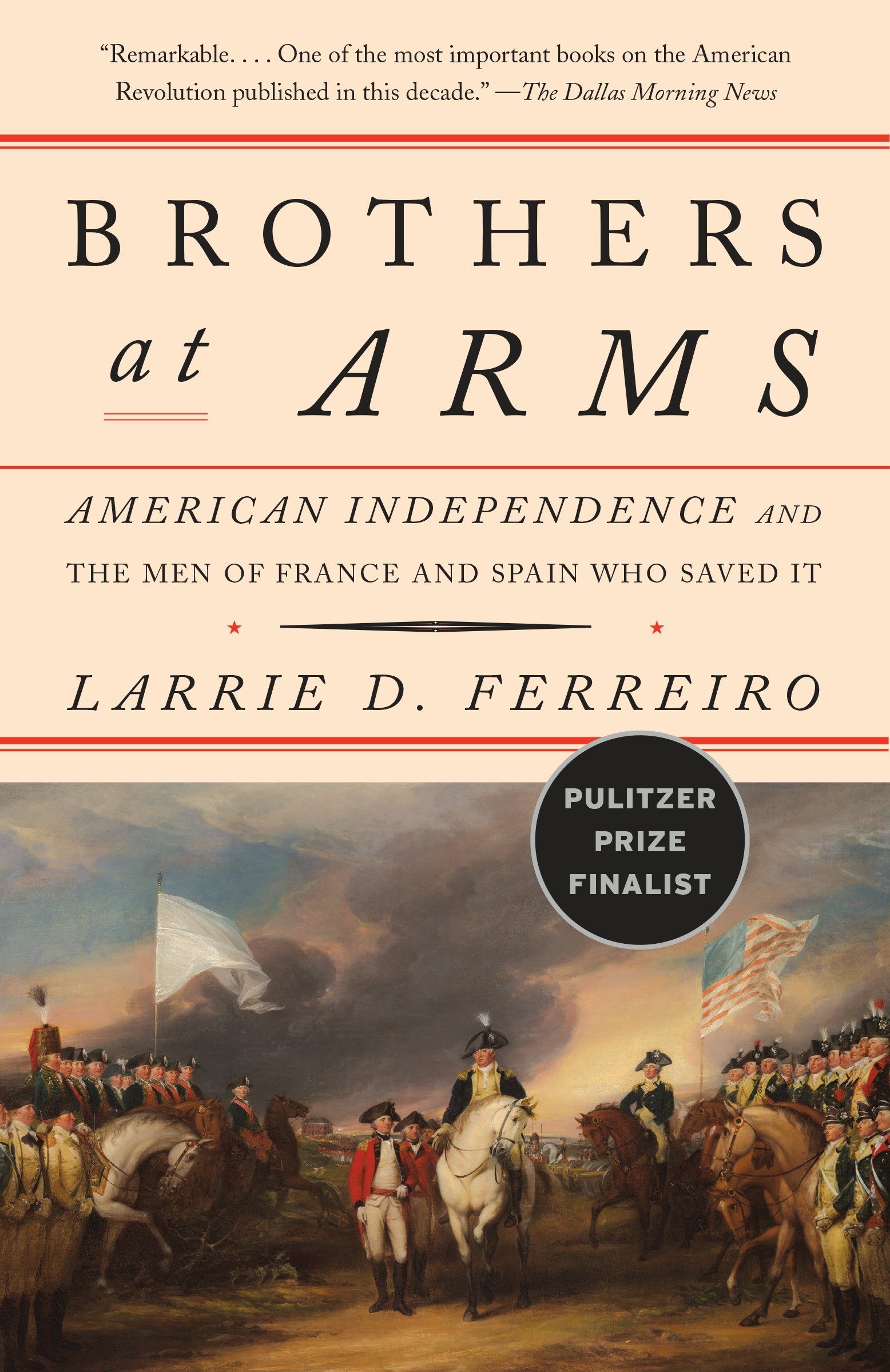
On Yom Kippur, I sat in my chair at Touro Synagogue in Newport, Rhode Island,  anticipating a beautiful and fulfilling evening. Next to me sat Larrie D. Ferreiro of Washington, DC, who was attending a conference at Salve. He teaches history and engineering at George Mason and several other schools in Washington DC.

I asked him to explain the combination of these disciplines. He said,

“Humans have been engineering large, complex structures as long as we have had civilizations.   Everywhere around the world, every time humans have created complex social systems, they have also created large complex structures.”

His examples include many of the structures in history such as the Pyramids, Angor Watt, and even a ship of the line which, with more than 10,000 parts, he calls one of  the “most complex machines built before the industrial revolution.”  

In a recent book, "Brothers at Arms,” he treats the American Revolution in a similar way. Although Americans see the revolution as a local event, it was much more. France and Spain were seething in anger at the results of the previous war, and the American Revolution became part of a much larger war that involved many of the major players in Europe in an 18th century world war.  

The American thinkers who ran things from Philadelphia realized that America could not succeed without (French) help…and the help in arms, men and money was very generous. Although America liked to credit Benjamin Franklin for his diplomatic success, in fact the French were very eager to assist. 

Newport had a role in the victory at Yorktown, Dr. Ferreiro points out. “American independence was saved by France and Spain — and the Rochambeau expedition at Newport was a major part of that.” The victory at Yorktown began with the march of the French Army from Newport southwards.

The French always deferred to Washington, who in turn consulted his advisors, including the French. The French suggested that with the help of the French Fleet, it would be easier to win a victory at Yorktown than to retake New York City, which was Washington’s preference. With some well placed leaks, Washington fooled the English into believing New York was the target, and moved much of the French and American forces to Virginia. Many of the soldiers at Yorktown, in each of the three armies, were Germans, either soldiers for hire, volunteers or immigrants to America.

As I contemplated our candle-lit shul, I thought how the building was a cooperative effort that involved a lot of moving parts, something like a ship. Some of the push to hire a rabbi, Isaac Touro, and build the synagogue might have been from Aaron Lopez, a recent arrival from Lisbon. The architect, Peter Harrison, used English architectural books for the outline, and information about a synagogue from the Jews of Newport for the details. The bricks were imported from England.

Our current congregation reflects its diverse origin.  In Rabbi Marc Mandel’s various holiday sermons, he addressed us as individuals and as a congregation. He challenged us to build ourselves into better human beings, on both an individual and community level.

On the second day of of Rosh Hashanah, Rabbi Mandel spoke about וּתְשׁוּבָה וּתְפִלָּה וּצְדָקָה “repentance prayer and charity will lead us to a better year.”

“The High Holiday prayer book, the מחזור,” he said, “doesn’t give us a tool kit for how to achieve these three goals. How should we do it and how should we not do it?”

Rabbi Mandel cautioned us against multi-tasking. “One of the most important words in our tradition is שְׁמַע- to listen. If we are multitasking, how can we listen? 

"Therefore this year–when we focus on תְשׁוּבָה תְפִלָּה צְדָקָה when we focus on repentance prayer and charity–let’s focus on each one separately–so that we can concentrate on each goal as we pray for a year of spiritual growth and success.” 

“But repentance, prayer and righteousness avert the severity of the decree.” is from Unetanneh Tokef. Although the machzor attributes it to Rabbi Amnon of Mainz in the 1100s, his existence is doubtful, and it was probably composed in Palestine between 500 and 600. The phrase is based on the Yerushalmi Talmud, which says that the decree will be annulled. 

As Rabbi David Golinkin explained in his paraphrase of Rabbi Marc Saperstein, “In other words, the Yerushalmi (and the Bavli too) had a very simple yet problematic theology: if you do X, Y, and Z you will annul the severe decree. The author of Unetaneh Tokef, who lived in the Land of Israel at the time of the Yerushalmi , did not agree with that theology. In his opinion, repentance, prayer and tzedakah cannot annul or eliminate evil, but by searching our souls through teshuvah, praying to God through tefillah and helping other people through tzedakah we help ourselves and others cope with evil and ‘make the evil of the decree pass.’ This is the peshat (simple meaning) of Unetane Tokef which, I believe, most modern Jews can relate to.”

At Kol Nidre, Rabbi Mandel said that perhaps the trap door on Touro’s Bimah was a message from the builders of Touro to future congregants,“Perhaps the people who built the synagogue were doing it for teaching, but for future generations.

“They were telling future members of Touro Synagogue, ‘Don’t become trapped by your own mistakes and misjudgments. Think courageously and boldly like we did.’”

Before Yizkor on Wednesday, Rabbi Mandel pointed to Jonah, who did what we all would like to do in the face of something unpleasant, run away. “God tells him to go to Nineveh and tell the people everything you’re doing is wrong. And Jonah says, ‘Not me. I’m not doing that.’ So he hops on a cruise ship, the best place in the world to run away from your problems and forget about everything.”

In the face of a hurricane, Jonah and we are snapped back into reality. There are forces in the world bigger that us that we can’t hide from.

Death is one of those forces.

As we think of our loved ones who are gone, Rabbi Mandel said, “It’s not too late for us to learn from them. Their souls will be alive if we take their sparks and live as if they are very much a part of us.

“We can inject anything they stood for into our lives and by doing so will unite with them once again, and they are still our mentors and our partners as we continue on our own journeys and once again learn all about what is right and wrong. Gamar Chatima Tova!”

Now it is time to build our sukkahs, ourselves, and our society. 


Friday, September 14, 2018

Apples and Apple

Apples and Apple
At Touro Synagogue
Rosh Hashanah First Day
September 10, 2018


On the first day of Rosh Hashanah at Touro Synagogue in Newport, Rhode Island, things were just right. The weather cooperated, there was a good crowd, yet it was not crowded, Rabbi Marc Mandel and Saul Woythaler raised us up during shofarot, we delighted to the davening of Dr. James Herstoff, Dr. Henry Spencer and Rabbi Mandel, the layning of Sam Spencer and our co-presidents, Professor Louise Ellen Teitz and Paul Tobak, sponsored kiddush lunch. We were happy in our seats, thanks to the work of Renee Talewsky.
After greeting us, Rabbi Marc Mandel spoke about Rosh Hashanah and apples,

“There is a custom on Rosh Hashanah to eat apples and honey. The Jewish people are compared to an apple, as it says in the Song of Songs - as the apple tree is unique among the trees, so is my beloved Israel.

“Recently, the company Apple achieved something never accomplished in American history. It became the first company to be valued at $1 trillion. With one trillion dollars, Apple could buy one billion people a $999 iPhone X and still have a billion dollars left in the bank.

“Even more remarkable, in 1997, Apple stood on the brink of bankruptcy and was just a short step from going broke. Steve Jobs revealed that the company was 90 days away from total insolvency.

“Steve Jobs started Apple in his parents’ garage when he was 20 years old and in 10 years Apple grew from two founders into a company with over 4000 employees.

“After he turned 30, Jobs was fired from the company that he himself started and he endured a public shaming, and what seemed then like the end of his career. Steve Jobs said the following to the graduates of Stanford University, ‘I didn’t see it then, but it turned out that getting fired from Apple was the best thing that could’ve ever happened to me. The business of being successful was replaced by the lightness of being a beginner again, less sure about everything. It helped me to enter one of the most creative times of my life.’

“Several years later, Jobs returned to Apple and turned it into the giant it would become by way of his genius. He understood that setbacks were stepping stones to greatness. Downfalls are not permanent. Failures are trials meant to make us stronger. The first tablets of the Ten Commandments were smashed – it was the second set which remained.

“As we celebrate the new year Apple can be a lesson to us - and an inspiration to us – if we face challenges that seem insurmountable, just remember how close Apple was to being broken, and today it is the most successful company in American history.

“With this New Year, let us pray that our dreams will bring us great success when we are challenged with difficult days.”

Steve Jobs’ 2005 commencement address at Stanford is one of the great speeches. He told three short stories from his life.

Jobs dropped out of college after realizing that he was wasting his parents’ savings...but then studied things that interested him such as calligraphy. It was of no use to him until the creation of the first Macintosh computer. He was able to ensure that both the fonts and the computer were esthetically pleasing.

His second story was about how being fired was good for him. At first he was in shock.  “But something slowly began to dawn on me — I still loved what I did. The turn of events at Apple had not changed that one bit. I had been rejected, but I was still in love. And so I decided to start over.”

Finally he spoke about death, “When I was 17, I read a quote that went something like: ‘If you live each day as if it was your last, someday you’ll most certainly be right.’ It made an impression on me, and since then, for the past 33 years, I have looked in the mirror every morning and asked myself: ‘If today were the last day of my life, would I want to do what I am about to do today?’ And whenever the answer has been ‘No’ for too many days in a row, I know I need to change something.”

He ended with a quote from the Whole Earth Catalog, “Stay Hungry, Stay Foolish.” If you are satisfied, you will not strive to improve. If you think you are smart, you will not push the envelope because you know better.

Shanah Tovah Umetukah from Jewish Newport.

You may read Jobs’ speech at https://news.stanford.edu/2005/06/14/jobs-061505/

@tourosynagoguenewport @jewishnewportri

Friday, September 7, 2018

The Mitzvah of Welcoming


The Mitzvah of Welcoming
At Touro Synagogue 
September 1, 2018


Something unusual happened today during parshat Ki Tavo. Nobody was called up for the sixth aliyah! Most of the sixth aliyah consists of warnings about what would happen to Israel if God’s commandments were not followed. No one wants to be called up for the “curse” aliyah. Rabbi Marc Mandel took on the burden of the aliyah..but he was not called up.  

The gloom continued during the rabbi’s brief words of Torah. He described walking in Beit Shemash, Israel, through an unwelcoming neighborhood. 


“Beit Shemesh,” he said, “is a town that has been in the news these last few years due to the turf wars between the ultra-orthodox and the less orthodox: there is real tension in Beit Shemesh and it is Jew vs. Jew.


‘A few years ago…we walked from Beit Shemesh to Ramat Beit Shemesh, and we were scared - in one neighborhood there was graffiti everywhere, broken windows, and what appeared to be gangs of people staring at us." 


Beit Shemesh has had a large influx of haredi (Ultra-Orthodox) Jews, some of whom are intolerant of anyone who they think is less observant. This has led to women being treated as second class citizens, forced to sit in the back of the bus, and trying to make them non-persons, at least in public. So many incidents have occurred that the United States Department of State has issued a warning for American travelers. 


Rabbi Mandel concluded, “So the picture of this week’s parsha is looking more like a bad dream in some places in Israel.


“But let’s be hopeful that we can turn this around. Rabbi Dov Lipman, who used to be a teacher at Reishit Yerushalayim in Beit Shemesh and a member of Knesset, has been trying to build bridges between the communities. Let us support people like Dov and work to paint a brighter picture of Israel that we can all be proud of.”


At the kiddish, which she sponsored, Rita Slom spoke about a time when she felt unwelcome. An election in Newport was scheduled on Rosh Hashanah, and Rita would be unable to vote for her husband, Aaron, who was running for school committee. The issue ended up in court, which ordered the day of the election moved.


In 2013, Rhode Island enacted a law to address the issue:


“§ 17-18-5.1 Elections falling on religious holiday. – In the event that the date for the holding of any state or municipal election, other than the general election held on the first Tuesday next after the first Monday in November in even numbered years, falls upon the day of a religious holiday on which the doctrines of a faith would prohibit its followers from voting, the election shall be held upon the next business day other than Saturday then following; provided, that nothing contained in this section shall be deemed to invalidate any election once it has been held.”


The morning was not all serious. Among the visitors were the Danesh and Hakim families. They had last visited on September 9, 2017 to celebrate the aufruf of Danny who was about to marry Jessica. Once again we heard the joyous sound of ulalation from above. I thought this was how women, who are not full participants during services, make sure that their voices are heard, and that those of us below understand who is in charge. 


Learn more about the aufruf at https://jewishnewport.blogspot.com/2017/09/at-touro-synagogue-september-2-2017-by.html


May you be able to vote in elections, may you be welcome and greeted with ulalation wherever you go, may you be welcoming to others and Shabbat Shalom from Jewish Newport!

Wednesday, August 29, 2018

Is there a Doctor in the House?

Is there a Doctor in the House?
At Touro Synagogue
August 25, 2018


At Touro Synagogue in Newport on Shabbat we heard from three doctors: a spiritual doctor, Rabbi Marc Mandel, a medical doctor, Morton Glasser, and a social doctor, Irene Glasser (Irene is a doctor of anthropology, so perhaps I should say a societal doctor.)


After greeting one and all (and they came from as far as London), Rabbi Mandel said,


“The Torah teaches us to take care of our health. It’s a mitzvah to take care of your health, mentioned several times in the book of Deuteronomy, [4:15] take good care of yourselves וְנִשְׁמַרְתֶּ֥ם מְאֹ֖ד לְנַפְשֹׁתֵיכֶ֑ם.
“In this week‘s Torah reading we are told [Deuteronomy 24:8]
הִשָּׁמֶר בְּנֶגַע-הַצָּרַעַת, be careful for certain diseases. Smoking certainly causes diseases in the human body.


“I saw an interesting video online from a Dr. Dave Montgomery, a cardiologist at the Piedmont Heart Institute.[ a video is at https://youtu.be/JAKeZXigQtQ] He said most people associate cigarette smoking with lung problems, but he said that it is really your heart and blood vessels that get damaged the most from smoking.


“Just this week there was a major medical discovery: the healthier your heart, the healthier your brain, meaning the more measures of cardiovascular health older people had, the less likely they are to develop dementia. But I’m not a doctor and will let our kiddish speakers talk about these issues.


“…It hurts me when I see people who are meticulous about attending the weekday minyan take breaks during davening for smoking: Don’t they realize that taking care of your health is a mitzvah just like davening? Don’t they realize that the torah frowns on this type of behavior? Why is that ignored?


“As we approach the new year, Rosh Hashanah, let’s do what we can to help all people live healthier and holier lives. Shabbat Shalom!”


At the kiddish, which they sponsored, Drs. Morty and Irene’s brief talks were related but very different.


Dr. Morty started with good news. Smoking rates in the United States have gone down considerably. He attributed it to the high price of cigarettes, which is caused by high taxes, and said we should think what the implications of this are for other health issues. He stayed away from the reasons why people smoke.

The damage from smoking takes years to accumulate, he said, and young people, who don’t have a long range outlook, have fewer inhibibitions to stop them from engaging in risky behavior like smoking.

He pointed out that American Indians (and Eskimos and other indigenous peoples) have the highest rate of smoking, in part, at least, because tobacco on reservations is untaxed.  


Dr. Irene began by saying how tobacco was traditionally used by native Americans. Tobacco was sacred and reserved for shamans who used it on special occasions. This is what the Europeans saw when they arrived. They deduced that it was a healing plant, and that is how it was initially presented back home.


I asked Newporter Mrs. Namel Chadash if she had the inside story.


“Now listen, Mr. Aaron! Ven you vant to know vat really happened, don’t go to Vikipedia, komm zu mir! Ven those pilgrims or puritans (I never could figure which was which) landed at that rock in Old Virginny (Have I got that right?), they found smokin’ locals who were feeling pretty good.


“John Rolfe, (who married Pocahontas, no less) said to his friend, Captain John Smith, ‘Methinks we could sell a lot of this back home. People are always looking for something to help them feel happy.’


“John Smith, a sly one vas he, replied, ‘John, methinks that is not the best vay to sell tobacco. Let’s call it medicine. People will pay anything for their health, and ve can avoid the sin taxes.’ The rest, as they say, is history!”


Dr. Irene focused on the homeless population in Rhode Island. Many of them smoke. Rhode Island’s adoption of universal healthcare has been very successful in increasing the availability of healthcare to all, but, reaching out to homeless people to give them information about smoking cessation is difficult. Smoking is one of many health issues they face. Living much of their time on the street is not conducive to counseling.


One approach is to make counseling available in soup kitchens. This was tried as a pilot program. Many of the homeless were interested in learning how to stop smoking, which indicates that anti-smoking efforts have reached them, and were grateful for any information. Unfortunately, the pilot program ran out of money and was not refunded.


Another approach is to train employees in shelters or day programs in smoking cessation. This was done in Rhode Island, but getting those employees into counseling did not work out; they still had to perform their regular duties.


Irene was asked a lot of questions and comments were made by the audience. People speculated about why smoking is high in this population.


One person said that tobacco companies are currently trying to decrease the price of tobacco in military facilities. I could not document this. In fact, it appears the military is very interested in the health of sailors and soldiers, and takes this into account when deciding how to price tobacco products.


The subject of treating narcotic addiction also came up. A parallel group to the homeless is the prison population. Irene explained that in Rhode Island, we only have a state prison system, not a county system. This simplifies trying something different. In prison one cannot use illegal drugs, but that does not mean the addiction disappears. There are three medicines that might help, and Rhode Island enacted regulations to make these available to prisoners.


After the talk, I got more insight from Dr. Morty.  He said that even among the homeless, smoking has decreased. He added that there is a big difference between smoking two cigarettes a day vs. two packs a day. The percentage of smokers doesn’t tell the full story.


That reminded me of a book, How to Lie with Statistics, by Darrell Huff that my college roommate, Arthur Forman, brought to my attention 35 years ago when he was a Neurology Senior Registrar at the Radcliffe infirmary, Oxford, England.


In the 1960s and 70s, How to Lie with Statistics was often assigned reading in college and is one of the best selling books about statistics, having sold over 1.5 million copies, and that is just in English. To get off to a good start, Mr. Huff  begins with a quote he attributed to Disraeli, “There are three kinds of lies; lies, damned lies, and statistics.” You can read the whole book at http://www.horace.org/blog/wp-content/uploads/2012/05/How-to-Lie-With-Statistics-1954-Huff.pdf


Shabbat Shalom from Jewish Newport!