Sunday, October 13, 2019

At Jewish Newport Yom Kippur, 2019

At Jewish Newport
Yom Kippur, 2019
Edited by Beth Ginsburg Levine


Where will we be tomorrow?


At Touro Synagogue in Newport, Rhode Island, we arrived to candlelight supplemented by electric sconces, giving an orange aura. We seemed transported to a different place and time. Rabbi Marc Mandel introduced Kol Nidre with a few words about tomorrow, 


“There is a story that you might have heard about a pilot who makes an announcement during a flight, ‘Ladies and gentlemen, I have good news and bad news. The good news is we are making good time. The bad news is we were lost.’ 


‘This can be a metaphor for our lives today in the 21st-century. We are making great time. Everything is moving so quickly. Today, when you wake up in the morning, you can purchase anything you want on Amazon and have it in your hands by noon. Our connections to the internet and the world are speeding up. We’re going from 3G to 4G to 5G. But do we know where we are going or are we lost?


“Someone once said, ‘If you don’t know where you are going, any road will take you there.’ We’re going on all these different roads but we’re not sure in which direction we are headed.


‘One day a year, on Yom Kippur, we come to our senses and we slow down. Recently I’ve been reading the biography of Steve Jobs, the CEO of Apple who reinvented the computer, the cell phone and music, by Walter Isaacson, who also wrote biographies of Albert Einstein and Henry Kissinger.


‘In Job’s biography, Isaacson has a chapter called Think Different. This, as you might recall, was the advertising slogan that Steve Jobs approved for Apple. This advertising campaign didn’t show computers and didn’t talk about processor speed or memory. It wasn’t about computers.It was about the creative things people can do by doing things in a different way.  That is really what Yom Kippur is about, one day a year we think differently. No lunch meetings, no running around, no business meetings, but we think about how we can do things differently for the new year.


‘It’s a powerful day. That’s why the Talmud says that Yom Kippur is really a happy day not a mournful day, because it celebrates the potential of human creativity.


‘Someone said, “You don’t have to know where you are to be there, but it is helpful  to know where you are if you wish to be someplace else.” On Yom Kippur we declare that we want to be someplace else. We want to think different and be creative with our lives. This year let us strive to enhance Yom Kippur, to think different, and to rejoice in our new life’s direction. May we all be inscribed in the Book of Life.”


After Kol Nidre, the overhead lights came on and the auro was no more. Were we still in the same place?


After Ko Nidre, I visited the synagogue wing where Jackie Mandel was leading junior congregation. She sat with the children in a circle. She told the children that they were here to learn as much as possible about Judaism so they could teach their children. This resonated with the children who glimpsed the future and imagined being parents. The children had been present when the Torahs were removed from the ark, and she reminded them that Rabbi Mandel said they were welcome in shul anytime. Then an important question popped out, “When are the snacks?”


The next day, Rabbi Mandel introduced Yizkor with three thoughts about people to remember, the early founders of Touro who have no one to say Yizkor for them, the Yom Kippur War’s fallen soldiers and Holocaust victims who have no one to say Yizkor for them and they have no burial place to visit them. He complimented Saul Woythaler for reading the names of the Touro founders, and told us that it was appropriate for our historic community to take a broad approach during Yizkor. At his request, I then read about Dolhinev, Belarus,


Remembering the Jewish Community of  Dolhinev


“Dolhinev, Belarus was in the Vilna District, Poland, between the first and second World Wars.


“By 1667 there was an organized Jewish community of 485. In 1792, it became part of Russia. During the nineteenth century Jews had concessions and also went into trade, exporting grain flax and fruit through Danzig. There were anti-Jewish riots in the 1880s.


“During the late 19th and early 20th centuries, many Jews left.  After World War I Dolhinov was near the border with the Soviet Union. This prevented trade, making economic conditions difficult. The thirties brought the depression and an increasingly anti-Jewish Polish government. 


“Nachum Lankin recalled in the Dolhinev Yizkor book, ‘A Yiddische Folkbank was established. A volunteer Bikkur Cholim committee visited the sick. A volunteer, Linat Hatzedek, arranged places to stay for poor visitors to the town. Achnasat Kala accepted donations for poor brides' dowries. A Hesed Shel Emet was established by Hevreh Kadisha to take care of the burials and to support the family members.


‘A few days before Passover, there was a committee that contained young women and men who would go to all the homes to collect money for Passover. They called it The Flower of Passover. For this they also received money from the town's residents who now lived in the US. Many families were helped by this organization. Many times, the mara d'atra [rabbi] distributed the money, and it would be done secretly, so that the families wouldn't be embarrassed about receiving donations. These missions were all done voluntarily without the backing of any of the other town's institutions.’


“The town was occupied by the Russians in Sept 1939 and organized Jewish life ended.The Germans arrived at the end of June 1941. In September the Rabbi and 18 other men were murdered. A ghetto was set up on March 3, 1942. The Jewish community was destroyed in three incidents. On March 28, 1942, 1500 Jews were shot in the market square. According to Zelig Dimmishtein, who was just a child and had not been present,

‘When [I] got to Dolhinov [after the first shechita] the snow on the ground was not white - it was red from Yiddishe blood from when they killed out everyone the day before. The streets were empty. That evening was Pesach. They locked up the windows and they recited the Haggadah. The next morning they went out and dug mass graves to bury the dead.


‘Every year since then I sit on Pesach and read the Haggadah - Ilu lo yotzianu miMitzraim - had You not taken us out of Egypt... what was that??!!  Absolutely nothing. When I compare Yitziat Mitzrayim to what we went through in Europe - Mitzrayim was nothing!!’


‘On May 5th, 1200 more were murdered and finally on May 22 the third shechita- the remaining three hundred perished. 


‘Among the few who escaped was Moshe Furman.  Moshe could not save his 25 year old wife Henia and their daughter Rakhel, who was not even one year old, and his wife’s parents, Shimon Kusinitz and his wife Sara, maiden name Berkovitz.  Before the first Shekhita, he found them a hiding place with a Polish noblewoman, but during the second shechita, their hiding place in the ghetto was discovered. Moshe’s father-in-law Shimon Kusinitz, was a brother of CJI members Rita Slom’s grandmother, Dora Kusinitz Adelson, and of Aaron Ginsburg’s grandmother, Dvorshe Kusinitz Ginsburg. 


‘Moshe Furman later met a woman in Minsk with a child. They married and later made their way to Palestine on the ship Exodus.”


After services, Rabbi Lowell Weiss mentioned a woman who had moved from the North Shore of Boston to Dartmouth and who was arranging for the translation of a Yizkor book for a town in Poland, where his wife Pattys’ family was from. A light lit up, “Do you mean Carol Marlin?”  He did! The town was Kurov, Poland. Carol has moved around a lot. Her father owned Simon Plumbing in Fall River. She knows more about my Fall River families than I, both on the Pokross side and on Kusinitz (Maury) side. 


Jewish Newport looks forward to being with you in the coming year and sharing with you as you think, think different and remember.

@jewishnewportri

Friday, October 11, 2019

Rosh Hashanah 2019


At Jewish Newport
Rosh Hashanah, 2019
By Aaron Ginsburg
edited by Beth Levine
Smoke gets in your eyes
(a video of is at https://youtu.be/0C3OxlpoIRI)
On the first day of Rosh Hashanah, Rabbi Marc Mandel of Newport’s Touro Synagogue spoke about blindness,
“In olden days, we used to receive many magazines; Time, Business Week, Parents. Today in the digital age, not so much. Jackie still receives People Magazine
“She recently shared an article about a graduate from Harvard Law School named Haben Girma.
“You might wonder, ‘Why an article about a graduate from Harvard Law School?’ Each year there are many graduates from Harvard Law School. Haben Girma is special and unique because she is blind and deaf, the first blind and deaf person to graduate from Harvard Law School.
“Why talk about blindness on Rosh Hashanah? Is there a connection between blindness and Rosh Hashanah? We read this morning about the binding of Yitzhak, Isaac who became blind. What caused his blindness? The simple explanation is old age.
“But the Midrash digs deeper. One explanation is that Isaac became blind from the second-hand smoke of his brother’s idol worship offerings. Another Midrash says he was blinded by the tears of the angels when he was on the mountain with his father.
“Sometimes we don’t see what’s right in front of us. In tomorrow’s Torah reading: וַתֵּ֨רֶא שָׂרָ֜ה Sarah saw the bad behavior of Hager’s son, Yishmael. Why didn’t Abraham see what was going on? Why wasn’t he aware? Maybe he didn’t want to see. After all, Yishmael was his son.
“Later, when Yishmael is dying, Hagar doesn’t see the well. וַיִּפְקַ֤ח עֵינֶ֔יהָ. And God opened her eyes - she couldn’t see by herself. The whole reading today is about seeing and not seeing.
“But the opposite of not seeing is seeing too much. The Misha tells us in Avot to cultivate an ayin tova, a good eye, like Avraham and not a bad eye like Balam, not bad in the physical sense, but in the spiritual sense - always looking to see what other people have, that’s a bad eye. Can we learn to be satisfied with what we have - or are we looking for more?
“Every day we praise God פּוֹקֵחַ עִוְרִים who opens [the eyes] of the blind. A recent National Geographic article about blindness gave hope that some day the blind will see.”
God opens our eyes, but will we use them to see?
When Rabbi Mandel said ”second-hand smoke,” many of us opened our eyes, perhaps in search of a fire. If we were not listening and seeing up until then, we gave the rabbi our full attention.
Second-hand smoking or passive smoking refers to the effects of tobacco on people who are present when someone is smoking. One of the ways to study it is to study the spouses of smokers. At team from Dana–Farber/Harvard Cancer Center coined “third-hand smoke” to describe the effect of the residue left after the smoke is gone. I suspect that at this very moment someone is trying to define, “fourth-hand smoke.”
On the second day of Rosh Hashanah, Rabbi Mandel discussed how we see Israel.
No one said it would be easy
“‘Trial’ has more than one meaing
  • A formal examination of evidence by a judge and a jury, in order to decide guilt in a case of criminal or civil proceedings.
  • A test of the performance, qualities or suitability of someone or something.
‘Today we will use the second definition. We look at Abraham’s trial [The Binding of Isaac] as a test of his ability to follow the will of God.
‘But that was not his only trial. The Mishnah tells us that Abraham had 10 trials from God. We know some of them: Lech Lecha (leave your home), circumcision when old, the war against the kings. Most commentaries say that Avraham’s final test was from today’s torah reading, the Akeda, the binding of Isaac.
‘But I heard a class from Rabbi J. J. Schacter from Yeshiva University, who said that wasn’t Avraham’s final test.
‘You know your Tanakh! What happens after the Akeda? Sarah dies and Avraham has to bury her, and that was his last trial, trying to get a burial place for his wife in the land of Israel.
‘It was difficult for him because the local people (Hebrew) didn’t want to give Avraham any land, and it was a trial for him to see if he would stick with it.
“Rabbi Schacter taught us, מַעֲשֵׂה אֲבוֹת סִימָן לַבָּנִים ‘Whatever happens to our fathers happens to us.’ Anything dealing with the Land of Israel is difficult and not easy.
“That’s our test today in the diaspora. What is our relationship with Israel? Here in the diaspora, we can say, “That's not our problem.” Or we could say, “I don’t like the image of Israel these days. It’s not what it used to be.” And we could also say, “I don’t think we should support Israel under today’s conditions.” And there are Jews saying all these things.
“That’s why it’s a test. It’s not supposed to be easy.
“Sure, it was easy in the days after the Holocaust to support Israel, but today the survivors are barely alive and Israel’s demographics have changed.”

Among the most difficult trials is the loss of a child. Among those at shul during Rosh Hashanah was Sima Menora, who lost two teenage daughters, Rikki and Rachelli, in a plane crash. In their memory, she founded DROR. “DROR – the Hebrew acronym for Derech Rikki and Racheli (in English, Rikki and Racheli’s Way) - was...inspired by many of the traits that defined Rikki and Racheli in their all-too-short lives, DROR is an organization that embraces the spirit of activity and empowerment to benefit the lives of other adolescent girls.” @jewishnewport @newportri

Saturday, September 21, 2019

Hope and Remembrance

Hope and Remembrance
At Jewish Newport
September 14, 2019
photos by Aaron Ginsburg
edited by Beth Levine
also on facebook.

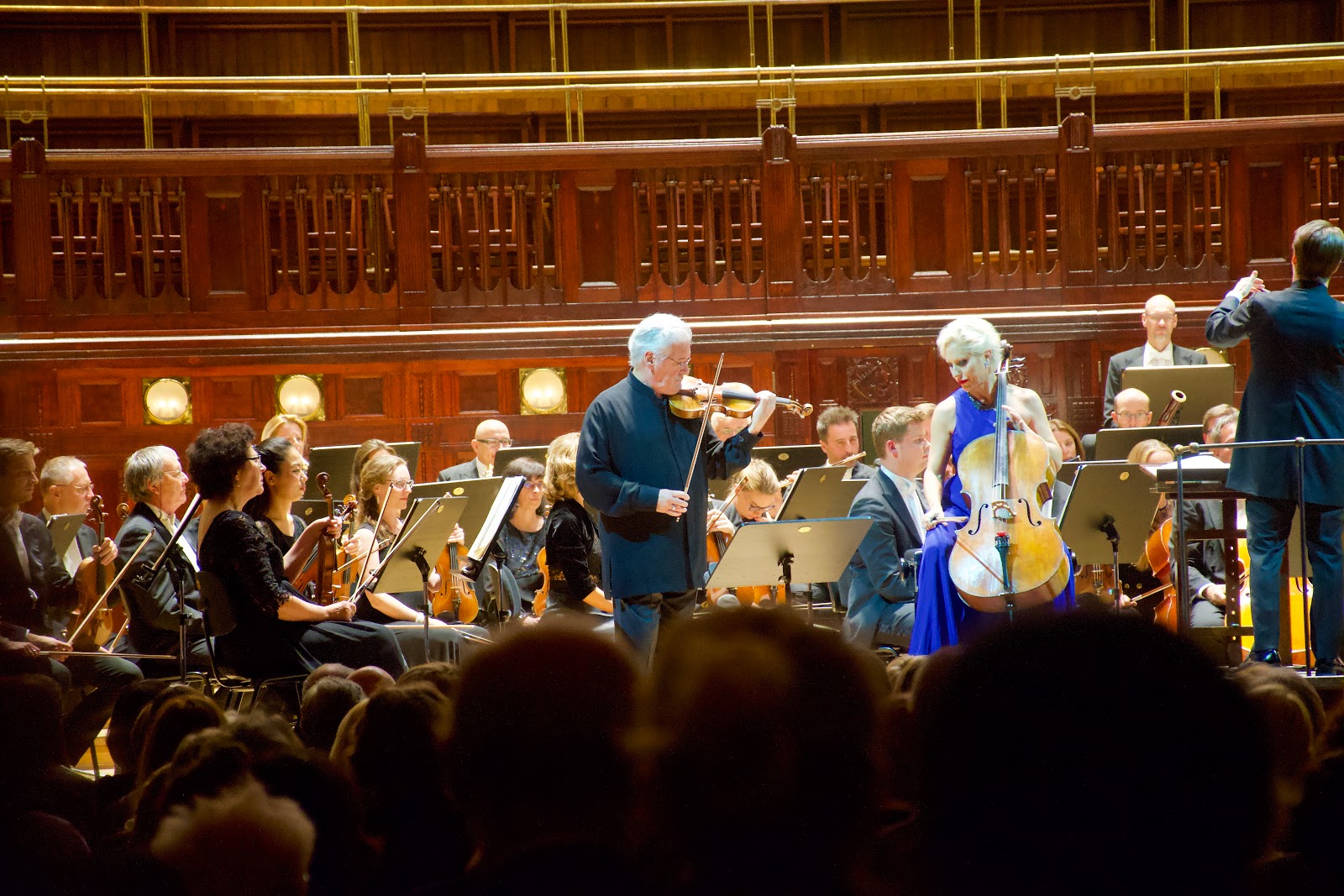
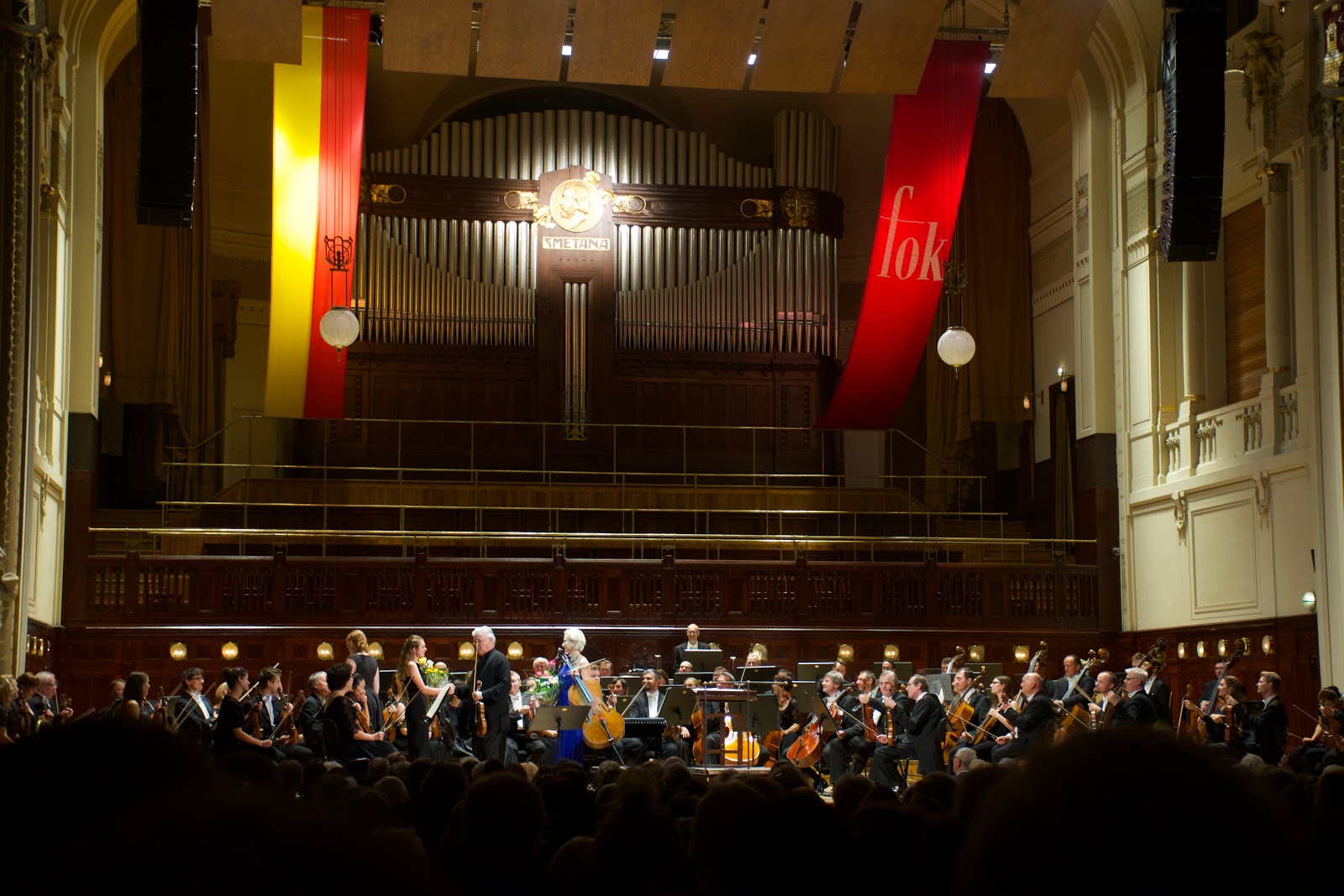
I have been visiting Prague for a few days with friends Lia Zakov, Sol Macner, and Alan Kaul. Thursday we went to the Opening Concert in Smetana (Alan Kaul, “Why did they put smetana (sour cream in Czech language) on top of the conductor?”) Hall. The concert featured Pinchas Zukerman and his wife Amanda Forsyth playing the violin and cello respectively, along with the Prague Symphony Orchestra, conducted by Pietari Inkinen. 


Alan Kaul, “Why did they put smetana (sour cream in Czech language) on top of the conductor?”
Amanda Forsyth and Pichus Zukerman
Zukerman played the music for the movie Schindler’s List. The score was composed and conducted by John Williams. Per wikipedia, the soundtrack album won the Academy Award for Best Original Score, the BAFTA Award for Best Film Music, and the Grammy Award for Best Score Soundtrack for Visual Media. It also received a Golden Globe Award nomination for Best Original Score.


Pinchus and Amanda Forsyth
The concert began with two pieces by Czech composer Antonín Dvořák, and continued with the Brahms double concerto for violin, cello and orchestra in A minor Op.102, one of the most recognizable pieces of classical music. The beginning seemed to portray a storm, the middle was calmer, and the ending was hopeful and uplifting but complex. Each movement had a distinctive melody. 


After the intermission, we heard Symphony No.5 in E flat major, Op. 82 by Finnish composer Jean Sibelius. The melody, if there was one, was subservient to the cacophony of a complicated world. Once again, the beginning portrayed problems and the middle was calmer. The end was tentatively hopeful..but the world was noisy and room-filling, almost but not quite drowning out the sound of hope. 


On Shabbat, Sep 14, 2019 we read in Parashat Ki Teitzei many laws of behaviour accompanied by repeated admonishments to “Remember that you were slaves in Egypt.” 


Rabbi Marc Mandel of Touro Synagogue in Newport, pointed out that we can learn something else from these repeated admonitions,


“Five times the Torah tells us that we must remember that we were slaves in Egypt. Why must we remember this depressing chapter in Jewish history?


“Rabbi Joseph Soloveitchik said that this teaches us to be sensitive to the vulnerable and less fortunate people in society, because we too were once in that position. Also, it teaches us to have hope, because we were freed from slavery, thus teaching us the power of hope, and never giving up.” 


Sol, Lia and Alan reading about Prague 's
Jewish Ghetto in Rick Steves.
 Maiselova Synagoga
Today I visited the Jewish section of Prague. The medieval and early modern Jews of Prague lived in a ghetto. It was rebuilt in 1742 after a fire.  Antonín Langweil created a paper model of Prague from 1826-1837. The Jewish museum has a video flyover based on that model, which is now in the Prague City museum. The video is at https://youtu.be/noMwDl8BofM The Jewish Museum consists of 6 sites including 3 synagogues. View a video flyover.


Jewish Ghetto Flyover
https://blogger.googleusercontent.com/img/b/R29vZ2xl/AVvXsEjLeBcwRNGId_zq5aFEQFHAWHQsHxL4X_dRhJs1JnKV53_dd9jAapACA2XGwZ4Bf_Youn0v1GgwVyArgEgMmdqP-pS5DVSOygp9EvngEK5Kr-c-WvANpGyu-iNRK6eCxgZ8tz_JnEpaWkZX/s1600/DSC_0359.MOVLike other great European cities such as Paris, the Jewish ghetto was almost totally demolished during the late 19th and early 20th century. All the residential buildings and three synagogues were destroyed. Just a few  buildings were spared including six synagogues, the Jewish Town Hall, which includes a clock with the hours in Hebrew, and the Chevra Kadisha building dating from 1912.


Chevra Kadisha 
It was a mitzvah to belong to the Chevra Kadisha, which cared for the dead and the dying and collected alms and raised money to support its activities. The Prague Chevra Kadisha, founded in 1654, became the model for modern Jewish burial societies. A member had to belong for 15 years before he could become a member of the board, and three more years to be eligible to be an officer. To belong was prestigious, and the membership consisted of the most prominent members of the community. 


The Jewish community leadership was elected by secret ballot. The results had to be confirmed by the civil authorities. In Prague, the leader was called the Jewish Mayor. The leadership positions were unpaid. Paid positions included the rabbis and the beadles, also known as the shabbasklepper. They used a wooden hammer to bang on doors to let the inhabitants know it was time to get ready for Shabbos.
left Altmeuschul, right
Jewish Town Hall
Altneuschul


Matzeva of the Maharal
When people need hope, sometimes a legend helps. German Jewish writers created the Golem of Prague in the 19th century. These stories were pushed back to the time of Rabbi Judah Loew ben Bezalel, also known as the Maharal (from Moreinu Ha-Rav Loew" ("Our Teacher, Rabbi Loew")) who purportedly created a Golem to help the Jews of Prague when they were threatened. The need for a protector became clear as modern antisemitism took hold during the 19th century. At the Altneuschul (Old New Synagogue), metal rungs ascend an outside wall to the attic, where the Golem awaits danger’s approach.


The names of the lost.
The ultimate danger came to the Jews of Prague and the rest of Bohemia and Moravia on March 15, 1939, when Germany took control. For most Jews, the Golem did not appear. In the Pinkus Synagogue, their names are on the walls, 80 thousand names.

The names of the lost.


Friday, August 9, 2019

A Tale of Two Cities

A Tale of Two Cities

At Jewish Newport
August 3, 2019

also at facebook
Last Shabbat the weather was comfortable. Rabbi Marc Mandel resumed his words of Torah after a one week heat related hiatus. For Rabbi Mandel, Torah is about questions. Answers often are elusive.


“Last Sunday we had a successful congregational trip to Boston to the Edward Kennedy Institute for the United States Senate. This museum contains a full scale reproduction of the United States Senate chamber: we had a chance to learn all about how the Senate works. It was a good trip, but these days, there is a great deal of cynicism surrounding Congress, and government in general. We often hear people say that the Senate doesn't accomplish much and they don’t work together etc. etc.


“It made me think about the recent Torah readings. Today we finished reading the book of Bamidbar, the story of the Jews in the desert. There are several themes in Bamidbar, but one of the themes is cynicism. The people in the desert were very cynical, ‘Why do we need to be in the desert? We were better off in Egypt. We had better food there and our leaders are no good; they don't really care about our welfare. They’re only interested in themselves.’ This cynicism covers a lot of ground in Bamidbar.


“Someone once said, ‘When a cynic smells flowers he looks for a funeral.’

Another wit said, ‘a cynic knows the price of everything and the value of nothing.’

“Cynicism is okay if it leads to an honest search for truth. But, if it becomes all encompassing, then it becomes part of the problem and not part of the solution. 


“Is there any value to cynicism in our society and in our lives? Is there truth to cynicism? A few years ago in the presidential debates, one of the candidates, I think it was Reagan, said, ‘Are you better off now than you were four years ago?’ 


We can ask a similar question. Were the Jews better off wandering in the desert, or were they better off in Egypt? If you say, ‘The Jews were better off in Egypt,’ you can say goodbye to Passover and its celebration. If you say, ‘The Jews were better off in the desert,’ how do you reconcile that with all the complaints in Bamidbar?


“Shabbat Shalom!”


Aaron Ginsburg with Alan Kaul
at the Rock and Roll of Fame Cleveland
At the kiddish, which was sponsored by the Oberhardt Installation Fund and Barbara Epstein, Rabbi Mandel asked me to speak about the Annual Conference of the International Association of Jewish Genealogical Societies (IAJGS for short) in Cleveland, which I had just attended with 800 other people interested in their family history. On Sunday evening the convention took over the Rock and Roll Hall of Fame. I was not sure why. The heavy au d'oeuvres turned out to be celery sticks, and when I arrived with my friend Alan Kaul people were streaming away.


Birds of a Feather table for The Friends of Jewish Dokshitsy
meeting Dokshitsy Descendants (Kabachniks) for the first time
I attended to reach out who people who might be Dokshitsy descendants. Dokshitz is a shtetl now in Belarus, that send many immigrants to Newport in the early twentieth century. At the share fair, I had a table, and met several new contacts. Some were members of the Kabatchnik family. In Newport, the family name of this family was Kaber. I also was a speaker and held a meeting for people interested in the shtetl. One of the favorite talks I attended was by Ron Arons, who talked about his grandfather, the bigamist. Ron had no idea until he started his genealogical journey. 
Ron Arons speaking about his grandfather the bigamist


top Marc Bakst, Aaron Ginsburg
bottom Linda (Bakst) Goldstein-Wolf,
Gary Baxt, Barbara Gross photo by
Marcia Bakst


I also met several Kusinitz cousins. I was able to help my Kusinitz Bakst cousins find the ships manifest for their grandfather, Simon Bakst, who was going to Brooklyn to join their great-grandfather, Sam Bakst. They did not know their great-grandfather came to the United States. Simon was born in Ivje, now in Belarus, which is only 17 miles from the town of Bakshty, which must be the origin of the family name. Geographical names don’t make much sense, unless you leave town.


Cleveland, has all the trappings of a major city: skyscrapers, classic downtown buildings, including the courthouse, library, and the Terminal Hotel, new hotels built for the Republican convention two years ago, the Cleveland Orchestra, a major art museum, the Rock and Roll Hall of Fame and two stadiums. 


There is just one thing missing, people. It was so quiet it seemed like the day the world had ended. There are surface parking lots and spaces, and one can easily park for $4 a day.  


Although 800 is a typical attendance for an IAJGS conference, in Boston in 2013, 1300 people attended. The Jewish Genealogical Society of Greater Boston (JGSGB) is the largest of 70 member associations, larger than New York’s and is still growing. 


Boston has several downtowns, including the seaport district, the financial district, the Prudential-back bay area and Cambridge’s Kendall Square. In addition there are two hospital districts, and many major college campuses. There are always people about. There is a definite vibe.


Someone pointed out to me that part of the reason for Boston’s vibe is the college students who like the area and stay.They keep us on our toes. 


I feel Bston's vibe at Temple Israel in Sharon Massachusetts. The synagogue men’s club usually runs away with the awards at the semi-annual national convention. Many of its members come from far away places like New York, arriving as students and then staying.


Cleveland’s fate is that of many industrial towns in middle America. The industries have left and not been replaced, and many of the people have gone elsewhere. In fact when I tried to have a family reunion in Cleveland, I was informed that most of the family was in Florida. 


Cleveland has good reason to be cynical about the future; Boston is the future.


In Newport, there is definitely a vibe, and we are inspired and uplifted by the many visitors to our city and our synagogue. 


Shabbat Shalom from Jewish Newport!


@tourosynagoguenewport @iajgs2019