Saturday, September 21, 2019

Hope and Remembrance

Hope and Remembrance
At Jewish Newport
September 14, 2019
photos by Aaron Ginsburg
edited by Beth Levine
also on facebook.

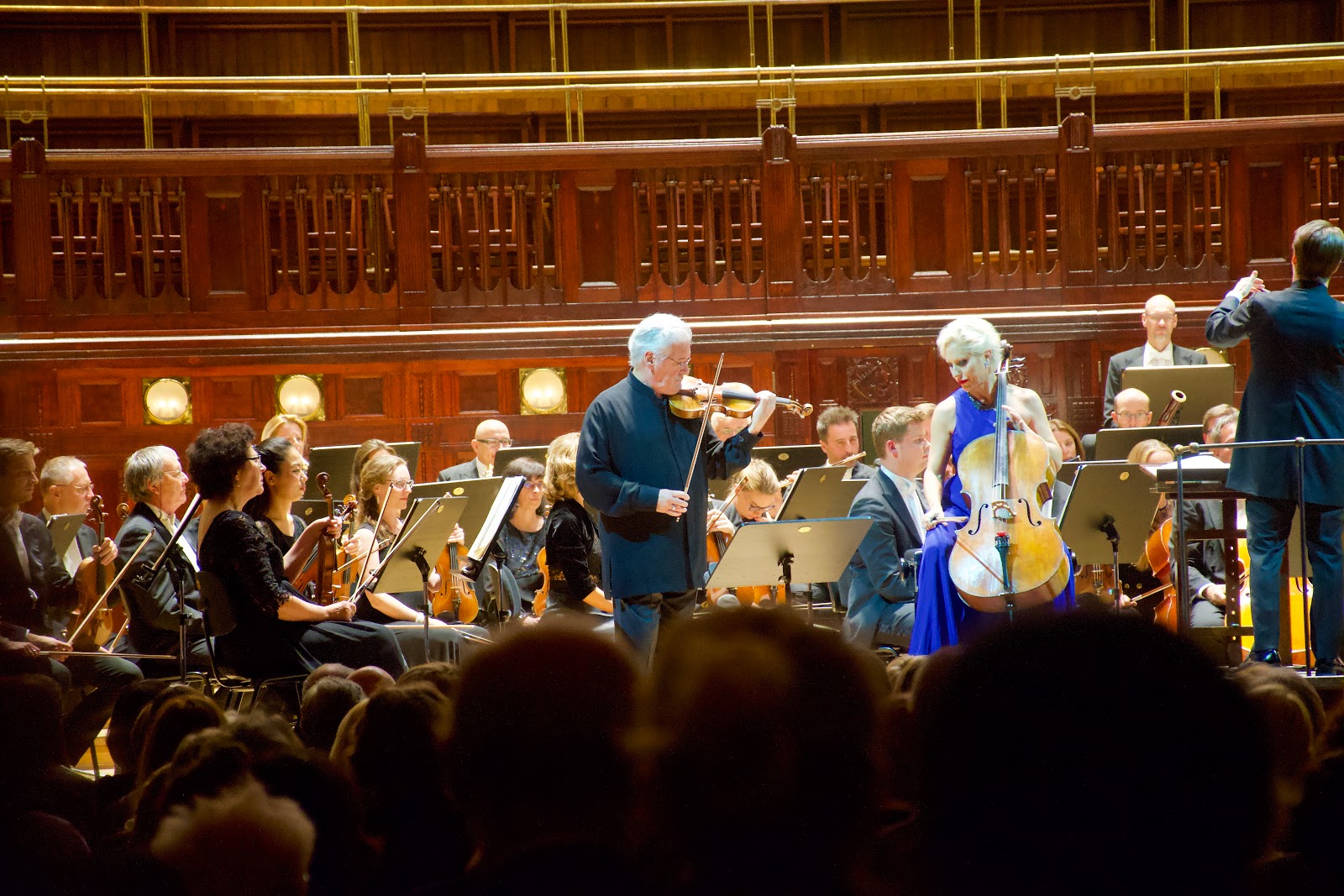
I have been visiting Prague for a few days with friends Lia Zakov, Sol Macner, and Alan Kaul. Thursday we went to the Opening Concert in Smetana (Alan Kaul, “Why did they put smetana (sour cream in Czech language) on top of the conductor?”) Hall. The concert featured Pinchas Zukerman and his wife Amanda Forsyth playing the violin and cello respectively, along with the Prague Symphony Orchestra, conducted by Pietari Inkinen. 


Alan Kaul, “Why did they put smetana (sour cream in Czech language) on top of the conductor?”
Amanda Forsyth and Pichus Zukerman
Zukerman played the music for the movie Schindler’s List. The score was composed and conducted by John Williams. Per wikipedia, the soundtrack album won the Academy Award for Best Original Score, the BAFTA Award for Best Film Music, and the Grammy Award for Best Score Soundtrack for Visual Media. It also received a Golden Globe Award nomination for Best Original Score.

Pinchus and Amanda Forsyth
The concert began with two pieces by Czech composer Antonín Dvořák, and continued with the Brahms double concerto for violin, cello and orchestra in A minor Op.102, one of the most recognizable pieces of classical music. The beginning seemed to portray a storm, the middle was calmer, and the ending was hopeful and uplifting but complex. Each movement had a distinctive melody. 
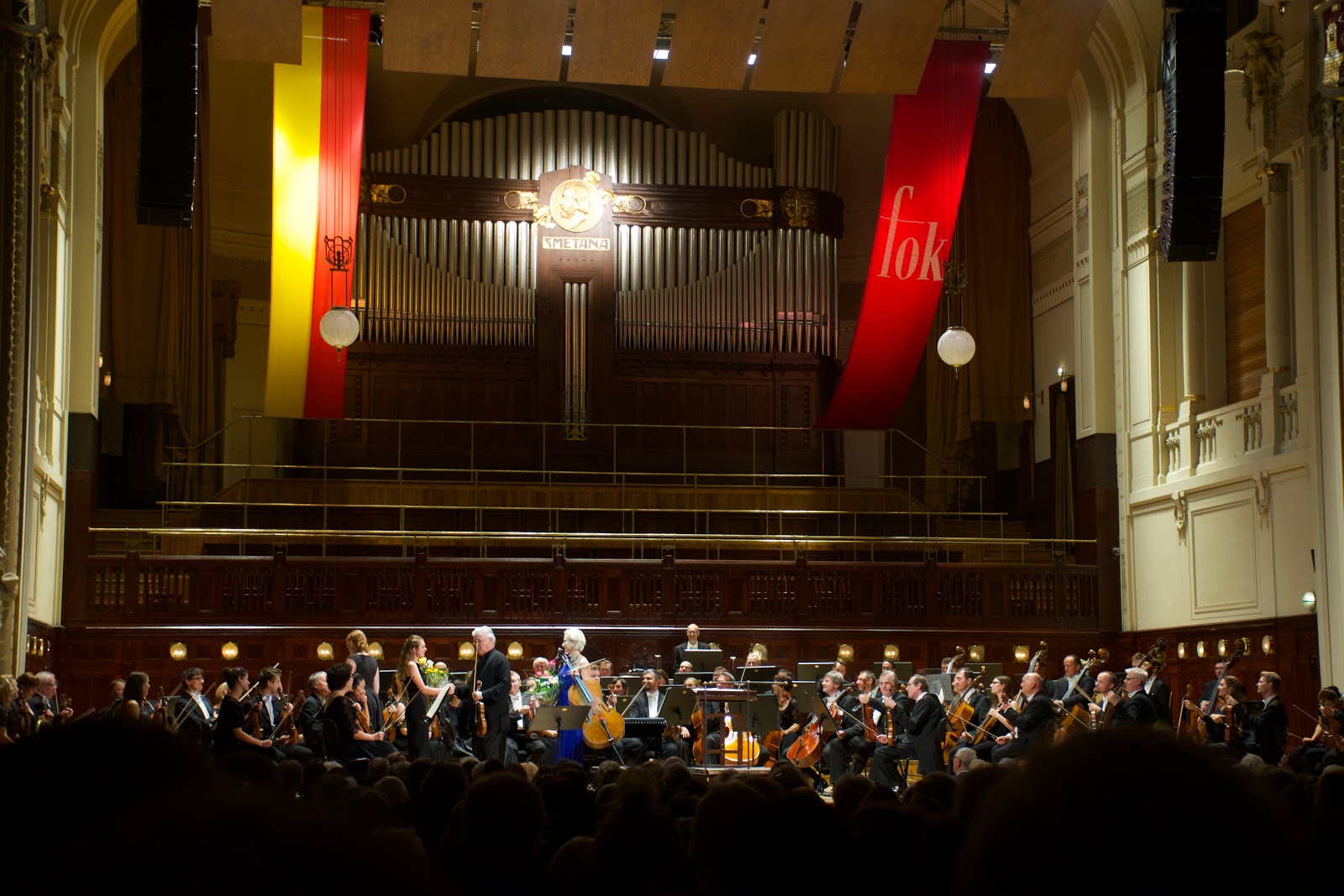

After the intermission, we heard Symphony No.5 in E flat major, Op. 82 by Finnish composer Jean Sibelius. The melody, if there was one, was subservient to the cacophony of a complicated world. Once again, the beginning portrayed problems and the middle was calmer. The end was tentatively hopeful..but the world was noisy and room-filling, almost but not quite drowning out the sound of hope. 


On Shabbat, Sep 14, 2019 we read in Parashat Ki Teitzei many laws of behaviour accompanied by repeated admonishments to “Remember that you were slaves in Egypt.” 


Rabbi Marc Mandel of Touro Synagogue in Newport, pointed out that we can learn something else from these repeated admonitions,


“Five times the Torah tells us that we must remember that we were slaves in Egypt. Why must we remember this depressing chapter in Jewish history?


“Rabbi Joseph Soloveitchik said that this teaches us to be sensitive to the vulnerable and less fortunate people in society, because we too were once in that position. Also, it teaches us to have hope, because we were freed from slavery, thus teaching us the power of hope, and never giving up.” 


Sol, Lia and Alan reading about Prague 's
Jewish Ghetto in Rick Steves.
 Maiselova Synagoga
Today I visited the Jewish section of Prague. The medieval and early modern Jews of Prague lived in a ghetto. It was rebuilt in 1742 after a fire.  Antonín Langweil created a paper model of Prague from 1826-1837. The Jewish museum has a video flyover based on that model, which is now in the Prague City museum. The video is at https://youtu.be/noMwDl8BofM The Jewish Museum consists of 6 sites including 3 synagogues. View a video flyover.


Jewish Ghetto Flyover
https://blogger.googleusercontent.com/img/b/R29vZ2xl/AVvXsEjLeBcwRNGId_zq5aFEQFHAWHQsHxL4X_dRhJs1JnKV53_dd9jAapACA2XGwZ4Bf_Youn0v1GgwVyArgEgMmdqP-pS5DVSOygp9EvngEK5Kr-c-WvANpGyu-iNRK6eCxgZ8tz_JnEpaWkZX/s1600/DSC_0359.MOVLike other great European cities such as Paris, the Jewish ghetto was almost totally demolished during the late 19th and early 20th century. All the residential buildings and three synagogues were destroyed. Just a few  buildings were spared including six synagogues, the Jewish Town Hall, which includes a clock with the hours in Hebrew, and the Chevra Kadisha building dating from 1912.


Chevra Kadisha 
It was a mitzvah to belong to the Chevra Kadisha, which cared for the dead and the dying and collected alms and raised money to support its activities. The Prague Chevra Kadisha, founded in 1654, became the model for modern Jewish burial societies. A member had to belong for 15 years before he could become a member of the board, and three more years to be eligible to be an officer. To belong was prestigious, and the membership consisted of the most prominent members of the community. 


The Jewish community leadership was elected by secret ballot. The results had to be confirmed by the civil authorities. In Prague, the leader was called the Jewish Mayor. The leadership positions were unpaid. Paid positions included the rabbis and the beadles, also known as the shabbasklepper. They used a wooden hammer to bang on doors to let the inhabitants know it was time to get ready for Shabbos.
left Altmeuschul, right
Jewish Town Hall
Altneuschul


Matzeva of the Maharal
When people need hope, sometimes a legend helps. German Jewish writers created the Golem of Prague in the 19th century. These stories were pushed back to the time of Rabbi Judah Loew ben Bezalel, also known as the Maharal (from Moreinu Ha-Rav Loew" ("Our Teacher, Rabbi Loew")) who purportedly created a Golem to help the Jews of Prague when they were threatened. The need for a protector became clear as modern antisemitism took hold during the 19th century. At the Altneuschul (Old New Synagogue), metal rungs ascend an outside wall to the attic, where the Golem awaits danger’s approach.


The names of the lost.
The ultimate danger came to the Jews of Prague and the rest of Bohemia and Moravia on March 15, 1939, when Germany took control. For most Jews, the Golem did not appear. In the Pinkus Synagogue, their names are on the walls, 80 thousand names.

The names of the lost.


Friday, August 9, 2019

A Tale of Two Cities

A Tale of Two Cities

At Jewish Newport
August 3, 2019

also at facebook
Last Shabbat the weather was comfortable. Rabbi Marc Mandel resumed his words of Torah after a one week heat related hiatus. For Rabbi Mandel, Torah is about questions. Answers often are elusive.


“Last Sunday we had a successful congregational trip to Boston to the Edward Kennedy Institute for the United States Senate. This museum contains a full scale reproduction of the United States Senate chamber: we had a chance to learn all about how the Senate works. It was a good trip, but these days, there is a great deal of cynicism surrounding Congress, and government in general. We often hear people say that the Senate doesn't accomplish much and they don’t work together etc. etc.


“It made me think about the recent Torah readings. Today we finished reading the book of Bamidbar, the story of the Jews in the desert. There are several themes in Bamidbar, but one of the themes is cynicism. The people in the desert were very cynical, ‘Why do we need to be in the desert? We were better off in Egypt. We had better food there and our leaders are no good; they don't really care about our welfare. They’re only interested in themselves.’ This cynicism covers a lot of ground in Bamidbar.


“Someone once said, ‘When a cynic smells flowers he looks for a funeral.’

Another wit said, ‘a cynic knows the price of everything and the value of nothing.’

“Cynicism is okay if it leads to an honest search for truth. But, if it becomes all encompassing, then it becomes part of the problem and not part of the solution. 


“Is there any value to cynicism in our society and in our lives? Is there truth to cynicism? A few years ago in the presidential debates, one of the candidates, I think it was Reagan, said, ‘Are you better off now than you were four years ago?’ 


We can ask a similar question. Were the Jews better off wandering in the desert, or were they better off in Egypt? If you say, ‘The Jews were better off in Egypt,’ you can say goodbye to Passover and its celebration. If you say, ‘The Jews were better off in the desert,’ how do you reconcile that with all the complaints in Bamidbar?


“Shabbat Shalom!”


Aaron Ginsburg with Alan Kaul
at the Rock and Roll of Fame Cleveland
At the kiddish, which was sponsored by the Oberhardt Installation Fund and Barbara Epstein, Rabbi Mandel asked me to speak about the Annual Conference of the International Association of Jewish Genealogical Societies (IAJGS for short) in Cleveland, which I had just attended with 800 other people interested in their family history. On Sunday evening the convention took over the Rock and Roll Hall of Fame. I was not sure why. The heavy au d'oeuvres turned out to be celery sticks, and when I arrived with my friend Alan Kaul people were streaming away.


Birds of a Feather table for The Friends of Jewish Dokshitsy
meeting Dokshitsy Descendants (Kabachniks) for the first time
I attended to reach out who people who might be Dokshitsy descendants. Dokshitz is a shtetl now in Belarus, that send many immigrants to Newport in the early twentieth century. At the share fair, I had a table, and met several new contacts. Some were members of the Kabatchnik family. In Newport, the family name of this family was Kaber. I also was a speaker and held a meeting for people interested in the shtetl. One of the favorite talks I attended was by Ron Arons, who talked about his grandfather, the bigamist. Ron had no idea until he started his genealogical journey. 
Ron Arons speaking about his grandfather the bigamist


top Marc Bakst, Aaron Ginsburg
bottom Linda (Bakst) Goldstein-Wolf,
Gary Baxt, Barbara Gross photo by
Marcia Bakst


I also met several Kusinitz cousins. I was able to help my Kusinitz Bakst cousins find the ships manifest for their grandfather, Simon Bakst, who was going to Brooklyn to join their great-grandfather, Sam Bakst. They did not know their great-grandfather came to the United States. Simon was born in Ivje, now in Belarus, which is only 17 miles from the town of Bakshty, which must be the origin of the family name. Geographical names don’t make much sense, unless you leave town.


Cleveland, has all the trappings of a major city: skyscrapers, classic downtown buildings, including the courthouse, library, and the Terminal Hotel, new hotels built for the Republican convention two years ago, the Cleveland Orchestra, a major art museum, the Rock and Roll Hall of Fame and two stadiums. 


There is just one thing missing, people. It was so quiet it seemed like the day the world had ended. There are surface parking lots and spaces, and one can easily park for $4 a day.  


Although 800 is a typical attendance for an IAJGS conference, in Boston in 2013, 1300 people attended. The Jewish Genealogical Society of Greater Boston (JGSGB) is the largest of 70 member associations, larger than New York’s and is still growing. 


Boston has several downtowns, including the seaport district, the financial district, the Prudential-back bay area and Cambridge’s Kendall Square. In addition there are two hospital districts, and many major college campuses. There are always people about. There is a definite vibe.


Someone pointed out to me that part of the reason for Boston’s vibe is the college students who like the area and stay.They keep us on our toes. 


I feel Bston's vibe at Temple Israel in Sharon Massachusetts. The synagogue men’s club usually runs away with the awards at the semi-annual national convention. Many of its members come from far away places like New York, arriving as students and then staying.


Cleveland’s fate is that of many industrial towns in middle America. The industries have left and not been replaced, and many of the people have gone elsewhere. In fact when I tried to have a family reunion in Cleveland, I was informed that most of the family was in Florida. 


Cleveland has good reason to be cynical about the future; Boston is the future.


In Newport, there is definitely a vibe, and we are inspired and uplifted by the many visitors to our city and our synagogue. 


Shabbat Shalom from Jewish Newport!


@tourosynagoguenewport @iajgs2019


Sunday, July 21, 2019

How Goodly Are Thy Tents

How Goodly Are Thy Tents
At Jewish Newport
July 20, 2019


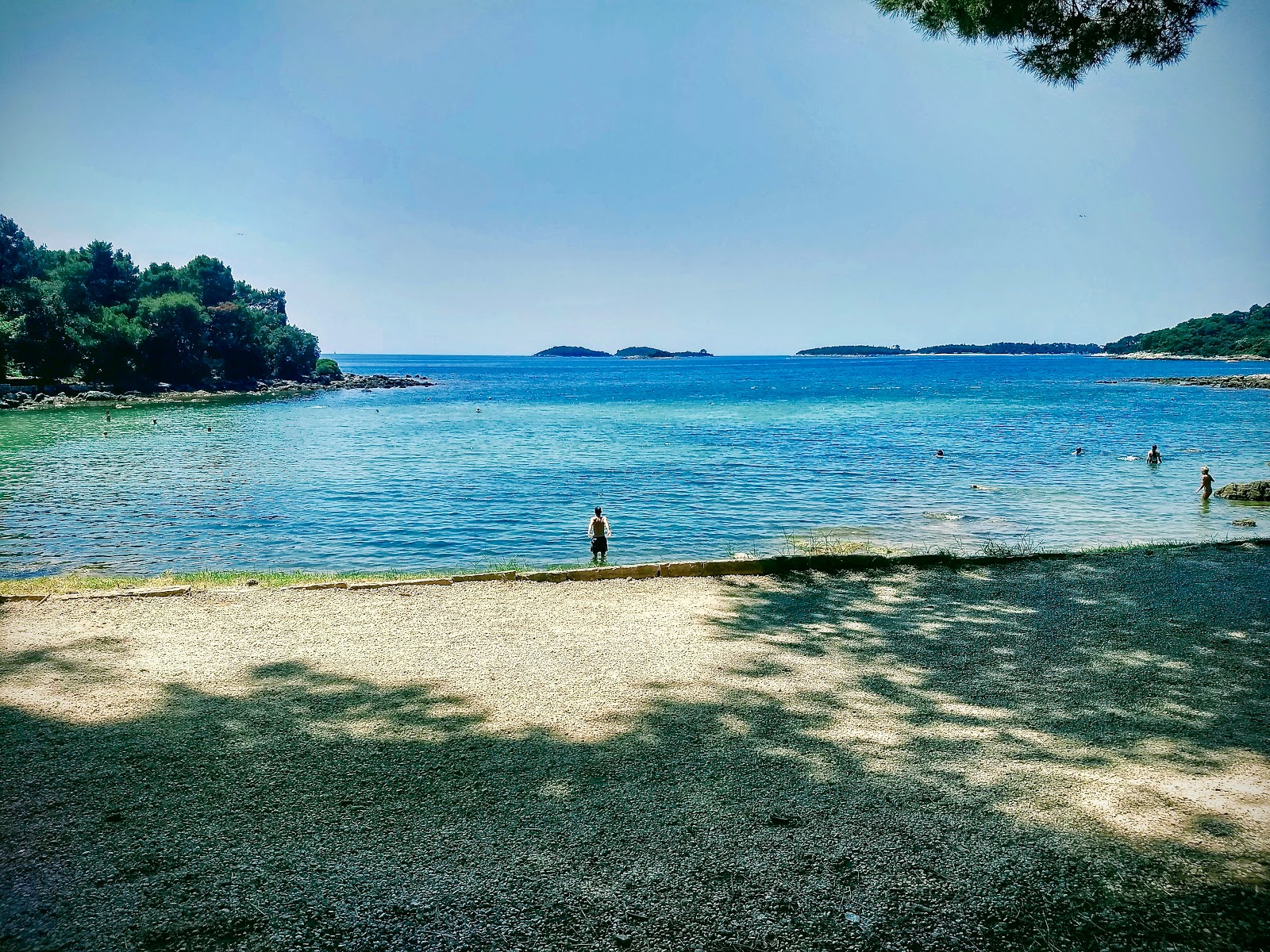
It was nice to be back in Newport after a long hiatus, visiting Rovinj, Croatia. Rovinj was ruled by Venice for over 300 years, ending in 1799, and looks the part. I was with a friend. We went to the beach for 17 out of 21 days. The shore was rocky, and water shoes are a must to avoid spiny sea urchins, but the water’s temperature was ideal, the Adriatic was calm, and if you did not like one beach, in 100 feet, you would come to a different beach. Usually the nude beaches were the furthest walk, and the least crowded! Just offshore, dolphins leapt above the water.


Speaking about clothing or the lack of it, I felt somewhat overdressed in shul, as I had opted to wear a jacket to shul in the stifling heat. I got some chuckles about this from the women's gallery. Upstairs there was a breeze.


I was grateful for an aliyah and a chance to lead the first part of musaf (returning the torah to the ark). 


The parsha was largely about Balaam, Balak, and the talking ass! I tried out for the third role, but was rejected as not being funny enough. The almighty, it seems, has a great sense of humor. Balaam took a page from George Washington, saying, “I cannot tell a lie,” after Balak complained about his praising rather than cursing Israel, which he had been hired to do at a considerable expense. 


Balaam’s words of praise began with,מַה טֹּבוּ אֹהָלֶיךָ, יַעֲקֹב; מִשְׁכְּנֹתֶיךָ, יִשְׂרָאֵל.  “Ma tovu ohalecha Ya'akov, mishk'notekha Yisra'el.” [How goodly are your tents, Jacob, your dwelling places, Israel]. By the time we heard this, we felt and appeared a bit frazzled from the heat, and Rabbi Marc Mandel said the sermon would be at the kiddush. 


If you look closely, you will
see a bottle of Youth-Dew.
Speaking of appearance makes me think of Jews and their involvement in the fashion and cosmetics industries. Estée Lauder was born in Queens in 1906, and was exposed to business in the family hardware store. She helped her uncle, who made cosmetics, and this led to her success in the cosmetics business. In 1953 she introduced Youth-Dew, a bath oil/fragrance, which sold 50,000 bottles in its first year. She explained later, “I have never worked a day in my life without selling. If I believe in something, I sell it, and I sell it hard." 


In 1930, Estée married Joseph Lauder. Their son Leonard became a postcard collector and art aficionado, with a particular interest in New York’s Whitney Museum. Their son Ronald is also an art collector. He founded the Neue Galerie of early twentieth century German and Austrian art, which is across the street from the Metropolitan Museum of Art in New York. Ronald has dabbled in politics, is strong opponent of anti-semitism, and is very involved in Jewish affairs. 


Stefan Pryor
At the end of the service, Stefan Pryor, Rhode Island Secretary of Commerce, arrived with his friends Elizabeth and Laura Lauder. Secretary Pryor spoke at the George Washington letter reading last year when he stole the show. We are slightly acquainted, having exchanged messages when I asked for a copy of his speech.


Rabbi Mandel greeted the arrivals, apologizing for finishing services early. He never has to apologize for finishing services late! I wish he was more widely emulated.


After briefly seeing Touro Synagogue, our guests joined us at Kiddish. Rabbi Mandel never misses a chance to have a kiddish speaker, and after the shock wore off, Laura Lauder obliged. 


Laura Lauder
Laura began by thanking Rabbi Mandel, who was holding his grandson’s hand. She described herself as a venture capitalist and philanthropist who also chairs the $2.1 billion Jewish Community Endowment Fund of San Francisco. She said the greater San Francisco Jewish community, one of the largest Jewish communities in the US, has an 80% intermarriage rate. The good news, she reported, is that 60% of the children of those marriages are being raised as Jews. 


She spoke of her Uncle Ronald’s involvement in Jewish life, including restoring synagogues in Europe, particularly the Dohány Street Synagogue, which is also known as the Great Synagogue of Budapest. The Great Synagogue seats 3000 and is the third largest synagogue in the world. Built in 1859, it is a Neolog synagogue, and includes an organ. Franz Liszt and Camille Saint-Saëns both played the original 5,000-pipe organ. The synagogue was badly damaged during WWII. The Lauder family donated at least $5 million to its restoration. The Central Synagogue in New York is a copy of Budapest’s Great Synagogue.
portrait of Adele Bloch-Bauer
by Gustav Klimt

— at Neue Galerie New York.


Ronald, she said, was also involved in restoring art that was looted during the Holocaust to its rightful owners or their heirs. Most famously, he knew the heirs to a Gustav Klimt painting, and when, after a long battle they retrieved the painting, he purchased it for $135 million and donated it to the Neue Galerie. 


As our guests left, I told Stephen Pryor to take his friends to Purgatory. He thought I was making a statement about life, rather than about Newport. I replied that I would be happy to show him around.


Come to think of it, we never did hear Rabbi Mandel’s words of torah, but we did learn about making visitors feel welcome, and gladly joined the rabbi in doing so.


Shabbat Shalom from Jewish Newport and from Purgatory!

Thank you to Beth Levine for editing.

Friday, June 28, 2019

A Man with a Vision


At Jewish Newport
June 22, 2019
also on facebook

A Man with a Vision

 Last Saturday at Newport’s Touro Synagogue, we enjoyed joining a local family as their son was called to the Torah for his aufruf, and we were grateful for their kiddush sponsorship. It was nice to be with so many people who were celebrating a happy occasion.

Rabbi Marc Mandel spoke about politics…almost. 

“This week, President trump officially began his presidential campaign for 2020 and next week 20 Democratic candidates will be debating and launching their campaigns. Who will be the leader of the most powerful country in the world?

“Leadership is the topic of this weeks Torah reading. Who will lead the Jewish people as they prepare to enter the Holy Land? In an interesting twist, Moshe asks his father-in-law, Yithro, to travel with the Jews and to lead them. Yithro said, ‘No, I don’t want the job. I like my life the way it is and I like my home.’ Moshe pleaded with him, ‘We need You. We need you to be our eyes.’

“What does that mean, to be our eyes? Rashi says, ‘Moshe was telling Yithro, “There are things that I don’t see that you see. I need your help.”’ Moshe believed in collaborative leadership-working together towards a common goal. 

“But why did Moshe need Yithro! Surely there were other people who could have helped Moshe? Yithro was a non-conformist, he challenged the status quo and he introduced new ideas that improved an ailing system. Moshe understood and knew this and that’s why he pleaded with his father-in-law.

“And then there is the vision thing.

“Moshe was having trouble presenting a coherent vision to the people. After all, it was Aharon his brother who built the  Mishkan.

“He was asking Yithro to help him develop a vision that he could share with the Jewish nation, a vision that could inspire the people.

“One thing I noticed over the years about the groom is that he is a person with a vision. He knows how to chill; but he  has a vision of what is important and he leads people with the vision. 

“Did Yithro end up going with Moshe? That’s a dispute between the Ramban and the Sforno. Ramban says he stayed and the Sforno says he left.

“Now the groom is ready to take his journey with kallah, but they’re not leaving anyone They are taking the values and the vision of both families and as they start their journey we look forward to sharing the their success and their blessings. 
Shabbat Shalom.”

William Wilberforce
I am reading a book called “Amazing Grace - William Wilberforce and the heroic campaign to end slavery,” by Eric Metaxas. William Wilberforce was very intelligent, but as a youth adopted many of the ways of the upper classes. In eighteenth century England religion and idealism were out of style. This was probably a reaction to 200 years of war and strife in the name of religion. Many enjoyed the good life, defaulting their roles as leaders.  

Wilberforce inherited a large fortune in college, which enabled him to become a member of parliament in 1784, when he was 25 years old. In those days, one had to pay for each vote. 

In 1785 he became a fervent  Christian (Methodist) and realized that he was doing nothing with his life. He became interested in two causes, the abolition of the slave trade, and the promotion of a more civil society. England was a very different place from the country we know today. There was widespread poverty, drunkenness, prostitution, and cruelty. Many crimes were punished by public hanging, which was a spectacle to titillate and intimidate the masses. 

Since 1688, every King of England had issued a proclamation on the accession to the monarchy that urged the ruling classes to act as leaders of society. They had abrogated that role.

Wilberforce’s lobbying persuaded King George III to issue the Proclamation for the Discouragement of Vice 1787. The role of religion in this was a secret. Being a sincere Christian was a non-starter.

Wilberforce helped create Proclamation Societies starting with the elite to get them to live up to their role. It took a long time for his vision to become a reality, but gradually England became a more civilized, less brutal place where people cared for each other and for those who were less fortunate. Sometimes it takes a man with a vision!

Shabbat Shalom!

Friday, June 21, 2019

Then And Now

Then And Now
At Jewish Newport
Shavuot, 2019
also on facebook


Rabbi Marc Mandel’s Dvar at Newport’s Touro Synagogue on the first day of Shavuot this year was succinct, yet inspiring.
He posed the question, “Why was the Torah given in the desert, and not in the land of Israel?” He gave two answers.
His first explanation was, “The Torah is open to everyone like the desert is.” It did not belong to a part of the people of Israel, such as the kohanim (priests). It belongs to all the people of Israel, and even to the entire world.
Another explanation, he said, was, “The Torah challenges us to create a community out of the desert. We are supposed to build.” The Torah is about building a society, and giving it in a settled land would dilute its impact.
On the second day Rabbi Mandel said, “Shavuot is one of the four Jewish new years. On Shavuot we are judged for fruit.” Then he spoke about the environment. “Our parents and grandparents,” he said, leading up to Yizkor, “did not have the luxury of worrying about the environment. But we must.”
In both explanations, the burden is upon us to make things better, with the guidance and inspiration of the one above us. Are we up to the challenge?
On the first day Rita Slom sponsored a special kiddish. As is well known, sponsoring kiddush and speaking at kiddish often overlap. Since Rita is my cousin, I was expecting great things, and was not disappointed. Rita reviewed the past, and looked to the future,
“I am so happy to see all of you here on this Shavuot afternoon. It is my honor to sponsor this luncheon in honor of what would have been by husband Aaron’s 100th birthday and his yahrzeit 16 years ago. My sons and their families all celebrated his birthday, but they could not be here today.
“Aaron and I and our sons were all born in the Newport Hospital, went to Hebrew School here and Aaron and the boys were bar mitzvahed here. In fact, Bernice Gamins Schweber and I were confirmed in this synagogue. I have never lived any place else - a real native.
“We all graduated from Rogers High School and this is what I want to talk about today. Aaron was born in 1919, a year after the big war, and graduated from high school in 1936. I was born in 1933. Obviously, we were not high school sweethearts. But we did meet at Touro and eventually dated and married!
“We often wonder how many Jewish families were here in those years. For those of you who read the Touro Update, you would have seen a picture taken in 1927 of a group who were at a Jewish community picnic. Aaron and his parents and his friends are in the front rows and my parents and my oldest sister Doris are in one of the rows in the middle. This was not the entire Jewish community. There was another synagogue in Newport at that time.
“I recently read Aaron’s yearbook and found that there were 21 Jewish students in his class. Of that number, only ten continued living in Newport. Many of them were active in the community and this synagogue. Two of them became president of Congregation Jeshuat Israel - my husband Aaron and Bernard Kusinitz. Two of them had sons who became presidents - Bea Berman Bazarksy’s son David and Irving Tobak’s son Paul Tobak who is currently co-president. Eleanor Meirowitz Davis graduated two years after Aaron, and her husband Seymour Davis was president. So were Mort Kosch and Samuel “Sonny” Friedman.
"Fred Alofsin became mayor, and my husband Aaron was on the school committee for 19 years.
"In my high school class there were 10 Jewish kids and only two of us, Michael Josephson and myself, are still in Newport. I was the first woman president of Touro Synagogue.
"In looking at my sons’ classes, there were not that many Jews, primarily because by then we had three high schools on the island. But in looking through the names of those in Rogers, I don’t think that any of those graduates still live in Newport. A sign of the times were the young ones have all moved out of town for jobs or for marriage.
"I am so proud of our Hebew School and all of the volunteers and children who are there. When we worry, ‘Who will be here after we are all gone,’ we can see that they are coming up behind us and hopefully will stay in Newport.
"Thanks for joining us today.”
Shabbat Shalom from Jewish Newport!
Thanks to Rabbi Mandel and Rita Slom for sharing, and to Beth Ginsburg Levine for editing. Touro Synagogue - Newport, RI @rogershighschoolnewportri