Monday, November 21, 2016

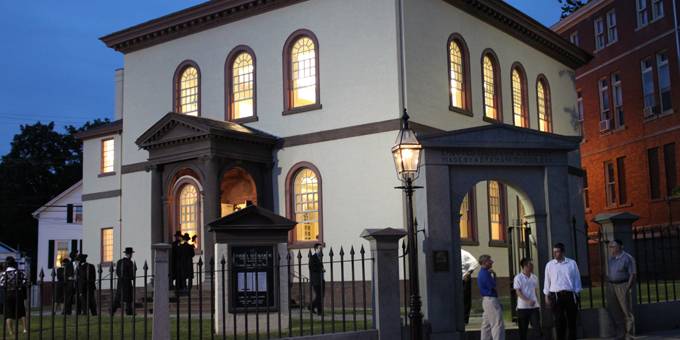
At Touro Synagogue November 19, 2016

At Touro Synagogue November 19, 2016
The Terebinths of Mamre and Corn Bread Crisps
by Aaron Ginsburg


 On Saturday we were blessed with many visitors, including Jeff and Tali Moskowitz from West Hempstead, Long Island. Jeff led services on both Friday night (with 1 minutes notice after passing the voice test) and on Saturday morning.  Jeff is in the corn bread snack food business. His davening was crisp, well seasoned and baked, not fried.   

We were also joined by Michael Field and Alan I Greenstein from Temple Emeth in Chestnut Hill, Massachusetts, and Mr Brescher from New York. It being a small Jewish world, Michael and I attended an event at Temple Israel in Sharon, Massachusetts last Sunday, and Alan I Greenstein, who shares the initials AIG with me, knows sisters Shirley Saunders and Beverly Bavly, who are active in the Touro Foundation. 

As often happens, Rabbi Marc Mandel got off the Bimah and went right to the door to greet some of the visitors, who did not suspect that the Rabbi was the greeter. 

Parshat Vayera, Genesis 18:1 - 22:24, has a lot in it, including the controversial binding of Isaac. Abraham’s tent, with its four doors always open to visitors, has become a symbol of welcoming. Speaking of welcoming, my sister Beth Ginsburg Levine wrote this month in the bulletin of Temple Emunah, Lexington, Ma:

“Visitors at Minyan

I have many responsibilities as the Thursday night minyan leader. Among these duties are to arrive at the synagogue every week before 7:30 pm; refer to the luach. (an annual calendar book that has instructions for additions/deletions to the service); be sure Dawny (the Thursday night gabbai) has everything she needs at her seat; refer to the yahrzeit list in case someone with a yahrzeit would like to lead the service. But, to me, one of the most important duties is to welcome those people that I do not know.

Sometimes the stranger turns out to be a Temple Emunah member whom I have never met, but most times he/she is a visitor to Temple Emunah. These visitors usually are either saying Kaddish during their year of mourning or have a yahrzeit. Because Temple Emunah has one of the few daily minyanim in New England, visitors from near and far come to our service. 

There are Temple Isaiah members we see regularly, some of whom feel a bond with their fellow Emunah minyanaires. There are some that come so regularly during their mourning year that they become service leaders. There are business travelers in the Lexington area who come to say Kaddish. There are vacationers who travel through New England and stop at Emunah because of our daily minyan. 

There is the woman who lives in western Massachusetts with a yahrzeit on Sukkot. She usually is in our area and I see her every year. There is the man from Brooklyn who comes to Lexington so often for work that he has become a regular at Wednesday morning minyan and Study with the Rabbis. There are those who come for a yahrzeit who are former members of Temple Emunah. They left our congregation for a variety of reasons, but count on our daily minyan.

Each of these visitors needs to be welcomed to our service. On Thursday nights, I try to greet everyone before the service begins. If there is a latecomer, I try to greet them after the service ends. I have found that this small, friendly gesture is greatly appreciated. Some visitors have eventually joined Temple Emunah because of the warm welcome; some have handed me donations to give to the synagogue. Others express their pleasure and gratitude at receiving the welcome. When you come to minyan, I urge you to say hello to someone you don’t know. It may be a lasting memory of Temple Emunah for a visitor.”
Beth Levine

Rabbi Mandel took his words of Torah from the first sentence of the Parasha, “ The LORD appeared to him by the terebinths of Mamre…”  

I have no idea what a terebinth is, but I love the sound of it. In fact, I want one for my coffee table. The Rabbi said, “God meets Abraham in the town named after Mamre. Rashi tells us that Mamre was Abraham's advisor. Since God was testing Abraham several times, he asked his advisors what to do, and only Mamre told him to follow the requests of God each time, so Mamre was rewarded in this Parsha.” 

Abraham was subjected to 10 tests or trials by the Almighty. Although Abraham sought advice from many people, he was responsible for the decisions he made.The Rabbi continued,

“Who are our advisors in life? Who will be Trump's advisors? Perhaps his son-in law, Jared Kushner.”

The Rabbi welcomed Michael Field near the end of his sermon. Michael told us that he went to school in New Orleans, and that Judah Touro was a local hero. Not only did he assist a synagogue that became Touro Synagogue, but by his generosity he founded a hospital, the Touro Infirmary. Across the street from the Touro Infirmary is the Touro Prytania Parking Garage, which is $4 for 2 hours. The Touro Foundation supports the hospital, and gives the Judah Touro Society award “annually to a living individual who has made an outstanding contribution to the welfare of Touro Infirmary.”  At Tulane University there is a Judah Touro scholarship.

Let’s pray that President Trump will select wise advisors, and will make wise decisions for our country and for the world. And in our own lives may we find advisors with wisdom and make wise choices. 

@tourosynagogue @jewishnewport


Monday, November 14, 2016

At Touro Synagogue November 12, 2016

At Touro Synagogue November 12, 2016  
Moving On
by Aaron Ginsburg


On Saturday we had quite a crowd. Elie and Marcia Cohen sponsored a special Kiddish, and we were joined by many of their friends and family to celebrate this special day. Elie read the Torah, just like he did at his Bar Mitzvah in Egypt back in the days.

It was a special treat to see Eleanor Davis and her son Bobbie. When I saw Eleanor outside, I went out to greet her, and Mike asked me to take charge of the gate while he helped Eleanor go upstairs. Wrapped in my woolen tallis, I stopped people to make sure they were coming to pray, and stopped traffic while a couple of people crossed the street. In truth it was rather quiet in Newport, and there wasn’t any traffic to stop! A cool breeze came from the sea. Next time, I’m wearing two taleisim!

Some people were pleased by the election results while others were upset and disconsolate.   

Using the parsha, Lech-Lecha, and the examples of Abraham and of Marcia and Elie Cohen, Rabbi Marc Mandel urged us to move on:

It’s customary to give a few words of greeting and of Torah. 
Yasher Koach to Dr Herstoff for leading us in the pesukei dezimra and in the shacharit, and to Saul Woythaler for the first part of the musaf, and to the Renee Cohen for the prayer for the United States Government and to Audrey Paiva for prayer for the State of Israel, and to co-president Naftali Sabo for the prayer for the United States Armed Forces and the Israel Defense Forces.
Thank you to our kiddish sponsors Marcia and Elie Cohen in honor of Elie’s Bar Mitzvah. 
A special welcome to Renee and Audrey and Joe-Jillian and Joline, and to Larry and Charlene and all their friends who are here for this special Kiddish. 
Well, the election is over and now is the time to move on.
Today’s Torah reading is Lech-Lecha-that’s what Lech-Lecha means-move on-carry on with your life. It’s over, and now we can go back to managing our lives in a productive way.
These words, Lech-Lecha, are very powerful. Marcia and Elie Cohen guide their lives with these two words, Lech-Lecha. They are always on the move. They are always moving on and doing something productive. 
One day last week I was talking to Elie and he had 7 meetings that day, at the hospital and the University, etc. And Marcia is alway on the move. Lech-Lecha-she’s taking someone to Boston and Providence to visit their doctors or she’s hosting people who are visiting.
It’s always Lech-Lecha-it’s always something productive and helpful. Of course, Eli left Egypt-and he went like Avraham to search for a better life for himself. At that time Egypt wasn't the right place for him to live.
Like Elie and Avraham, we are all in search for a better life for ourselves and for our families and for our country. Jews have been here in Newport since the 1600s. That’s a long time. Why are they here?  Because they were looking for a better place to live, and they found one. So we have a lot of stake in this country.
Every Presidential election is important for us. That’s why Moses Seixas wrote the letter to George Washington. He wanted to know,  “Did they make the right choice by moving here?” And George Washington told him, “Yes you did!” 
And that’s what we want to hear from every president. We want to hear them say, “You made the right choice by moving here, because every American citizen has rights to freedom and happiness.”  
That’s what Elie wanted when he left Egypt and that’s what every American wants for their families.
In today’s Torah reading Avraham and his nephew Lot go separate ways- and that’s what seems to be happening in the United States today-people  are divided. We have to learn from Elie and Marcia to bring people together-because that’s what they do-they bring people together like they are doing today with this special Kiddish.
Let us hope and pray that we will come together as a country and that Jews in Israel and all over the world will live securely. Shabbat Shalom

The Rabbi  words were not just about the election, but about any time things don’t go the “right way.” It’s not easy, but with the help of the Rabbi and Shabbat, let’s give it a try!


After services, most of us went across the street for the wonderful Kiddish and a chance to schmooze. Marcia and Elie brought us together. Let’s emulate them and Lech-Lecha! 


@tourosynagogue @jewishnewport

Sunday, November 6, 2016

At Touro Synagogue November 5, 2016

The Parsha and the election;  How do we know what a person is like?

by Aaron Ginsburg

Today we read the second parasha in the book of Bereishit, Noach (Genesis 6:9 - 11:32). In the parasha, the Tower of Babel story seemed to be very dubious about the benefits of city life. But  when Noah planted a vineyard and  got drunk, it was connected to his being a man of the land, אִישׁ הָאֲדָמָה, in other words, a farmer. I don’t know about you but I think the country is fine, if city comforts are available, such as wifi! One can be good or bad anywhere.

Rabbi Mandel discussed the parasha and Tuesday’s election:

“This Tuesday is election day and America will be choosing a new president. This has been a crazy election season. The debates have been about personal attacks and insults. How do you judge a candidate? How do you really know what a candidate is like? 

We see from this week’s Parasha, Noach, that it is very difficult to really know what a person is like. Noach is believed to be in the Torah as a tzadik. A tzadik is a righteous person. How many people in the Tanach are referred to as a tzadik?

Does he act like a tzadik? It doesn’t seem that way. He doesn’t protest about the flood at all. As long as he feels safe, the flood doesn’t seem to bother him.

He doesn't really believe so strongly in G-d. When does he enter the ark? When he is about to drown.

And he has a drinking problem and is not in control of himself. Is this the behavior of a tzadik?

So it is very difficult to really judge people. We have to use all the information we have and decide based on what we have seen and what we know from the candidate’s past.

Let us hope a pray that we all have the wisdom to choose the best candidate and may the United States continue to prosper in every possible way.”

Was the rabbi really discussing the election, or was that just an example to illustrate the question? You decide.

Among our visitors on Shabbat was Rabbi Alex Ozar and his wife Lauren Steinberg from Stamford, Connecticut. The Rabbi is studying at Yale for a doctorate in Philosophy & Religion, focusing on how modern Jewish thought was affected by non-jewish modern philosophical thought.  His wife is a terrorism expert at the Anti-defamation League headquarters in New York City. 

One of the topics that came up was the Kosher restaurant scene in Stamford.  Navaratna, a vegetarian Indian restaurant, and Shoosh  (sushi) were special favorites. Want desert? No problem! The Stamford Dairy Queen is also certified by the Vaad Hakashrus of Fairfield County. Of course Newport has the Raw Power Juice Bar and Kitchen, certified by our own Rabbi Marc Mandel. 

Lauren Steinberg spoke briefly at Kiddish about her work. Her group consists of five people tracking and analyzing domestic terrorism. Part of the focus is on radical Islamic terrorism. Except for the fact that they are mostly males, the terrorists don’t seem to have a lot in common. One issue is how to distinguish terrorists from people who, although they might sympathize with Hammas, a terrorist organization, are totally opposed to domestic terrorism. The ADL shares what it learns with government officials and the FBI. 

@tourosynagogue @jewishnewport http://www.navaratnact.com 


Sunday, October 30, 2016

At Touro Synagogue Saturday, October 29, 2016

At Touro Synagogue Saturday, October 29, 2016 
by Aaron Ginsburg

 On Friday on the way to Newport, as I drove through the rock-cut on Route 24 towards the Sakonnet River Bridge, the sky seemed to be on fire. When I approached the bridge, the clouds had slightly broken up on the horizon just as the sun was setting. It was spectacular…Was it the end of the world, or it’s beginning? It seemed like a scene from this week’s Parsha,  Bereshit (In the Beginning).

The Stone Chumash translated the phrase Tohu v’ Vohu as “utterly empty.” When I entered Shul on Saturday the Shul was utterly empty, although this was remedied before we got to the Torah reading. 

Rabbi Marc Mandel spoke about books. During Sukkot, we read Kohelet (Ecclesiastes). In Kohelet 12:12 we read “And furthermore, my son, be admonished: of making many books there is no end; and much study is a weariness of the flesh.” The author of Kohelet was having a bad hair day, or was extremely depressed. Alas, there was no Prozac or shock therapy available to snap him out of it. 

The Rabbi noted that today’s Parsha referred to a book. “This is the book of the generations of Adam (Bereshit 5:1).” 

This brings to mind the Documentary Hypotheses. A lot of effort has gone into the hypotheses, which states that the Torah was written by many hands over many years.  From a historical perspective these ideas are very interesting..but it is still our Torah, and we can continue to learn and be inspired by it.  

Rabbi Mandel held up a copy of the “Jewish Voice,” which had a front page obituary for Professor Jacob Neusner. Neusner, who taught in many places, wrote 950 books. Cliff Guller calculated that to be one every two weeks if he started at age 20. Perhaps it was a substitute for weight watchers.  There was some question about how good Neusner’s books are, and about the validity of his conclusions about Jewish history and religion and the accuracy of his translation of Jewish texts. 

By comparison, Isaac Asimov wrote or edited only about 500 books, and wrote a mere 90,000 letters and postcards. Asimov was a polymath. A biochemistry professor at Boston University, he wrote many classic works of  science fiction, and mysteries, popular science, and even “Asimov’s Guide to the Bible” and Asimov’s Guide to Shakespeare.” 

Asimov was born in the shtetl Petrovichi. When Tzar Nicholas I decided to expel the Jews from Russia proper, a wealthy citizen moved the border marker so the town would be inside the Pale of Settlement, enabling the Jewish residents of the shtetl, 50% of the population, to remain in their homes. His first language was Yiddish, and his second language was Brooklynese. I have read far more books by Asimov then by Neusner. What about you?


Our visitors today included two couples from Stamford, Connecticut. It was slightly unclear whether they were coming for the Touro experience or for the cholent, but they stayed for both the service and Kiddish sans cholent. @tourosynagogue

Friday, October 28, 2016

At Touro Synagogue, Saturday, October 22, 2016, Shemini Atzeret, and Simchat Torah

At Touro Synagogue, Saturday, October 22, 2016, Shemini Atzeret, and Simchat Torah 

by Aaron Ginsburg

Shabbat Hol HaMoed Sukkot, Saturday, October 22, had special Torah and Haftarah
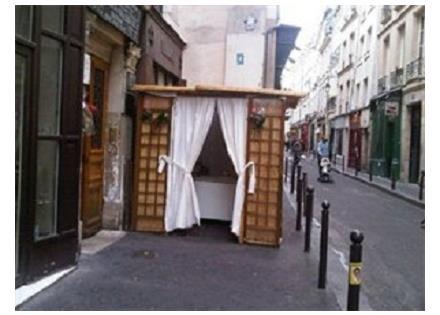
Paris, France
readings. Rabbi Mandel discussed Sukkot. “What is the purpose of a sukkah?” he asked. The congregation gave several answers, although not the one he was looking for. Perhaps someone should be planted in the congregation to bail us out when we are stumped.
Rabbi Mandel explained, “ A sukkah is for protection. When people are moving from one place to another, they are vulnerable. The Jews were vulnerable when they left Egypt, but they were protected by God. There is a debate in the Talmud if they were protected by real sukkahs or Divine clouds of protection. Today, there are millions of migrants in the world and they are vulnerable. They often lack protection. We can relate to this.“ 
Sukkah or dIvine protection? It’s not an either-or situation, and besides, it’s always good to have a back up plan. If your computer has ever crashed, you know that!
At Kiddish, Rabbi Mandel received several complements…for his tuna salad! It seems he did not go overboard on the mayo, and people observed that it actually looked like tuna salad rather than mayo salad. I was about to speak up on behalf of mayonnaise, but bit my tongue. Did Phil Ochs write a song about this?
On Monday, Shemini Atzeret, we had a few visitors, including a couple from Toronto (originally from Zimbabwe), and some of the omnipresent New Yorkers. As a young, strong New Yorker was about to lift a very heavy and lopsided Torah, Rabbi Mandel said softly, “This one might be a little heavy.” The Torah was raised with the greatest of ease. I breathed a sigh of relief that I was not asked to lift that one. 
As he gave Saul Schweber a Yashar Koach after an aliyah, Mike Josephson told Saul in an audible voice, “If you go up often enough, you’ll learn the blessings by heart.” 
Rabbi Mandel told us that Shemini Atzeret was difficult to understand. “On the one hand, it’s the 8th day of Sukkot ( Shemini means 8 ). On the other hand, we don't sit in the sukkah or use the lulav and etrog. Either way, it is the end of Sukkot.” He also mentioned a website sukkahsoftheworld.org that is devoted to pictures of sukkahs. The site is great fun, although in need of updating.
“Sukkahs are a unifying force, because we all come together into one sukkah,” he said. “A sukkah also unifies us with earlier Jewish communities, because, their sukkahs were probably similar, in many ways, to our sukkahs.” He spoke of the many sukkahs he remembered as a child in New York City, including sukkahs on fire escapes for those who lived in apartment buildings. 
I recall the sukkah at Touro Synagogue from my youth. It had heavy canvas undecorated walls. That was before the plastic century began. I also recall enjoying the sukkah because of the herring.
When the Rabbi reviewed the Simchat Torah schedule, there was a question from the balcony. “Will there be a women’s hakafa tomorrow?” inquired Rita Slom. Rabbi Mandel confirmed that indeed there would.
When introducing Yizkor, he asked people to remember their childhood sukkahs and the memories they have of their parents and grandparents sukkahs.
On Simchat Torah evening, we were fortunate to be joined by some children. Because of the weather, we danced inside, but our joy was not diminished. And there was a women’s hakafa. Two mini-Torahs had the complete Torah printed on paper, making them fast-proof if they were dropped (It is traditional to fast if a Torah is dropped). They were carried by children of all ages! On Tuesday morning, services were efficient as usual. We did two hakofas at a time, and doing all seven didn’t take long. We had no trouble finishing by our usual 11:00 AM. @Tourosynagogue www.sukkahsoftheworld.org

Friday, October 21, 2016

Yom Kippur, Shabbat, and Sukkot at Touro Synagogue October, 2016

Yom Kippur, Shabbat, and Sukkot at Touro Synagogue 

October, 2016 by Aaron Ginsburg

Yom Kippur


Most of our experiences with candlelight take place after a storm. When we lose power we don't usually light enough candles to illuminate a room. But there is a way to get a true candlelight experience: Attend  the Yom Kippur Kol Nidre service at Touro Synagogue.  With five candelabras and the candlesticks, the room takes an orange hue, often joined by the setting sun.

Rabbi Marc Mandel spoke about how the High Holidays are never at the right time. They are either too early or too late in the year. If they’re early it's too hot.  If they’re late it’s too cold. Speaking about time, Rabbi Mandel told us about a sermon called, “Five Minutes to Live.” It was given by Rabbi Kenneth Bernstein on Yom Kippur Day, 1986, and was the subject of a recent article in the New York Times. There are links below for the article, and to the complete sermon.


Rabbi Bernstein spoke about the Challenger disaster. The astronauts were alive during the five minutes it took their spacecraft to hit the ground. What would go through your mind if you knew that you had only five minutes to live?

A framed photo of Rabbi Kenneth Berger
and Aviva Berger dancing.
 Nate Pesce New  York Times
Three years later the rabbi and his family were themselves involved in an airplane crash. Their plane was damaged after an engine blew up.The Rabbi’s wife, Aviva, fainted, and he comforted their two children.  The plane circled for 40 minutes and then crash landed. The children survived; the rabbi and his wife were killed.

On Yom Kippur, we don’t know whether we have five minutes or 40 minutes to live,  or whether we have  five years or 40 years. How often have we regretted not doing or not saying something, for example not spending time with our families or not saying we are sorry? The High Holidays give us a chance to put things right. We might only have five minutes to live. Do we want to spend our last minutes regretting what we did not do?

At the afternoon service Rabbi Mandel mentioned a rabbi who works on a cruise ship.To the amusement of the congregation,  Rabbi Mandel said, "I wonder how I can get a job like that.” We assured him that he already has a job that's even better.  He's the Rabbi on an island resort and doesn’t even have to worry about getting seasick. 

The haftarah, read by Rabbi Lowell Weiss, was the book of Jonah. When Jonah wanted to get away from his troubles, he bought a ticket for a cruise to nowhere. It was not so easy to escape, and this caused problems for both Jonah and his fellow passengers. In real life it’s not always possible to get away from our problems, which are often still there when we get back from vacation.

Shabbat October 15, 2016 


Rabbi Mandel told us that although today's parsha, Parashat Ha’Azinu, is a song/poem…there is some debate about it. And of course, there is some debate whether Bob Dylan’s songs could be considered literature, and if so worthy of a Nobel prize.  He certainly has both  a poetic and a prophetic gift, since he seemed to speak for a generation.  And what is the job of both  literature and a prophet, but to put into words the things we are thinking, or should be thinking? 

It was unavoidable that Bob Dylan and the electric guitar he played at the Newport Folk Festival  would be mentioned. Saul Woythaler and Aaron Ginsburg  blurted out almost simultaneously, “I was there!” Saul was an usher, and Aaron was helping his cousin Charlie Lasky with the record concession.  


Sukkot Tuesday, October 18, 2016


Visiting Rabbi Allen Podet gave the sermon. A former Navy Chaplain, Rabbi Podet is very familiar with Newport. He recalls Rabbi Lewis. Currently he is Rabbi at Temple Hesed Abraham, Jamestown, NY, Professor of Religious Studies at Buffalo State College, and a Chaplain at the Buffalo VA Hospital. He also is a founding rector of the Abraham Geiger College in Potsdam Germany, the first progressive rabbinical school in Europe since WWII. 

Rabbi Podet had the customary 15 minute notice that he would speak, but with his resume, there was not a doubt that he would come through.

Rabbi Podet modestly thanked Rabbi Mandel for his effusive introduction. He pointed behind him to the flags of the United States and Israel, and said those flags would not exist without what was in the painting above them, the Ten Commandments and the Torah.  I think he was referring to the rule of law, and of justice, a justice that applies to all.

We were also joined by Dr Louis Arnow, whose office used to be on Bull St. Dr Arnow was hoping to speak to the Rabbi. He was welcomed to join us for services and in the Sukkah, and he did. 

During his Navy years Dr. Arnow found out he would be sent to Key West, Florida. At the time, Key West was noted for its large population of… fish! Finding out that an appeal was possible, he asked to be reassigned. After finding out he was single, the assignment officer said, “I’ve got just the place for you!” He was sent to Newport, which was more appropriate for a single guy.  He arrived in 1960, just in time for the Jazz Festival riot. (Saul and Aaron remembered that too.) Dr Arno recalls Dr Sam Adelson fondly and was proud to have followed in the footsteps of Dr. Sam and of Dr Elie Cohen by becoming Chief of Medicine at Newport Hospital. 


He told  us a story that he heard from Sam Adelson. Dressed in appropriate attire, Sam was puttering around in his garden at the corner of Rhode Island Avenue and Old Beach Rd, where he lived with his wife Mildred. A woman in a limousine stopped to admire the flowers, “Are you the person that takes care of that lovely garden?” Sam acknowledged that he was the gardener. “I bet the lady of the house pays you well for your skill.” “Not at all,” said Sam. “She pays me nothing.” As the woman was about to hire a new gardener, Dr Adelson gave a clarification, “I sleep with her.” There was not a career change, and he remained in the medical profession. In this case, clothes did not make the man.

Hag Sameach!


@tourosynagogue


Sunday, October 9, 2016

At Touro Synagogue Saturday, October 8, 2016


At Touro Synagogue Saturday, October 8, 2016 

by Aaron Ginsburg

On Shabbat Touro Synagogue was back to basics. Not a single tourist was present. Presumably, they were leaf-peeping.

The short torah portion, Parashat Vayeilech (Deuteronomy 31:1 - 31:30) tells of the transition of leadership from 120 year-old Moses, to Joshua who was a mere 96. Moses said, "I cannot come in and go out anymore and I cannot cross this Jordan.” Moses wasn’t happy about it, but the boss is the boss. G-d decided it was time for a change.  Moses and Joshua had very different. Joshua usually plowed right in to get things done. Moses often needed reassurance from above.  

Moses repeatedly told Joshua “chazak ve'ematz" ("be strong and have courage”).It was clear that Joshua had courage and strength. Moses was probably telling Joshua to be strong in his faith and not to entirely depend on his own strength.

Several of the more senior members of the congregation were called up for an aliyah including Mike Josephson, Zal Newman, Saul Schweber, and Herb Meister.

Rabbi Marc Mandel said, “Mike’s great-grandparents were the first to have the key when the synagogue reopened for worship in the late 1800s.” Mike held up his keyring and quipped, “And I still have the key!” 

When Saul Schweber came down from the bimah he realized that something was not quite right with Cliff Guller's appearance, “Cliff, where's your suit?” Cliff owned up, "It's at the dry cleaners.” 

Herb Meister noticed that I had not cut all the threads on my new jacket, and, joined by several others, pulled out a pocket knife to correct the situation. Note to myself: be sure to cut the threads before Yom Kippur.

Rabbi Mandel pointed to the command “Now therefore write ye this song for you, and teach thou it the children of Israel; put it in their mouths, that this song may be a witness for Me against the children of Israel.” The Rabbi said, “It’s a little ambiguous. Does it refer to the song that is in the next parsha or to write a Torah scroll?” Writing or having a Torah scroll written is a mitzvah. The rabbi mentioned that congregant Henry Spencer brought a Torah to Poland to help reestablish Jewish learning and worship with the help of the Lauder Foundation. The mitzvah is not limited writing down the Torah, but includes using the Torah to teach.
Dr. Bruno Feitler

Our kiddush speaker, Dr. Bruno Feitler, is a Touro National Heritage Trust Fellow at the John Carter Brown Library at Brown University. He teaches early modern history at Federal University of Sao Paulo (Brazil). His topic was the Jews of Pernambuco.  His talk was organized by Melvyn Blake in memory of his friend Bernard Bell. Dr Feitler said that one of the main sources were the well-preserved records of the Inquisition.

The Dutch West India Company conquered Pernambuco, a major sugar producing area in the northeastern part of Brazil. Dutch rule lasted from 1630-1654. They colony allowed religious tolerance. Some Jews came from Amsterdam. Some of the Portuguese residents were  cristãos-novo (New Christians) and a few of them  returned to the Judaism. 

Many of the Jews who were forced to leave Spain in 1492 crossed the border to Portugal. When the king of Portugal prohibited the practice of Judaism in 1497, he did not want to lose a large and productive part of the population.The Jews were forcibly converted. These “New Christians” were treated with suspicion and legal discrimination for many years.  In Portugal, the legal discrimination continued until 1772.

When the Kahal Zur Israel Synagogue of Recife, the capital of the colony, needed a rabbi, Isaac Aboab da Fonseca took the job. Rabbi Aboab’s marrano family had immigrated to Amsterdam from Portugal when he was 7. He lost his job in Amsterdam when three Sephardic communities  combined.  

After Dutch rule ended, da Fonseca returned to Amsterdam and become the Chief Rabbi of the Sephardic community. This resulted in his being among those who excommunicated Baruch Spinoza. Spinoza, a Hebrew scholar and a philosopher, questioned almost everything. Spinoza was probably excommunicated out of fear that his ideas would spread to the Sephardic community, whose faith was new after having returned to Judaism. 

About 50 Jews joined the Rabbi and returned to Amsterdam. From there, some went to Curaçao, Barbados, Jamaica, and eventually New Amsterdam (New York).

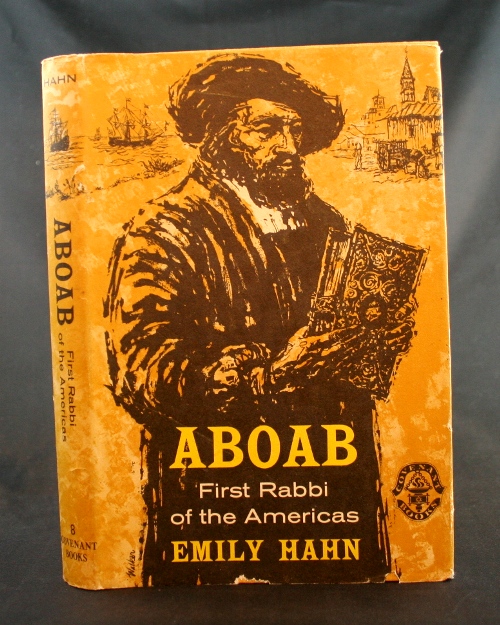
A few years ago I was speaking with Hamburg, Germany resident Lisolette Hermes da Fonseca.  When she said, “I’m a direct descendant of Rabbi Aboab,”  I pulled “Aboab: First Rabbi of the Americas” from my bookshelf. The book, by Emily Hahn, was published in 1959.

In the American southwest, some Synagogues have many Mexican-Americans worshippers who believe that they come from a new Christian background and are therefore Jewish. They don’t quite understand that to “return” to Judaism they need to convert. 

G'mar Chatimah Tovah!


@Touro Synagogue

Friday, October 7, 2016

Rosh Hashanah at Touro Synagogue 2016

         Rosh Hashanah at Toruo Synagogue 2016  by Aaron Ginsburg


note: I was so busy when I visited the Ukraine, Belarus, and Israel that I did not have time to write about my experiences. I will describe some of my adventures in my weekly messages.

We’re back!


Monday, the first day of Rosh Hashanah: “Where were you when the fire alarm went off?” I was in my second row seat at Touro Synagogue, trying to stay awake. I was still lagged out after my 26 hour trip home from Israel. The alarm was so loud that there was some motion in the Ancient Jewish Cemetery at the top of Touro St. Maybe it was just the horse chestnuts hitting the ground.


About Chestnuts: I used to put a few in my pockets when I walked to Touro for the High Holidays. Years later, I am often reminded of my youth when I discover them in a forgotten pocket. When I found some in Dokshitz I pocketed them. Just in case, upon my return to the US I declared them. This led to a meeting with the agricultural inspector. He donned plastic gloves and gingerly retrieved them from my suitcase, lest they propagate. He told me it was first time he got to ask the chestnut question, “Why chestnuts?” I responded, “Why carrots?”


On entering shul, there were several leaflets explaining the ins and outs of Rosh Hashanah. A rather complicated schedule showed some important information: which pages would be skipped.


One leaflet explained the proper High Holiday greeting. Fortunately, after the first day of Rosh Hashanah, Gut Yom Tov is perfectly fine. Although the emphasis was on the wording, there was an underlying assumption.Greeting each other is the rule, not the exception. I’ve noticed that when there are fewer people around, we are more likely to greet our fellow human beings, but this impulse fades in a crowd. At Touro, there is rarely a crowd, and always a greeting.


Rabbi Marc Mandel stumped us by asking about Charmian Carr, who died on September 17. Charmian played Liesl, the oldest daughter in the film version of “The Sound of Music.” While singing “Sixteen Going on Seventeen,” she danced with Rolfe, Liesl’s older brother. The Rabbi then got to the point…and made music by blowing the shofar.


Tashlich was at the transient dock at Perotti Park. More people were at tashlich than at the evening service which followed. Yair Strachman gave us something to think about. At Sinai, when the ten commandments were given, the shofar sounded, but it was not clear who was blowing it. I wonder if the shofar was the beating hearts of the People of Israel, excited by the overwhelming experience. He also observed that Rosh Hashanah was a relatively low key holiday. How could it be otherwise, with the emphasis on apples and honey? Our time on the transient dock was brief. As we finished the dock master realized that we were not there not on ferry business, and asked us to get back on dry ground.

Aaron Ginsburg, Alexandra Dimyenko, Helen Korostik.
"Have some Belarusian apples."

Speaking of apples, on Sunday, September 18, I visited Alexandra Dimyanenko, who was born in Parafyanovo, 6 miles from Dokshitz, where the Ginsburg family lived. I was assisted by English teacher Helen Korostik. Alexandra lived in a pre-WWII Jewish home owned by the Bilsky family. They were killed in the Shoa. When I arrived Alexandra offered me Belarusian apples. She gave me two bags of apples, one fresh and one dried. Getting suspicious, I asked, “Where is the tree?” We went out to the garden so she could point it out. When I went to Israel, I met several people whose parents were from Parafyanovo, and was able to greet them with an apple from Parafyanovo.


I had also visited Parafyanovo on Thursday, September 15. Galena Azarevich, chairman of the local government, discussed moving a concrete wall so the Holocaust massacre site, where 30 Ginsburg family members were killed, would be visible from the street. 

Maria Balash
Standing in the center is the German soldier Eric,
who helped save the lives of Jacob and Isaac Castrol.


Maria Balash, a child during WWII, talked about the Jewish man, Jacob Castrol, that her parents were hiding in the barn while their home was occupied by seven German soldiers. Saving the lives of Jacob and his brother involved several people, including a German soldier, Eric. Jacob stayed in the village, and I visited his grave. When we got to the cemetery, Galina knew what to do. She made a phone call, and soon a woman arrived who took us right to his well-tended headstone. Jacobs children are now in Russia, Lithuania, and Israel. He has a nephew, also named Jacob Castroll, in Los Angeles.
Jacob Casrol's grave


Aaron Ginsburg with school
principal Victor Korostik,


I suggested that we show the video 
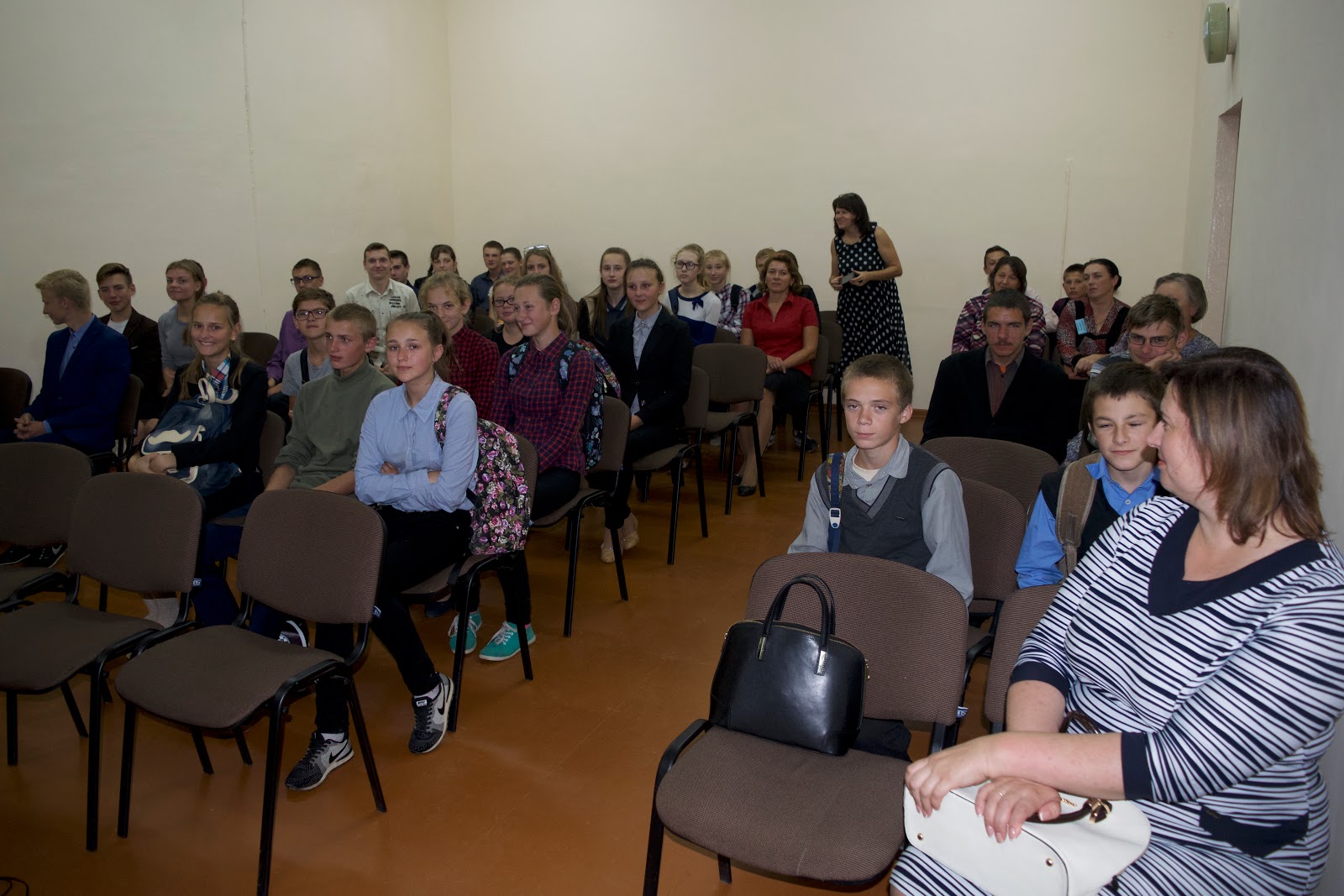
“Remembering Dokshitsy” about the 2008 cemetery restoration to the local school. English teacher Helen Korostik called the school principal Victor, who happened to be her husband In less than one hour I was at the school showing the video. Helen Korostik later thanked me for telling her about local history.

On the second day of Rosh Hashanah, we were happy to welcome Yehuda Yaakov, the consul general of Israel to New England. He was joined by his wife Ofra, daughter Yaara, mother Molly Jacob, and family friend Yair Lange. They were with us to daven. I’ve notice that we can always pull a speaker out of a hat. The consul addressed us briefly. After an Aliyah, he greeted us and spoke about Shimon Peres, z.l. He noted that Peres supported a strong Israel, both militarily and economically, and the he felt this was a necessity for Israel to make peace with its neighbors. 

Izi Rozow's (left) father was 
born in  Parafynovo.
Reuvan Barkan(right) is a 

member of the Markman 
family from Dokshitsy.

Among the visitors were Avram and Leah (Waterman Honig). It did not take long to discover that Leah's father is Elliot Waterman​ who grew up in Newport. Elliot and I used to carpool to URI.

Shanah Tovah Umetukah, A Good and Sweet year
Aaron Ginsburg with Ruti Yariv 
and apples from Parafynovo. 
Ruti's father was born 
in Parafynovo.